Analysis of an outgoing Polish Presidency: Environmental ambition can’t wait until crises worsen
10 Juli 2025
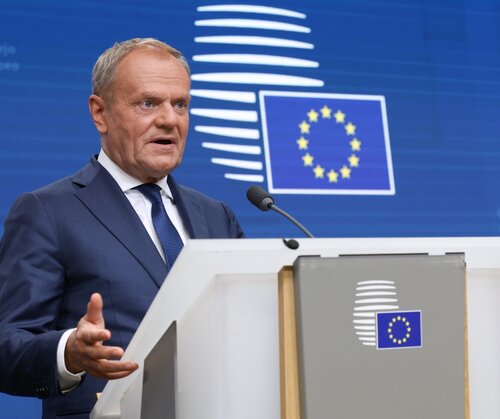
Back in October 2023, thanks to a historically high voter turnout, Poland’s electorate swept Donald Tusk’s Civil Platform party (part of the European Peoples Party (EPP)) into office, largely on the basis of its bold environmental stance and heady promises, and the great surge of hope that those promises generated (FW 290). By contrast, when Poland took over the 6-month rotating Presidency of the Council of the European Union, in January 2025, hope had turned to expectation of further environmental backtracking.
Indeed Tusk’s current term as Polish Prime Minister has seen him wriggling out of electoral pledges at home and at the EU. A domestic example: they promised to exclude 20% of public forests from logging, but only 1.3% have been.
It came as no surprise then when Donald Tusk, in his opening Council Presidency address, glossed over environmental objectives to focus on security and competitivity. More startling, however, was his criticism of the European Green Deal and his inference that environmental laws that may affect competitiveness are unaffordable, and somehow naïve.
As it comes to a close, the Polish Presidency ‘results’ website lauds the introduction of five Omnibus simplification packages, “including fewer reports and statements, easier access to investment financing, and simplifications in agriculture, defence and for small and medium-sized enterprises” – aggravating climate and biodiversity crises by systematically picking apart social and environmental protections that irk commerce and industry.
Certain ‘achievements’ are particularly discouraging, and the most generous thing that can be said is that the Polish Presidency did not defend environmental integrity:
-
The Council’s adoption of the General Approach on the Forest Monitoring Law marks a significant shift away from the original ambition of harmonised, science-based forest insights across the EU. Countries’ decision to eliminate satellite monitoring – the backbone of the original proposal – means losing the ability to obtain real-time, objective public data on forest resilience (FW 304). Key indicators that would have provided critical insights into forest health and how to do forestry better have been deleted. The postponed European Parliament vote, expected in September, will be a critical moment to reaffirm that transparency through satellite monitoring is needed.
-
Regarding the beleaguered European Union Deforestation Regulation (EUDR), the Polish Presidency put the file on the Agriculture and Fisheries (AGRIFISH) ministers’ agenda. This unnecessary move opened the gate to tamper with the law (FW 306), and the EUDR is, once again, fighting for its life.
-
Even the flagship Habitats Directive was not spared. The reduction in protective status of the grey wolf, a concession to powerful farmer lobby groups and hunters, sets another damaging precedent, opening a Pandora’s Box of possibilities to hunt that are difficult to verify and control. It will also have consequences across Member State borders.
To give credit where its due, the Polish Presidency seems to have defended a stronger 90% 2040 Climate target, but this success is dampened by the overall disappointment.
One Polish environmental campaigner reports feeling “personally used,” a feeling he believes is widespread, and played an important role in the blow dealt to Tusk’s reform agenda in Poland’s recent presidential election. “I think they lost because they betrayed so many of their supporters; they thought they could move to the right – a miscalculation, because people demobilised.”
Perhaps it is also naïve to think that one can ignore campaign promises and suffer no setbacks. As the Polish Presidency hands over the reins to Denmark during a life-threatening heatwave, today’s environmental problems are set to worsen and will still require remedy, at greater cost, years down the road.
Kategorien: News, Forest Watch, European forests