Discussions on weakening 2040 climate targets move on
8 Mai 2025
Recent policy developments have sparked significant discussions on the integration of international carbon credits into climate targets.
This offsetting approach, which was abandoned in the EU many years ago because of its lack of environmental integrity, undermines the EU’s responsibility to reduce emissions domestically.
It also coincides with the forestry sector hurtling towards defaulting on EU land use climate targets. This raises the uncomfortable question of why politicians suggest relying on climate effort elsewhere instead of addressing the lack of meaningful actions in forestry and other EU industries to reduce emissions at source.
In her 8 April 2025 speech, Ursula von der Leyen (VDL) emphasised the EU’s unwavering commitment to its climate goals. She stated, “Our climate goals remain the same. But we will be more flexible and pragmatic on how we achieve them.” The main concern with this declaration is that domestic actors will receive less pressure to decarbonise.
Fern has previously drawn attention to large concerns that the forestry sector is being let off the hook for excessive logging levels. Now, even other industries are jumping in to say that all sectors, including forestry, must remain committed to transforming their practices to address the impacts of climate change.
Despite calls for all sectors to remain committed to reaching their climate targets, it is clear that EU Member States and MEPs are starting to support the idea of using international credits to lower the pressure of meeting climate targets ourselves, which is easier than insisting that industrial sectors causing greenhouse gas emissions take measures actually to reduce those emissions.
In an unfortunate development, the German Government recently announced its coalition agreement, which supports ‘permanent’ carbon removals and international carbon credits in both the Emissions Trading System (ETS) and the upcoming EU Climate Law (which would house the EU’s 90% net target).
What are assumed to be permanent removals, such as bioenergy with carbon capture and storage (BECCS) (FW 294) and biochar, are often not even a removal when land use impacts are factored in. Growth of any wood-based carbon dioxide removal technologies would only exacerbate the current negative impact that harvesting has on the land sink. The history of international forestry carbon credits is also abysmal. It seems illogical to direct attention to these problematic “solutions” instead of promoting a move to continuous cover forestry across the EU’s forestry sector.
MEPs such as Peter Liese and Pascal Canfin have voiced their support for international credits, with Liese suggesting capping the international credits at 5% of the effort needed to reach the 2040 target. This is nearly as much as the contribution from the Land Use, Land Use Change and Forestry sector, which represents around 7% of EU greenhouse gas emissions, according to latest EEA estimates. We should not ignore a declining land sink in order to espouse shaky promises of permanent removals of faulty international carbon credits.
Rather than offload its emissions reduction obligations on other nations – many of which will be disproportionately affected by climate change – the EU must take full responsibility for its emissions reductions and address the ongoing logging trends in its forests to truly lead the way in global action to address global warming and biodiversity loss. Let’s not forget that fraud linked to international forest offsets has previously hovered at 90%.
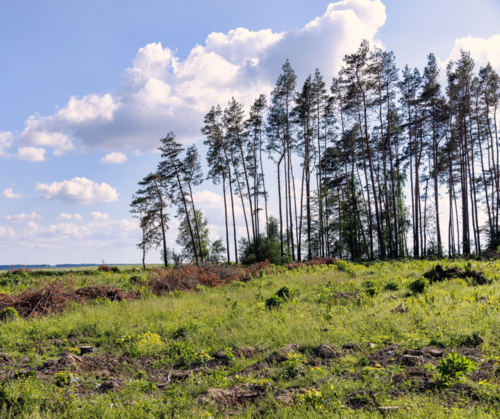
Image: ihar leichonak/Alamy
Kategorien: News, Forest Watch, Carbon offsetting