Extractivism, wood burning and a missed opportunity: the EU Bioeconomy Strategy
28 noviembre 2025
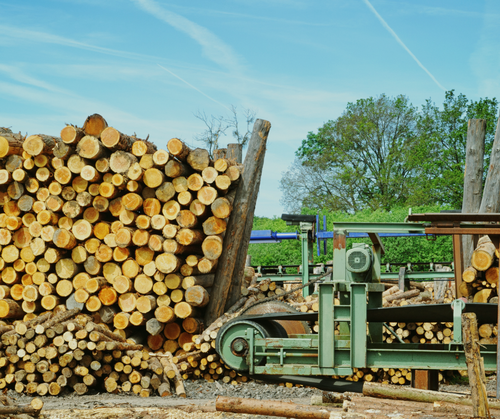
Yesterday, European Environment Commissioner Roswall presented the revised European Bioeconomy Strategy. Martin Pigeon and Sydney Vennin offer their initial impressions:
Business as usual
There are few meaningful changes to previous leaked versions. Apart from a bigger insistence on biotechnology, the strategy still focuses on investment-and-growth and comes from a regulations-are-market-barriers perspective. It is peppered with promises of new technological wonders, as long as industry receives public funding and is given a captive market to produce bioplastic packaging and biochemicals.
Lip service to planetary boundaries
Europe has already exceeded its ecological boundaries, yet the strategy claims that “nature itself can become part of Europe’s competitiveness”. It should say that Europe’s businesses need clear guidelines to make sure nature is safeguarded. Wood supply is limited and threatened by poor forest management and the climate and biodiversity crises. Most of the biomass on Earth does not grow in Europe but between the two tropics: “expanding market access for sustainable solutions” and “identifying trade barriers” risks boosting extractivism abroad even more.
A missed opportunity to eliminate wasteful uses of wood
The strategy was a missed opportunity to tackle bioenergy – one of the most wasteful uses of wood and crops which is incentivised by the European Union renewable energy policy. Wood-using sectors (including pulp and paper, wood panels and furniture) have consistently criticised the subsidies for cutting into their supply. An early draft called for “disincentivising inefficient bioenergy combustion” but this was removed and Commissioner Jessika Roswall ducked questions about it. She also claimed the Renewable Energy Directive’s sustainability criteria would help stop bioenergy from driving forest destruction even though they have been criticised at length by the European Commission’s own scientific advisers.
Cart before the horse
It was particularly strange to see that while the strategy foresees an assessment of the “impact of Member States’ support schemes for biomass, including on biodiversity, climate and the environment, and on possible market distortions”, this will take place in 2027, AFTER the planned 2026 legislative proposal for the post-2030 Renewable Energy Directive. Proposing an impact assessment after a legislative proposal does not sound like serious policy making.
Too vague to judge
One area it’s hard to have an opinion on is the strategy’s plan for numerous new “Alliances”, “Forums”, “Groups”, and “Partnerships” with various remits. Depending on how these are set up, they could be meaningful engagement spaces or a waste-of-time.
Worst of all, the strategy fails to answer urgent questions of paramount importance to forests, such as how to increase robustness, carbon sequestration and biodiversity in forests given that monoculture and clearcut management is failing? And how to optimise the limited wood supply so that it can deliver high added-value supply chains in rural economies?
The full strategy is available here.
Categorías: News, Bioeconomy, Bioenergy