Gold's Dark Web: The Hidden Price of a Booming Market
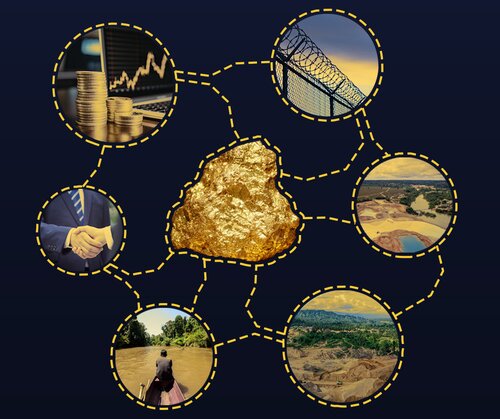
The event ‘Gold's Dark Web: The Hidden Price of a Booming Market’ took place on 25 June during London Climate Action Week 2026. As the world's largest gold trading hub, London's bullion market carries real weight, and real responsibility. London Climate Week was the moment to shine a light on the true climate cost of this secretive commodity. The event brought together community leaders and experts, to make the case for urgent reform, and heard banks and policymakers on their plans and perspectives.
Gold prices have more than doubled over the past three years, and despite a recent dip below $4,000 an ounce, the boom shows no sign of ending. Opening the panel, moderator Jack Farchy, senior reporter for energy and commodities at Bloomberg News, set the scene: rising prices create incentives across the whole gold supply chain – for miners, traders, refiners and banks – and that cuts both ways. Alongside the legitimate market, it fuels an illegitimate one tied to environmental destruction, pollution and the financing of crime. Jack cited an estimate aired at a recent London Bullion Market Association (LBMA) conference that the illicit gold trade is now worth around $120 billion a year. The scale of the issue, he said, is not in doubt.
Sophia Pickles, of the Global Initiative Against Transnational Organised Crime (GI-TOC), opened the panel by reflecting that fifteen years of collective work across government, civil society and the private sector on responsible gold sourcing has so far achieved limited results. She drew on a report that GI-TOC had just published on the matter, which lays out continued and systemic vulnerabilities in the global gold sector that allow criminals and bad actors to produce and trade illicit gold. There has been progress, she said, but rising gold prices are also driving an increase in criminal activity across the gold sector - and price is not the only driver: crime and human rights abuses in the sector pre-date the current boom and have intensified alongside it. She described howillicit gold is currently blended into legal supply chains, making it extraordinarily easy to launder into the legal market. With over US$160 billion in over-the-counter gold commercial bullion trades daily, and as one of the world’s most prominent gold trading centres, she argued that as a major financial and gold trading hub, London is uniquely placed to tackle illicit finance linked to illegal gold trafficking and illicit gold mining and trading. Sophia closed by calling on the UK government to use its forthcoming Illicit Finance Summit to establish a binding, globally harmonized standard, grounded in international human rights, environmental and criminal law and existing international standards for the gold sector.
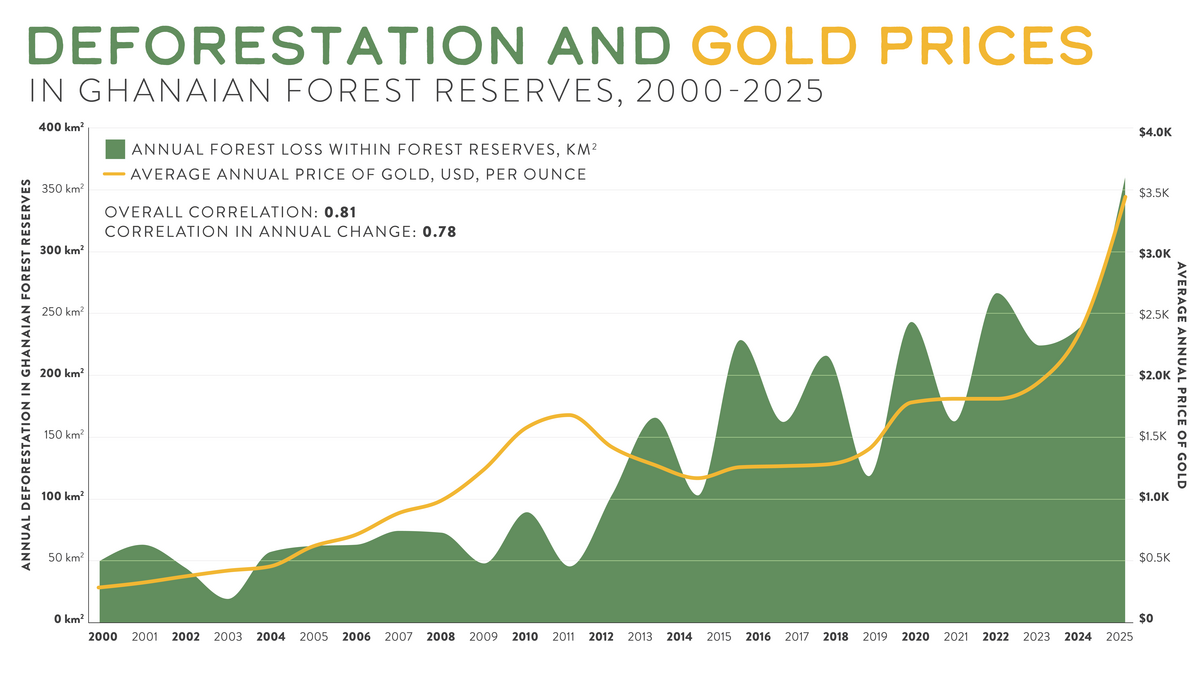
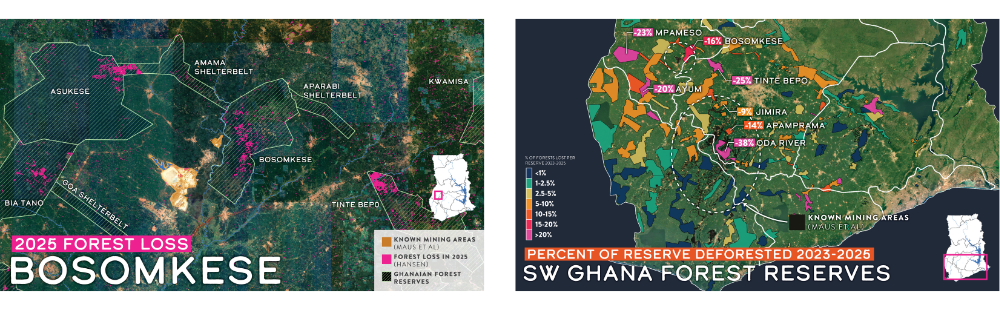
Daryl Bosu, Deputy Director of A Rocha Ghana, spoke about the scale of illegal small-scale mining ("galamsey") in Ghana. Gold mining is central to Ghana's economy and livelihoods; illegal mining has expanded sharply in recent years, alongside the rise in international gold prices; mining-related pollution (including from chemical processing) is contaminating rivers that communities rely on for drinking water; forest reserves have been heavily encroached on; children in mining communities face risks accessing safe water; and a figure of around 1,200 people displaced as a result of mining-related conflict or land loss was mentioned. Daryl closed by calling for stronger domestic enforcement in Ghana alongside better-aligned international standards and pressure from international partners.
Jackeline, an Indigenous leader in the Peruvian Amazon, gave testimony on the impact of illegal gold mining on her community. Mining is contaminating the rivers her community depends on, killing off the fish stocks they rely on for food, and contaminating the forests that provide their other food sources — there is no supermarket to fall back on. She described the dangers faced by community members who patrol and defend their territory against illegal miners, including violence and killings of land and environmental defenders. Her community has organised its own indigenous monitoring system, covering close to 3,881 hectares, supported by technology provided by allies, to protect their land. She called on governments to formally recognise indigenous communities' land rights and ownership, for support and funding to reach communities and defenders directly rather than only through intermediaries, for proper health studies into the impact of mercury contamination on Indigenous communities, and for consumers and the international community to stop buying illegally mined gold. She closed by stressing that the forest her community defends does not belong to them alone, but to everyone.
Julia Yansura, Program Director for Environmental Crime and Illicit Finance at the FACT Coalition, argued that relatively little attention has been paid to tackling the billions of dollars of "dirty money" generated by illegal mining. The dominant response to date - sending in police and military to mining sites - has reached the limits of its usefulness. In Colombia, for example, more than 6,000 police and military operations were carried out against illegal mining last year, yet experts estimate illegal mining still grew significantly over the same period. She gave three reasons this approach is failing: it tends to target the least powerful actors in the supply chain rather than those who profit most; local communities are often caught in the crossfire; and even when mining equipment is destroyed, criminal groups are frequently back in operation within days. A more effective approach, she argued, would target the financial incentives that make illegal mining so profitable — not just the gold price itself, but the ease with which illicit gold is commingled with legitimate gold and profits quietly enter the international financial system. Tackling the harms of illegal mining, she said, should not be the sole responsibility of mining countries: financial centres such as London, New York and Miami have a responsibility to act on the money flowing through their own systems.
Reflections from Banks and UK Politicians
The second half of the event brought together Dame Anneliese Dodds MP, Matthew Allen* (Head of Policy, Complex Advisory and External Engagement, Economic Crime Risk, Santander) and Michael Stock(Global Head of Financial Crime Risk Investigations and Intelligence, Standard Chartered.
Matthew Allen reflected that banks devote significant compliance resources to meeting their legal and regulatory obligations, but criminal actors are adapting their methods faster than a purely defensive compliance posture can keep up with. He called for a markedly different approach: one that targets criminal actors specifically, without penalising legitimate trade. Banks, he said, have made real efforts to keep illicit finance out of the system — criminal money is not good business — but they cannot solve the problem alone: they need governments to provide clearer information on how criminal gold proceeds are entering the banking system in the first place. He pointed to the UK's planned Illicit Finance Summit as a genuine opportunity to build a global, multi-sector coalition to tackle the problem.
Michael Stock said any new regulation needs to be designed to actually change outcomes, not simply add to the rulebook. He pointed to cross-border information-sharing - both between Financial Intelligence Units (FIUs) and within banking groups - as one of the most effective tools currently available, noting that there is room to develop those mechanisms further whilst balancing concerns about data protection and confidentiality. He argued for a "whole system" approach that brings source and transit countries into the conversation, rather than imposing standards on them from outside, warning that if standards are tightened only in one location without equivalent action elsewhere, illicit gold will simply move to less-regulated markets. Asked about Standard Chartered's own exposure to gold sourced via the UAE, Hong Kong and China, he said the bank manages risk by working with a small, trusted group of refiners and counterparties with long-standing relationships and known ownership structures, rather than broad market exposure.
Dame Anneliese Dodds MP started by drawing a direct line between the conflict in Sudan - cities under siege, water shortages, extreme heat - and resource-driven conflict more broadly, noting that gold has become a significant source of financing for armed groups in Sudan. She argued the UK has a particular responsibility to act, given that it is hosting the Illicit Finance Summit (now scheduled for December), holds the presidency of the Financial Action Task Force, and is the "penholder" on Sudan at the UN Security Council. She welcomed some recent progress - UK government procurement now includes explicit environmental and human rights criteria, and last year's UK trade strategy referenced OECD due diligence guidance for businesses — while acknowledging that far more needs to be done, including extending these standards more systematically to gold and other commodities. She pointed to sanctions as an important part of the toolkit, welcoming recent UK sanctions on individuals linked to the Sudanese gold trade and calling for closer coordination with the EU, US and other jurisdictions. She also called for greater scrutiny of the role played by hubs such as Dubai in the onward trade of Sudanese gold. Asked about the EU Deforestation Regulation and whether gold should be treated as a forest-risk commodity, Dame Anneliese Dodds noted that the Regulation's current scope is built around agricultural and plant-based commodities, which raises definitional challenges for extending it to gold, but supported continued work towards a more harmonised international approach between the UK, EU and other jurisdictions.
Closing the event, Hannah Mowat from Fern and Helen Taylor from Spotlight on corruption thanked the co-hosts — Fern, CAFOD, Spotlight on Corruption, GI-TOC, Mighty Earth and the FACT Coalition — and reflected that the day's testimony, from Ghana to the Peruvian Amazon to Sudan, illustrated both the scale of the challenge and the opportunity created by the UK's coming Illicit Finance Summit, its FATF presidency, and growing convergence between civil society, banks and policymakers on the need for clearer regulation to ensure illicit gold mining and trade can be halted.

Categorías: Events, Critical minerals