What is the state of EU forests?
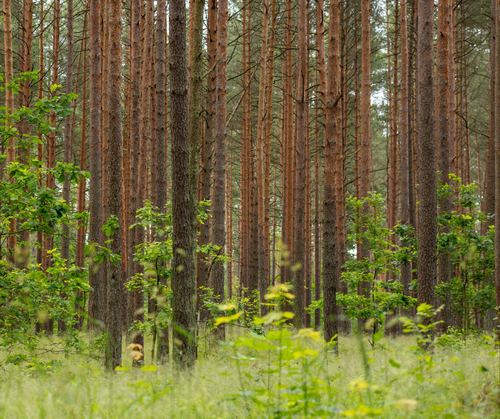
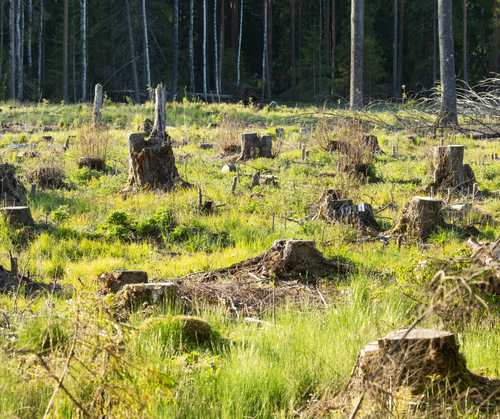
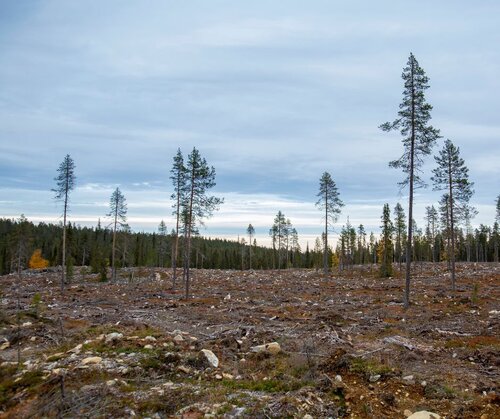
Decades of intensive forestry practices have meant that healthy biodiverse EU forests have been replaced with treestands that resemble crops. Even some of the EU’s vanishingly small undisturbed primary forests are being threatened with logging. In addition, three quarters of European forests are managed through clearcutting and other intensive rotational methods, leaving many in a bad state.
This type of forest management destroys biodiversity and ecosystems and harms efforts to reach EU and global climate goals. And yet it is being driven by subsidies for biomass burning. Nature is suffering, but so are rural communities and Sámi peoples who are losing their livelihoods.
There is no silver bullet solution, but EU support for more sustainable forest management such as Continuous Cover Forestry (CCF) would be a huge start, delivering more resilience, more diversity, more employment opportunities, and cleaner and cooler air. It would also help meet Nature Restoration Regulation (NRR) goals and benefit the bioeconomy as wood produced from CCF tends to be more suitable for manufacturing long-lived products.
What is continuous cover forestry?
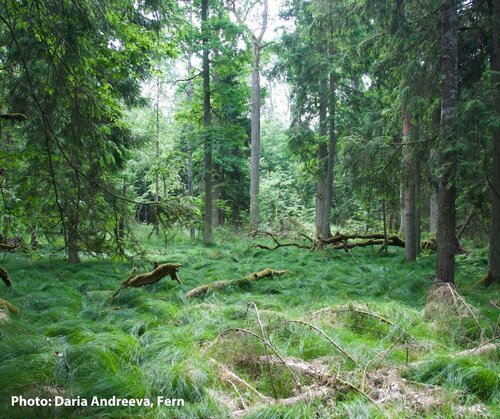
Continuous cover forestry avoids large canopy openings and ensures age and species diversity. It often favours natural regeneration over planting and is practiced primarily because it allows a steadier income over time. Many practitioners also appreciate the increased forest resilience and ecological value. As CCF requires expertise to decide on which trees to fell, it contributes to high-quality rural jobs.
As Europeans have always used wood and managed forests, one could argue that CCF has existed for thousands of years, but it has been a forestry discipline for several centuries. It has strong roots in Central Europe, but, with adjustments for local conditions, there is growing acknowledgement that it can also benefit Northern and Southern Europe.
There are therefore several definitions of CCF, and there are debates about similar management styles such as close-to-nature forestry, but in general the aim is the same - to manage forests with multifunctionality in mind and without large canopy openings. It should not let us distract ourselves from offering policy support for practitioners of CCF. Fern usesboth continues cover and close to nature forestry to describe management that avoids clearcutting and mimics and uses natural processes, at the smallest possible scale.
Fern’s work on continuous cover forestry
What do Fern and our partners want?
We want European forests and the people that depend on them to flourish. EU policy incentives do not presently recognise the potential of CCF and continues to offer harmful subsidies, poor laws with loose enforcement, and a lack of oversight over the negative trends in environmental and social impacts. We want to turn this around.
What are we doing?
We are calling on the EU to agree a coherent policy to support multifunctional forest management that maintains and increases the forest carbon sink; is in line with EU ambition to protect and restore biodiversity; and contributes Sámiand rural community livelihoods. This means having an ambitious forest sink target, and full and meaningful implementation of the EU’s Biodiversity and Forest Strategies. We are calling for an end to harmful bioenergy subsidies, with the money used instead to support continuous cover foresters.
What are the primary ecological benefits of continuous cover forestry?
In contrast to clear-cut forests, harvesting in continuous cover forests has less impact on their structure, allowing them to maintain a large part of their biodiversity and carbon stock. The niches created by removing trees are often filled by trees already sprouting in undergrowth. These trees are then given the chance to grow to their potential, making the recovery after cutting faster. Continuous cover forests do not go through development stages like rotational forests and are therefore more stable environments. This is especially important for very localised species.
How does continuous cover forestry enhance forests’ resilience to climate change?
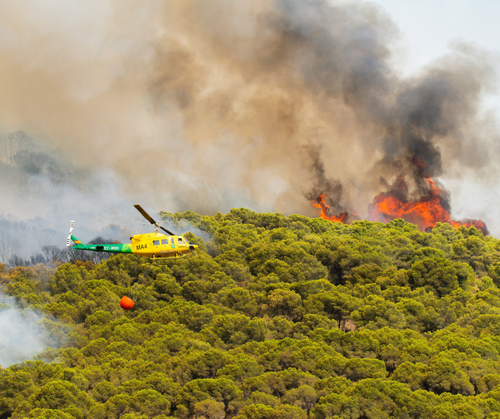
After CCF harvesting, the forest still has canopy cover to protect the area’s microclimate. Having diverse tree species makes the spread of pathogens more difficult and secures forest continuity even if one species of trees is severely suffering. For instance, if all the spruces in a forest die, the forest can remain somewhat stable as long as other species survive.
How economically viable is continuous cover forestry?
A striking fallacy in the debate over different forestry models is that pursuing an environmentally-friendly, sustainable path means losing jobs and profits. In fact, there’s growing evidence that CCF provides similar or superior profits to forest owners than intensive practices. Many forest experts are now calling for a shift away from intensive forestry. For instance, evidence from boreal forests in Central Europe and Southern-European countries has shown that CCF has at least the same economic efficiency as intensive methods while also being better for biodiversity, the climate and nature.
What needs to happen to achieve our goals?
Although the benefits of CCF are well known, there is little recognition in EU policy beyond a mention in the NatureRestoration Regulation of supporting CCF to recover biodiversity. For that to happen, the EU must design funding tools that favour CCF and Member States must include measures in their National Restoration Plans.
Key resources

Funding resilient forests
Rethinking EU and State subsidies

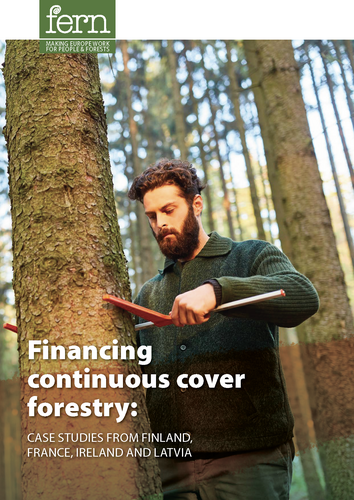
Financing continuous cover forestry
Case studies from Finland, France, Ireland and Latvia