
With the right support, thriving forests and prosperous businesses can go hand in hand. Sydney Vennin reports from rural France on how an innovative new economic model for forestry is working in practice.
The Aisne is a rural département in the far north of France, close to the Belgian border. It has red brick houses, agricultural fields and derelict factories characteristic of this part of the country, which has undergone deindustrialisation for decades. It also has large swaths of broadleaved forests, which, when I visited, were on the cusp of autumn.
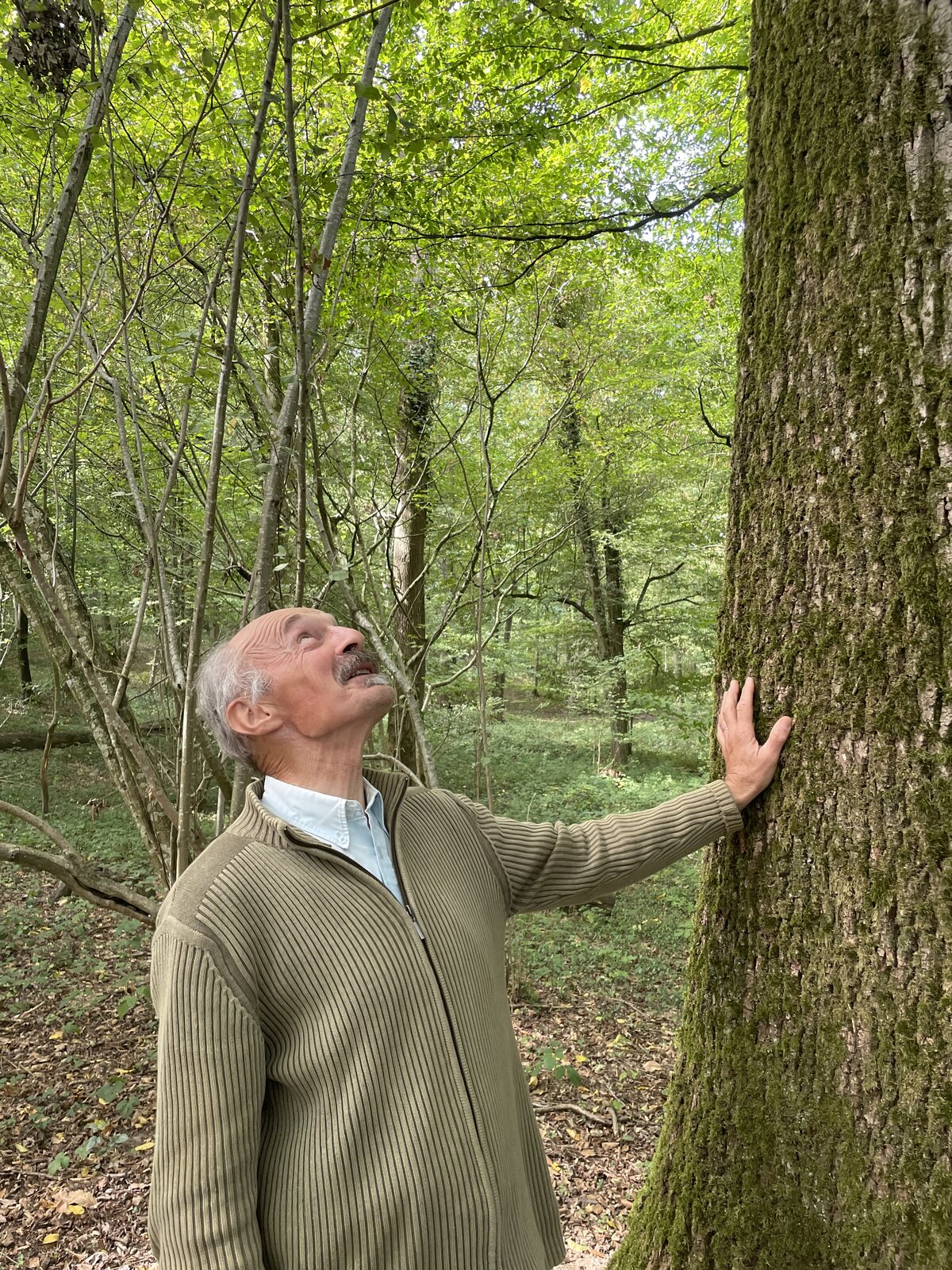
Yves Vuilliot loves his forests.
A farmer and a forester, he has been managing them for over four decades using close to nature forestry, a model which stands in contrast to the dominant clearcutting model in Europe. He stands in one of the 1,000 hectares he manages, surrounded by large oaks, soaring chestnuts, small hornbeams and coppiced hazelnut, with birds chirping in the background.
Around two-thirds of French forests are made up of hardwood species, also known as broadleaves. But most of this wood is sold to large bioenergy factories, their demand fuelled by the huge subsidies available for burning wood for energy under the EU’s Renewable Energy Directive (RED). This, says Vuilliot, is “the last of the catastrophes invented for forests. The high prices for energy are totally superficial. Everything is distorted by subsidies.”
Driving this ‘catastrophe’, says Vuilliot, is the economics underpinning the bioenergy industry.
“Harvesting for bioenergy is so mechanised that it’s bad for forests,” he says. “You need volume, cheap, so you use harvesters to cut down the trees. But we can’t work with harvesters without harvesting less than 40% of the standing volume. And 20% is my limit, if I want my forests to be healthy and regenerate naturally.”
“The alternative we have seen in France is large-scale plantations, also a bad idea. You can’t even imagine what forest management would be if governments didn’t fund plantations,” Vuilliot adds.
A different model
So, what’s the alternative? How can foresters continue to manage their forests through close to nature forestry, against market forces driving them to the prevailing intensive, destructive clearcutting model? How can better forestry also be more economically viable in this region?
Vuilliot’s case is an exemplar of how it can be done.
He says there are two ways to ensure workers are paid well for taking care of his forest in a close to nature way - an essential requirement given that forest workers are already squeezed.
One is to export unprocessed logs: current global market prices are high. The other is to sell his wood to local sawmills.
“We need to rebuild a virtuous wood value chain,” Vuilliot says. “One based on real wood. One that can use all the hardwood species in our forests.”
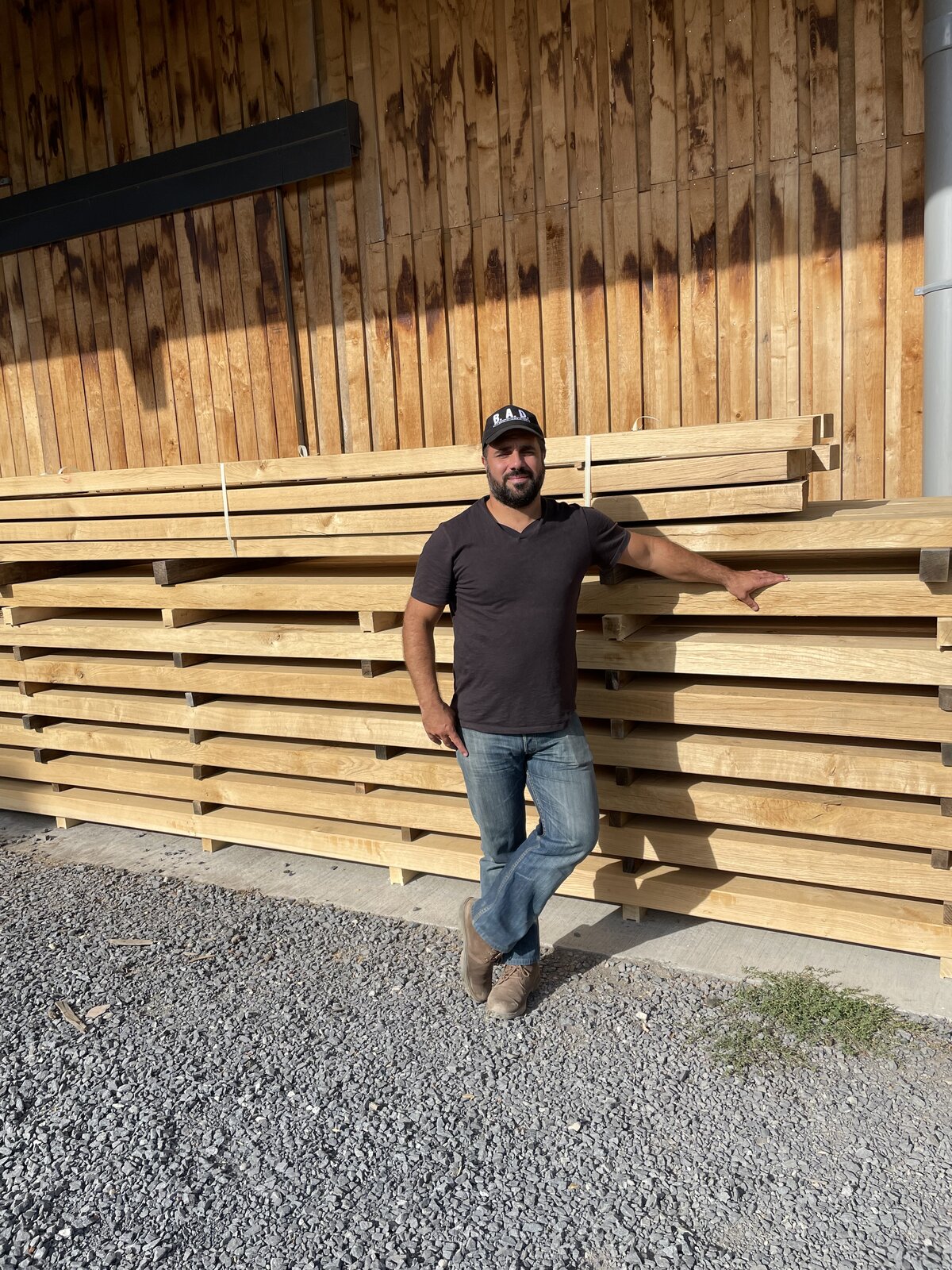
And this is where Yvain Brochot, who buys wood from Vuilliot, enters the picture. Trained as a forester and an entrepreneur, and from the nearby town of Saint Gobain, Brochot has just started his own small sawmill business.
According to Vuilliot: “It’s a beautiful project. They only buy wood from forests managed through close to nature forestry. They are creating a new economic model. They want to irrigate the local economy.”
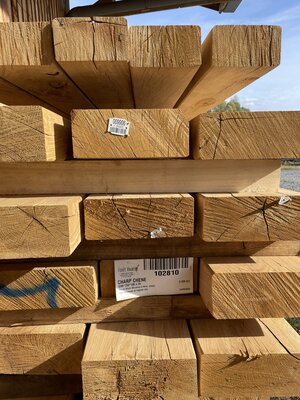
The sawmill is called Scierie Forêt Vivante (the Living Forest Sawmill).
“We have one guiding principle: to only use wood from local forests managed through close to nature forestry. And this means two things. One, local forests are hardwood, this grows more slowly and less straight than conifers, but we think it’s important to source locally and protect those forests, so we saw hardwood. Two, to hold our promise, we need to guarantee full traceability. When we deliver a deck board, we can say which forest it comes from.”
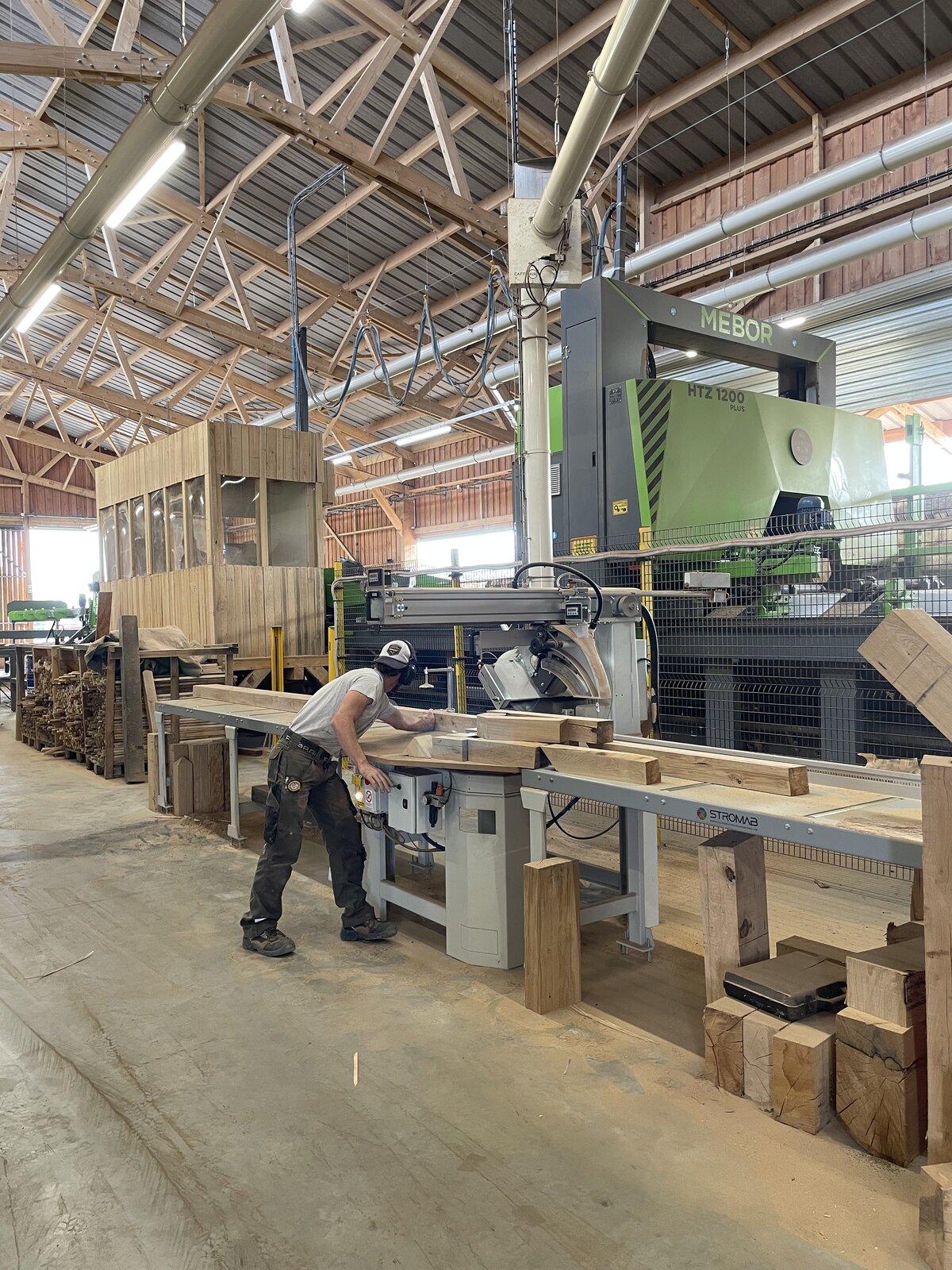
The Scierie Forêt Vivante is a small sawmill: seven staff, 3000 m3/year sold, enough sawn timber to frame more than 100 houses a year. It’s categorised as a “service” sawmill: one that provides quality bespoke goods for communities living around it.
At the mill, four species of hardwood are cut and then, for added value, the sawn wood is transformed, creating terraces, cladding, and parquet which can be sold. The whole process is self-sufficient for thermal energy and uses solar panels to be 50% self-sufficient for electricity.
Structural decline
But Brochot is swimming against the current, and he knows it.
“Over the past 15 years, I’ve seen two sawmills close in a 20-kilometre radius.”
In France, local sawmills have been closing: from 15,000 sawmills in 1960, France has less than 1,500 left today – a 90% decline. The French Senate reports an 8.5 billion Euro structural deficit in the French wood sector. Sawmills have disappeared, but also the industries which relied on them, such as furniture or parquets.
This structural decline has many reasons. Competition from abroad and from other materials like synthetic laminates, metals, and low-cost particle boards, consolidation into larger sawmills, lack of investment, and difficulties with supply.
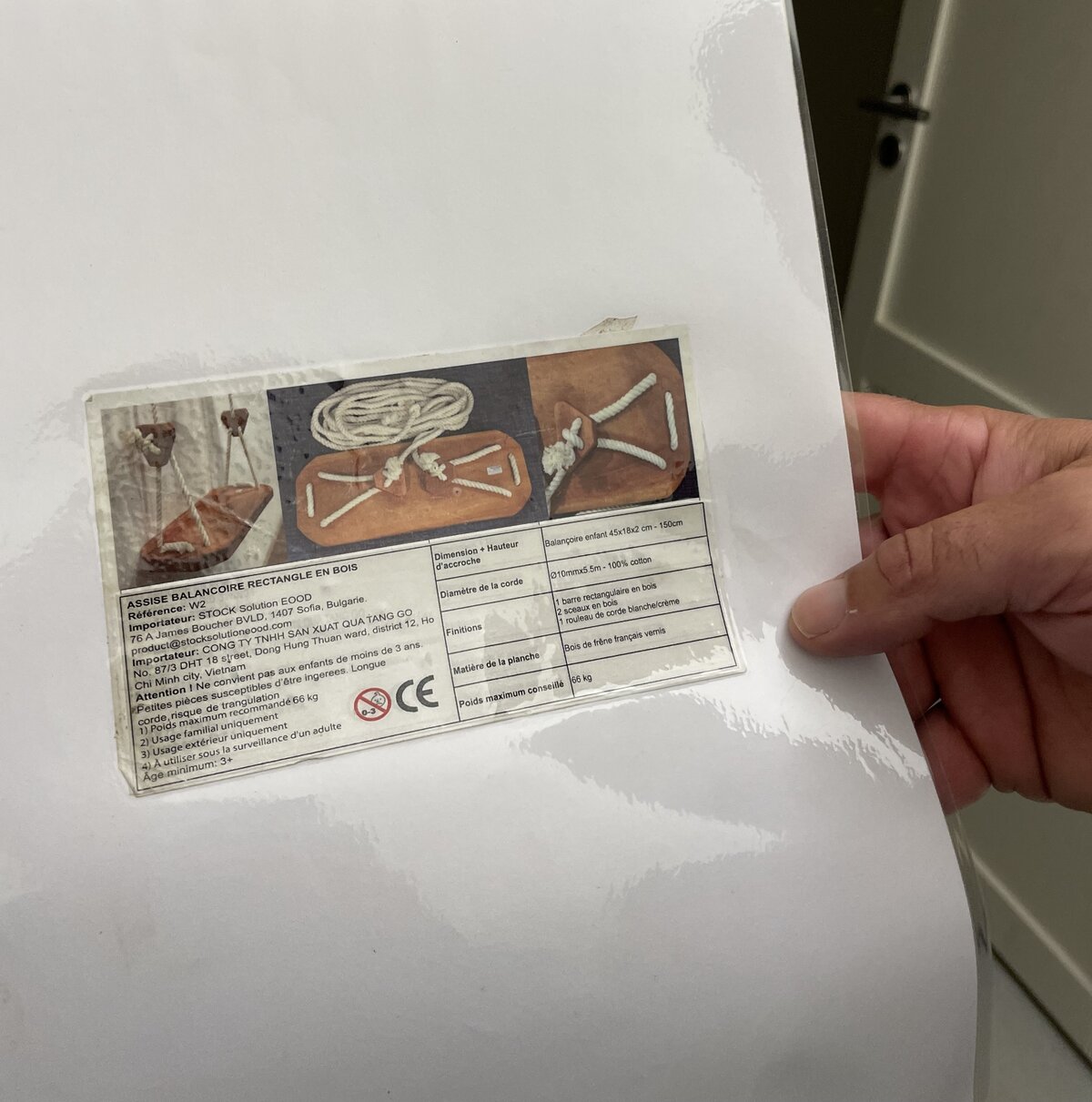
Brochot says: “The crux for us is to secure our wood supply. Oak, ash, and chestnut fetch such high prices at export that it’s hard for us to compete. We’ve dropped ash altogether because of this. Last year, my wife found this cheap garden swing in an unsold goods store. The swing broke in two days, but I found it so crazy I kept the label. It’s made from French ash, but in Vietnam."
Vuilliot agrees: “If we rely on the traders, we make ourselves vulnerable. Once they have the whole market, they can drop their prices.”
And the other crux is, of course, sales. “We need buyers.”
“Our products are better for consumers and for forests, but they are also more expensive.”
EU support
What are the solutions?
Today, one solution for the Scierie Forêt Vivante is public procurement.
“What works is when products like ours, local hardwood, are specifically included in calls for tenders. For example, “it needs to be hardwood and needs to have been harvested within maximum 300-kilometers of the construction site.” We’re working on cladding for a nearby social housing project. That’s great. We’ve also supported a nearby town with the renovation of their concert hall.”
“And we’re working with architects, so they understand the importance of using local wood. In our region, this means hardwood, which is more expensive than softwood. So subsidies for use of local wood in construction would also be a good lever.”
When asked about competition for the purchase of round logs from China and Vietnam, Brochot shrugs. “I can’t do much about that. That’s trade.”
And indeed, trade rules are in the hands of the EU.
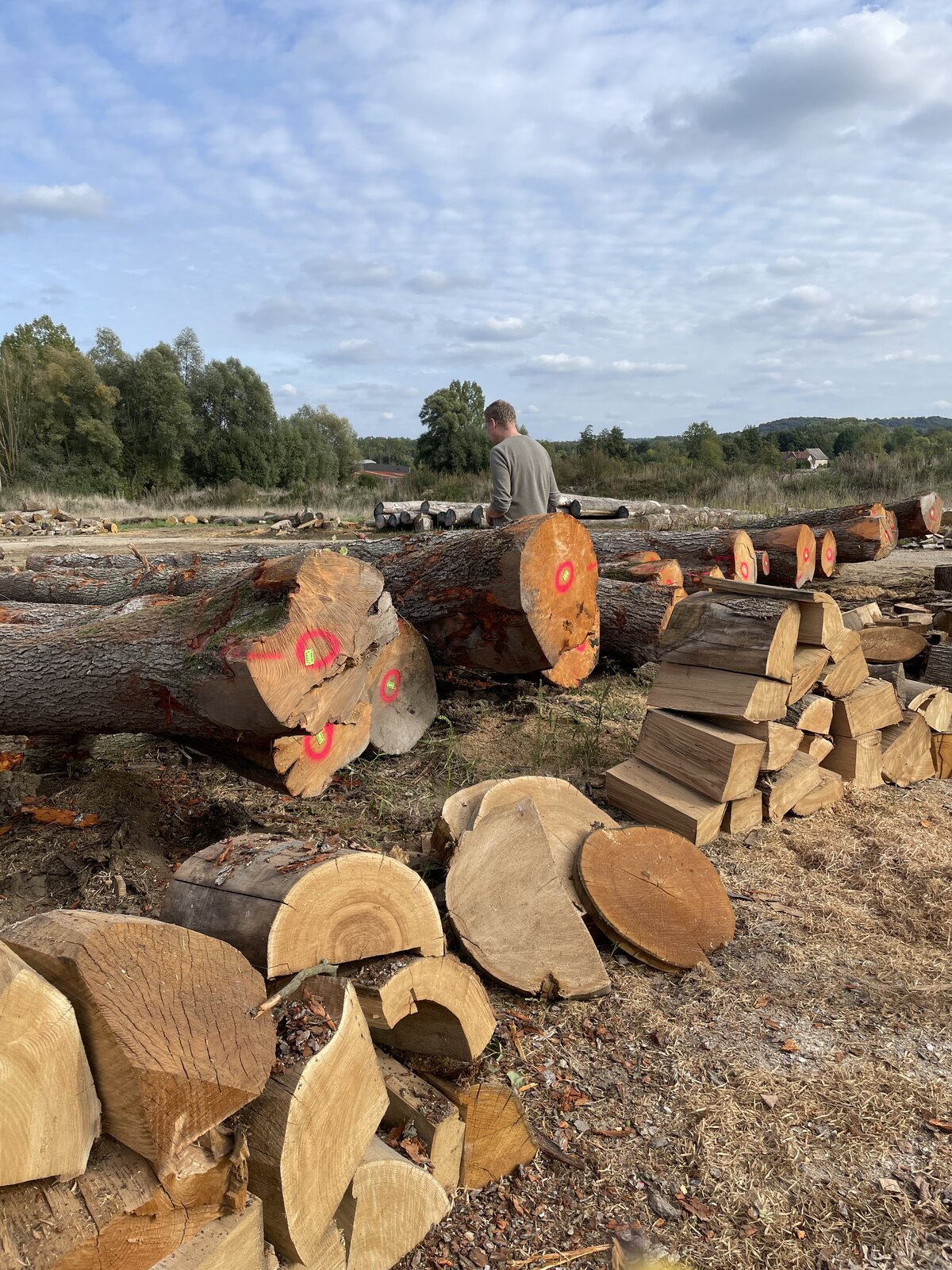
Today, with increased protectionism from key allies like the United States and increased competition from fast growing economies, including in southeast Asia, the EU is exploring trade measures aimed at protecting EU industries. In a context where competition for hardwood is high, companies like the Scierie Forêt Vivante should be supported to secure their supply.
And, of course, small service sawmills need investment if they are to swim against the current and rebuild healthy local economies based on healthy local forests. The Scierie Forêt Vivante benefited from the European Regional Development Fund. This is the type of project where funding for Bioeconomy in the next EU budget should go.
The symbiotic relationship between Yvain Brochot’s sawmill and Yves Vuilliot’s close to nature forests is a vision for what a thriving rural bioeconomy in West and Central Europe could look like. It offers an inspiring example of wise wood use – and, as such, is a model that needs urgent support from local, national and European governments.
Sydney Vennin is a Forest Policy Expert at Fern. All images were taken by Sydney Vennin.
This article is also available in French.