
A Lose-Lose Deal for Liberian Communities
13 mai 2026
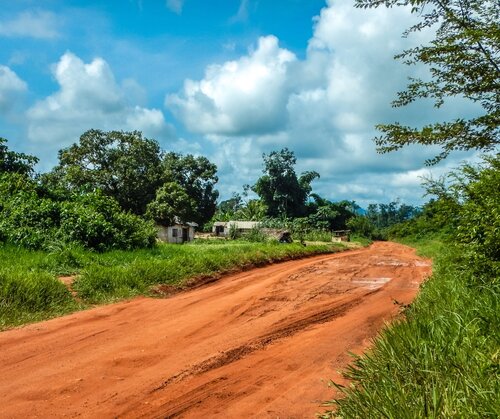
The Government of Liberia is rushing to finalise a Carbon Policy that would take 50% of carbon benefits away from the very communities who ensure that carbon remains sequestered in Liberian forests.
This draft policy aims to bring money into Liberia to conserve forests. Whilst NGOs in Liberia want Liberia’s forests to be conserved and money to be channelled to communities to do so, unfortunately the government is drafting a Carbon Policy that threatens communities’ rights and benefits.
Communities own 70% of Liberia’s forests. When communities own forests, they are entitled to 100% of forest benefits and should therefore have rights over any carbon sequestered, but the proposed law would earmark only up to 50% of benefits from carbon market deals (after tax) to be distributed to communities. Notably also, receiving distributions from benefit-sharing agreements has always been problematic for communities. Communities have deserved, and still deserve better.
The ninth Carbon Policy draft was only shared with Civil Society Organisations (CSOs) on the day it was proposed to be sent to the president for signature.
Representing 25 CSOs working on issues of land governance, forest management, community rights and environmental sustainability, the NGO Coalition of Liberia sent a letter to Liberia’s President Joseph Nyuma Boakai, 1 May 2026, urging him to not sign the carbon policy. The NGO Coalition emphasised, “our primary concern is that, in convening a comprehensive national validation process, the Government has not followed the due process that would ensure the full and effective participation of communities, civil society and other affected stakeholders”. The NGO Coalition does not support a carbon policy that not only takes away 50% of carbon benefits from communities, but also does not ensure that they have a meaningful say in shaping it. This is the very heart of the principle of Free, Prior and Informed Consent (FPIC).
Our letter outlines that this policy also risks:
- “Undermining the legitimacy and public trust in national policy, as well as damaging the international reputation of Liberia, given that the policy potentially undermines Liberia’s ability to maintain its bilateral investment treaties and fulfil its Nationally Determined Contributions under the Paris Agreement;
- Exposing communities to arrangements that they neither fully understand nor have consented to;
- Creating conditions for inequitable or unfavourable carbon agreements that may be difficult to renegotiate; Embedding structural gaps into future legislation on carbon markets and climate governance.”
These concerns build on previous statements sent by the NGO Coalition to the Government about the draft Carbon Policy. We had previously alerted them to the legal uncertainty created by recognising communities’ ownership of carbon rights, while somehow giving the Government sole ownership of carbon credits, when ownership normally includes trading rights. The lack of clarity is compounded as it appears that only the Government is empowered to enter carbon contracts – but this is neither explicitly stated nor justified. The legal structure of revenue-sharing is also confusing: how the funds allocated to communities will be managed is unclear, and no provision is specified for banking arrangements or mechanisms to make timely payments. Finally, the draft Carbon Policy only makes weak reference to FPIC.
The NGO Coalition’s inputs into the Carbon Policy process have gone largely unheard, and have not translated into modifications of current drafts. The Carbon Policy process risks undermining communities, as well as civil society, and all forest experts who have a right to input into the future of our forests.
The Financial Times published an article indicating that, “Liberian government departments have been told that a portion of the country’s funding from the African Development Bank (AfDB) — which has previously provided budget support and loans to the country’s private banks — depends on its approving a carbon sales framework, according to two people familiar with the matter.”
But the Government of Liberia needs to take its foot off the gas pedal, and not rush into a deal that disenfranchises communities. A deal that is bad for communities will ultimately mean that they search for other ways of increasing their livelihoods, which could compromise the very forests we seek to protect.
Image: Konoplytska/Shutterstock
Catégories: News, Forest Watch, Partner Voices, Liberia