The EU-Indonesia CEPA places trade before social and environmental justice
15 octobre 2025
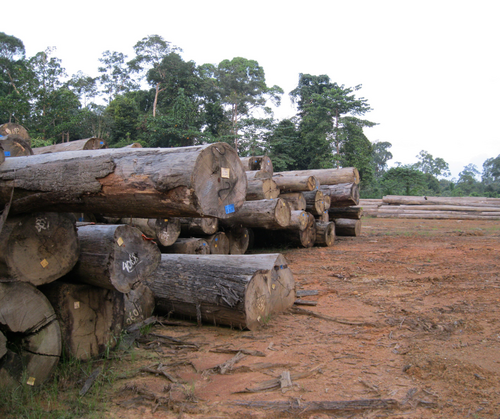
Despite long-standing concerns and warnings, in September 2025, the EU Commission and Government of Indonesia signed a Comprehensive Economic Partnership Agreement (CEPA), the product of nearly a decade of negotiations. Given the context in which this trade agreement will play out, civil society can be forgiven for fearing that the CEPA will be a bulldozer that rolls over Indonesia’s forests and vulnerable communities’ already-battered rights.
The exact contours of the deal are unclear as the official text has not yet been published; as it stands to affect the lives of almost a billion people worldwide, this is already a disturbing lack of transparency. Despite repeated requests, trade unions and civil society representing Indigenous and local communities could not participate in negotiations (FW 298) or help shape the final agreement.
The overriding commercial priorities are clear, however, on both the EU and Indonesian sides of the agreement. The CEPA fails to predicate EU market access on enforceable safeguards to support human rights or deforestation standards, a vast opportunity lost.
For the EU, this deal represents a leap forward in its scramble to secure access to Indonesia’s critical minerals, notably nickel and other raw materials needed to advance Europe’s clean tech and digital future and electric vehicle batteries, and to reduce dependence on China and an increasingly unpredictable United States. Notably, however, these minerals often lie under forests and Indigenous Peoples and local communities’ (IPLCs) ancestral lands.
The EU is also the world’s third-largest importer of Indonesian palm oil, a commodity caught by the EU Deforestation Regulation (EUDR), and within hours of the CEPA announcement, another shoe dropped: the Commission announced that the EUDR’s application could be postponed for another year, giving companies trading in relevant commodities (e.g., palm oil, timber) another year of forest destruction uninhibited by additional administrative burdens.
As for Indonesia, the 2020 Omnibus Job Creation Law and its secondary legislation had already legally cemented the prioritisation of commercial over community interests, streamlining permitting processes and sweeping aside social and environmental protections (FW 253, FW 259, FW 290). Deforestation is at its highest rate since 2021, most of it legally permitted, and the human rights situation is deteriorating.
The central government has dragged out the process for mapping and protecting IPLCs’ ancestral lands, and IPLCs commonly lack legal title that could help shield them from evictions. In 2025, 4,000 land disputes were underway in Indonesia, yet the capacity of affected peoples to seek judicial redress is restricted. IPLCs who have experienced land seizures and violence are frightened by their government’s implacably pro-business stance, which has increasingly relied on a military presence to back up its goals.
Indonesian civil society had hoped that the prospect of a strong EU stance on environment and human rights would bolster their efforts to protect vulnerable communities (FW 303). Instead, the CEPA strengthens commercial predominance to the detriment of human rights, environment and even Indonesia’s own efforts to encourage value-added processing domestically.
“The deal reinforces an extractive model which has already caused immense harm to Indonesia’s forests. It contains no tangible, foreseen benefits for those who have historically lost out when trade is liberalised – namely, Indigenous communities, smallholders and workers. Instead, it strengthens the already vice-like grip corporations hold over Indonesia’s forests,” says Fern’s Perrine Fournier.
The heated protests across Indonesia in September 2025 heightened fears that martial law could be imposed; it may be that the prospect of the CEPA offered an argument against the imposition of martial law that would have put an end to cooperation. But is that the best we can hope for with this international trade deal? We must insist on better trade deals and more equal partnerships that support a circular economy.
Catégories: Forest Watch, EU-Indonesia Free Trade Agreement, EU Partnerships, EU Regulation on deforestation-free products, Forest risk commodities, Indonesia