
To fulfil the Tropical Forest Forever Facility’s promise, Indigenous and local communities must be at the heart of its governance
11 juin 2025
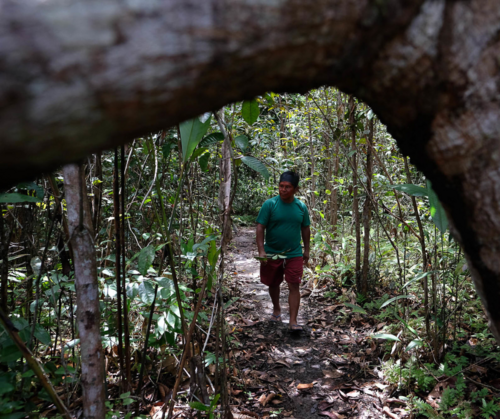
Joe Eisen, Executive Director of Rainforest Foundation UK, discusses the changes that are needed to enhance the new fund’s effectiveness in protecting forests and upholding forest communities’ rights.
In 2024, the world lost almost 6.7 million hectares of primary tropical forest – the fastest rate of deforestation ever recorded. Forests are still falling to mining, logging and agriculture, but for the first time, the leading cause of tropical primary forest loss is fire. As the climate crisis intensifies, burning forests pump more carbon dioxide into the atmosphere, further supercharging extreme weather.
With world leaders’ promise to end and reverse deforestation by 2030 well off track, a new US$125 billion investment fund to pay tropical countries to halt deforestation offers a lifeline for the world’s forests, and the Indigenous and local communities who live in them.
Brazil proposed the Tropical Forest Forever Facility (TFFF) at the 2023 COP28 climate summit in Dubai; it aims to keep forests standing by paying nations an initial annual fee of US$4 per hectare of forest they maintain, from a permanent endowment funded by sovereign and philanthropic capital and private investment.
The TFFF launch is expected to be a focal point of November’s COP30 climate summit, hosted by Brazil in the Amazonian city of Belém. Investors, tropical forest governments and the TFFF secretariat are currently refining details, which will likely be released late June. What is already in the public domain, however, raises environmental and social concerns.
Given the desperately high stakes, we should all want the TFFF to succeed. But unless these issues are addressed, its chances of doing so will be slim.
Inherent risks: A briefing prepared by more than 40 international environmental, human rights and Indigenous organisations lays out concerns and, crucially, how they should be tackled. To start, tying funding for tropical forests to future economic growth, interest rate fluctuations and the decisions of hedge fund managers is inherently risky. As should also be evident, investors in a fund intended to halt destruction of global forests should not contribute to planetary devastation in other ways, such as by holding investments in fossil fuels and other entities that fail to respect Indigenous Peoples’ rights.
To alleviate risks, the fund must exclude certain industries and investors. It should also adhere to Environmental Social and Governance standards such as those applied by the World Bank’s International Finance Corporation. Equally important: the fund must not repeat the failures of carbon and biodiversity markets, with TFFF investors using it as a substitute for efforts to curb their own environmental damage.
While the fund rightly respects national sovereignty — allowing beneficiary countries to use revenues from forest preservation (monitored via satellite) at their discretion — stronger environmental and social safeguards are clearly needed. Currently, the uniform 20% forest canopy cover threshold could allow countries to significantly degrade primary tropical forests through logging and other activities, yet still remain eligible for payments.
The TFFF must incentivise the protection and restoration of forests with high ecosystem integrity by requiring recipient countries to adopt robust national forest policies and invest in effective forest protection measures. That the TFFF does not incentivise harmful practices that undermine the rights of forest-dependent communities – militarised conservation, land grabs and criminalisation of traditional livelihoods – is crucial. An explicit commitment to uphold international standards, including the Cancún safeguards and the United Nations Declaration on the Rights of Indigenous Peoples, must be required.
An accessible, transparent and responsive grievance and redress mechanism is also needed to hold countries and investors accountable. The TFFF can build on the Green Climate Fund model – currently the most credible international standard.
Forest guardians: Overall, Indigenous and local communities plus civil society groups must figure more prominently in TFFF governance. They hold or manage more than half of the world’s intact forests, and studies show that they are the best custodians.
It is positive that about 20% of the funds are expected to be allocated to Indigenous and local communities. But for TFFF funding to reach its intended recipients, it must go directly to them to the largest extent possible, rather than through the intermediary of national governments, as now proposed. Moreover, funding mechanisms must be co-designed by Indigenous and local communities and civil society organisations, not imposed on them.
In short, Indigenous and local communities must move from the fringes of the TFFF to its heart, if the fund’s achievements are to match its ambition.
Image: Alberto César Araújo/Amazônia Real)
A previous version of this article was published by Mongabay.
Catégories: News, Forest Watch, Partner Voices, Finance for forests and peoples