Europe’s forests are ailing, and need a more rational approach
1 abril 2026
As it does every five years, Forest Europe has just released its 2025 State of Europe’s Forests report, compiled from the national inventories of the EU and 44 European countries.
As the successful battle to kill off the EU’s legislative proposal to harmonise forest data foreshadowed, the news is not good. The condition of Europe’s besieged forests, already battered by over-harvesting, climate change and pests, is not improving.
The State of Europe’s Forests 2025 (SoEF) shows that forests are shifting from older, resistant forests, to younger ones that are increasingly vulnerable to disease and extreme weather. On average, it finds, only 11.5% of stands are now considered mature – ominous also for the climate, as generally, younger trees hold significantly less carbon than larger, older trees.
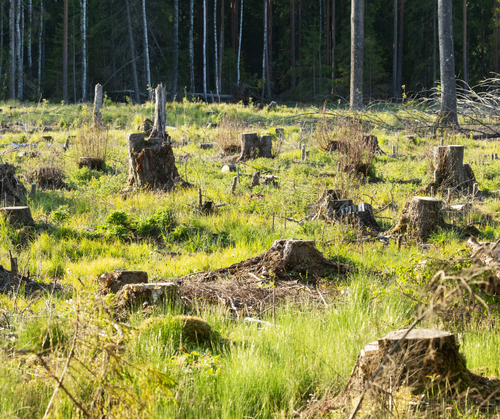
Clear-cutting is still the preferred method of forest ‘management’ and periods of regrowth between harvests are being curtailed. Even the SoEF’s hopeful note, that perhaps the share of the uneven-age category is up from 28.2% to 36.3%, comes with a disclaimer: this ‘improvement’ may reflect shifting definitions rather than reality. We cannot really know the situation without the ability to collect reliable data across EU Member States.
Against a backdrop of regrettable forest conditions and a worsening climate crisis, the SoEF notes that, both in volume and in pace, wood harvesting is increasing. The tug-of-war of conflicting policy aims – to preserve forests so as to meet EU climate targets (Land Use, Land Use Change and Forestry (LULUCF) and the Climate Law), while continuing to subsidise industries that burn them as biomass (Renewable Energy Directive III) and to allow them to be pulped for single-use packaging (FW 292) – is being lost by the forests.
The 2025 SoEF appears to uphold criticism of the forest sector’s claims to be providing jobs, finding that between 2000-2020, employment in the sector shrank by 25%, while the share of GDP went from 1.13% to 0.83%. As for how biodiversity is faring? SoEF data cannot offer insights for improved implementation of Natura 2000, the Birds and Habitats directives and the Nature Restoration Regulation, as they do not differentiate between managed and protected forests.
Throughout the report, an obstacle to sensible decision-making becomes evident: despite the valiant efforts of individuals across Europe to collect pertinent information, the most recent data for insect outbreaks, forestry jobs, logging rates and other subjects date back to 2020 – out-dated even before they are published.
One conclusion must be drawn from the SoEF, implied but unavoidable: it was reckless to allow the forest industry to drown out climate and nature scientists’ measured logic, and to kill off proposed EU Forest Monitoring legislation (FW 309). Accurate, comparable data are the cornerstone of sensible policymaking, and a solution must be found for their collection. Our obligation to future generations is to do better.
As the world tilts inexorably towards biodiversity and climate collapse, SoEF’s findings lead to another, obvious conclusion that Fern has long advocated: Policy-makers must find the courage to shift financial and other incentives away from over-industrialised forest management and clear-cutting to close-to-nature forestry, which will enhance rural livelihoods while giving nature the breathing room to flourish.
Image: adamikarl/Shutterstock
Categorias: News, Forest Watch, Close-to-nature forestry, European forests