
The EU is scrambling to secure the critical raw materials needed for the energy transition and defence. But in Finnish Lapland this quest threatens to destroy precious habitats and traditional livelihoods, as Perrine Fournier, Anna Muižniece and Dhany Alfalah discover.
The tranquil beauty of Viiankiaapa’s remote marshlands - which lie 150 kilometres north of the Arctic circle in Finnish Lapland - is in stark contrast to the growing commotion over their future.
This vast wetland is home to a precious ecosystem, teeming with rare and endangered birds and plants.

As such, Viiankiaapa is a Natura 2000 site: part of the largest network of protected areas in the world, established by the EU to offer a haven for Europe’s most valuable species and habitats against the relentless advance of logging, mining and hydropower.
But this protection - as well as that provided by Finland’s national mire conservation programme - could soon dissolve in the face of economic and geopolitical pressures.
The EU is desperate to secure a supply of the critical raw materials needed for the clean energy and digital transitions, as well as for weapons systems.
In order to do so, in 2024 it passed the Critical Raw Materials Act (CRMA). Following this, in March 2025, the European Commission announced 47 Strategic Projects: sites across 13 EU member states where procedures for mining for key metals and minerals will be streamlined.
Among them is Anglo-American’s Sakatti project in Finland, where the mining company expects to start extracting copper, platinum group metals and nickel - materials expected to be used for electric batteries, wind turbines, weapons systems and artificial intelligence (AI) - from the early 2030s.
Part of the deposit, however, lies under Viiankiaapa’s rich peat bog ecosystem, which developed as glacial rivers and a lake in the area melted at the end of the late Ice Age.
As a result, a fault line has emerged between those in favour of the mine, and those who argue that destroying an ecosystem that’s evolved over thousands of years for the short-term needs of the car and defence industries cannot be justified.
They say that the credibility of nature conservation in Finland and across the EU, is at stake.
Viiankiaapa, moreover, is not an aberration.
The same issues playing out in Finnish Lapland are materialising across the globe, as the environmental and human cost of the scramble for critical raw materials becomes clearer - and the need to reduce demand for minerals becomes more urgent.

Assailed from all sides
Viola Ukkola, a 23-year-old reindeer herder and researcher at the University of Lapland’s Arctic Centre, is acutely aware of the negative impact that mining can have on peoples’ lives and livelihoods.
“In Sodankylä, we have this case of the resource curse: when the place becomes dependent on one resource,” she says, referring to locals’ heavy reliance on mining for their livelihoods.

Ukkola is steeped in a reindeer herding tradition that stretches back generations in her family, and which she absorbed from a tender age from her grandparents.
“In the last 50 years or so there’s been a huge change in herding because of modernisation,” she says, citing the use of snow mobiles, all-terrain vehicles and GPS collars on reindeer. Yet at its core, the working life of the herding cooperative Ukkola is a member of would be familiar to her forebears.
Their reindeer meat is still sold or eaten. Reindeer skins still provide warmth, while antlers and bones are used for utensils and handicrafts. The cooperative’s herds still graze on lichen from trees. And the herders themselves still have an intimate relationship with the natural world.
“Reindeer herding is so connected to nature, the environment, the weather, the climate, the pastures,” Ukkola says. “Nature is the basis for life.”
Yet in recent years, this connection has been assailed from different directions, including intensive logging and climate change. The Sakatti mine will be situated on land next to where Ukkola’s cooperative’s reindeers graze, and dust and pollution from the mine will affect the growth of lichen, Ukkola says. The impact will be even worse for their neighbouring Oraniemi [reindeer] cooperative, as the mine will located on their lands.
Sodankylä sits just 90 kms away from the traditional homeland of the Sámi, the northern most Indigenous People living in the EU. But while the extractive industry is more reluctant to invest in their territory, known as Sápmi, because of the protections afforded the Sámi under international law, Sodankylä is fair game – despite also being home Indigenous Peoples and deeply rooted local communities.
“As reindeer herders, we feel our voices have not been heard. Our suggestions have not been considered in the [mine’s] environmental impact assessment… Reindeer herding is not valued by the Finnish government or society,” said Ukkola.
Economic questions
Ukkola, however, is probably among a minority of Sodankylä residents who view the Sakatti mine as a threat to her livelihood.
Nearly three-quarters of locals surveyed in a recent poll thought mining in the municipality was acceptable, and just over half (52%) were not opposed to mining a Natura 2000 site.
Yet according to research by Mikko Sipilä, a Professor at the Institute for Atmospheric and Earth System Research at University of Helsinki and member of the Sodankylä Municipality Council, claims regarding the exceptional nature of Viiankiaapa’s deposit are overblown.

Sipilä has calculated that the indicated resources of the mine’s largest product, copper, would satisfy global demand for just three days. What’s more, only a fraction of the mine’s copper output would go to producing clean energy products. At best, he estimated, the mine would advance the green transition globally by one day.
The race for critical minerals is not only being driven by the demands of a low carbon digital economy, but by the those of weapons manufacturers: the same minerals essential for Electric Vehicles and wind turbines are used in weapons systems. And Sodankylä’s relative proximity to the Russian border means that the fears of the looming threat from the east are palpable here, and the race for armaments is assuming greater urgency.
“I'm not categorically against mining,” Sipilä explains. “I'm categorically against mining performed in the most valuable natural areas. We need to get rid of fossil fuels. We need a transition to greener ways of making energy. But it cannot come at the cost of nature, biodiversity and clean waters.”
Establishing ‘no-go zones’ to stop mining for critical raw materials in ecologically rich places, is a solution that could help stop these areas being destroyed around the world. Yet in Viiankiaapa, so far this has not halted plans for the mine.
“This is [already] a ‘no-go zone’ based on our law. I don't understand how somebody can imagine coming here and demanding that our government change its laws, remove these ‘no go zones’… There is no other way around this crisis other than by decreasing the demand [that is driving it],” he says.
In the EU this could mean, for instance, reducing reliance on the critical raw materials used to power electric vehicles (EVs), through limiting car and battery size, promoting low deforestation batteries, and soft transport solutions, such as car sharing and promoting public transport.
Mining in Viiankiaapa would set a dangerous precedent, Sipilä says.
“The Sakatti case is about the credibility of Finnish nature conservation. If that mine’s established, it would open the way for other mining companies or other industries to enter areas which are meant for nature conservation, not for industrial operations.” Sipilä intends to use his role on the local council to explain to the community “why [the mine] not only threatens our environment and our people's ways of life, but the credibility of nature conservation in Finland and even in the whole of the EU.”
Awareness
One person has probably done more than anyone to raise awareness of the threat the Sakatti mine poses: Riikka Karppinen, an environmental activist whose father is a miner, who has been a member of Sodankylä’s municipal parliament for 12 years, and who’s married to Sipilä.
When Karppinen was ten years old, Anglo American was granted permits to explore Viiankiaapa.
“I already thought in that moment that I would not accept mining there. In my childhood the area was like my backyard, where my family would pick berries, go fishing and so on,” she says.

At 15, she began campaigning against mineral exploration in Viiankiaapa, writing to Finnish politicians, visiting the Parliament in Helsinki, and attracting international coverage for the cause.
“It started with just an idea that I would like to do something for this nature near our village. After that, it just grew and it became a big campaign for Viiankiaapa.”
It’s not that we would like to stop forestry and mining here, but it’s about better regulation for these big industries. Lapland has always been the place where big companies come and take natural resources from us. From forestry to the water energy industry making dams in our rivers, and now mining. People who live here feel there’s another way of taking these natural resources out of Lapland."
Legal fight
The European Commission has declared the Sakatti mine is “strategically important” and stated that extraction can take place there despite its Natura 2000 status, because of “overriding public interest”.
In autumn 2026, the Finnish Government is set to decide whether mining can indeed occur.
“If the government wants to revoke these laws, then, of course, we have to complain about it to every court. We have to take this as far as we can,” says Karppinen.
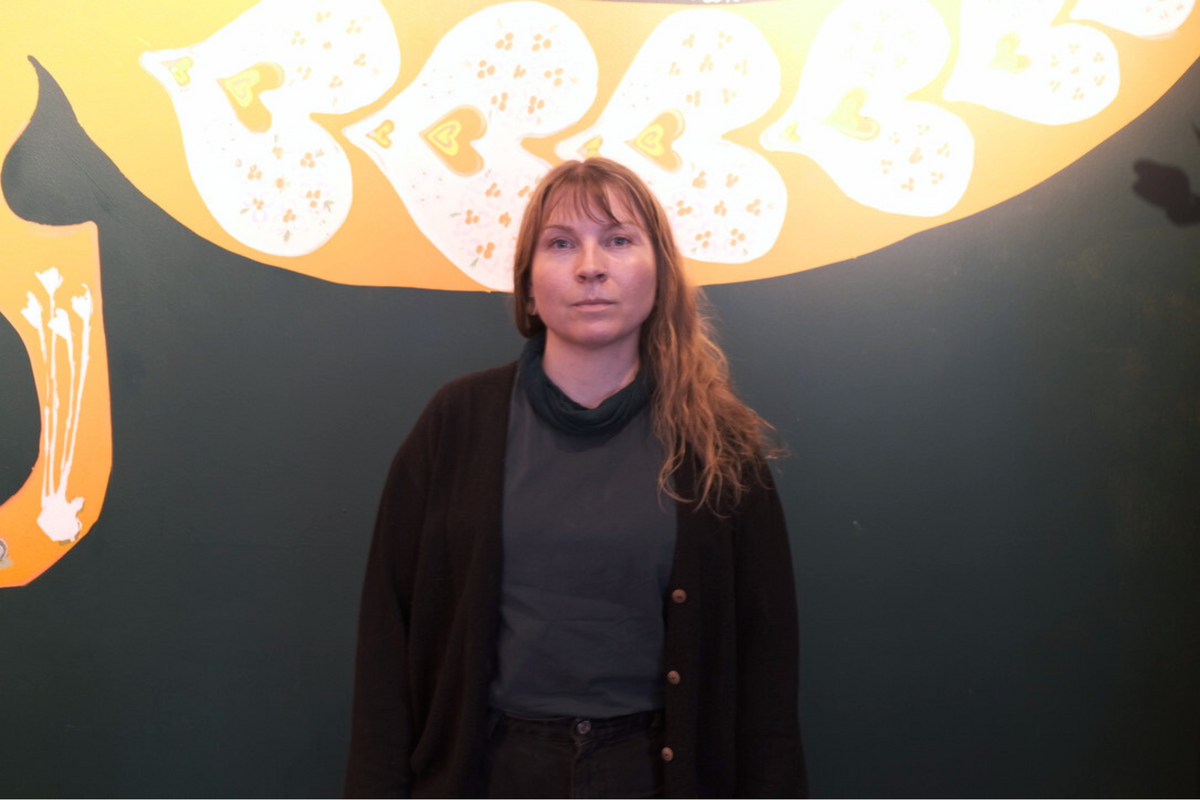
Among those also involved in this legal battle is Sisli Piisilä, an environmental engineer and the Executive Director of the Suomen luonnonsuojeluliitto (Finnish Association for Nature Conservation) in the Lapland region.
Piisilä is involved with a number of court complaints and appeals on mining, including over Viiankiaapa.
“There’s a power imbalance affecting a lot of these discussions, because the mine is offering us jobs… In Finland, the municipalities have the option to say no to the mine, but, of course, we already know that this will not happen. They are going to say yes to every mine, [which] will mean that they have this boom of investments for a short period of time and then nothing.”
She explains that the project’s CRMA ‘strategic project’ status will not necessarily ‘fast track’ Anglo American’s permitting process. Legislative changes will first be required for both Natura 2000 and Finland’s mire conservation programme.
“If there is this fast tracking… we are going to appeal to every court that we can.”
Perrine Fournier is a Mining Campaigner and Anna Muižniece is a member of the communications team at Fern.