
Publications
How to stop gold from causing deforestation: lessons from agriculture & timber
Why does the gold sector need better oversight?
Recent gold price increases have increased both production and its negative impacts: deforestation, pollution, ill-health, community disruption, illegality, tax evasion, smuggling and corruption. Gold has also become a major channel for money laundering, sanctions evasion, financing of armed groups, and human and drug trafficking. Efforts to tackle the problem still lag behind its scale and remain uneven and fragmented.
The environmental and climate impacts of gold mining, particularly on land-use and forests have received less attention. And yet, the overlap between known gold deposits and forests means that this impact is likely to grow.
Problems of illegality, criminality, unsustainability and, in some case, links to armed conflict, have also characterised the production of forest risk commodities (such as timber and agricultural products) commonly associated with deforestation and widely traded internationally, including beef, cocoa, palm oil and soy. Over the last 25 years or so, efforts have been made to tackle these problems, including measures to improve forest and land governance – addressing the underlying drivers of illegal and unsustainable behaviour – and to exclude illegal and/or unsustainable products from consumer markets.
This summary report sets out the lessons that those working on gold can learn from previous efforts on forest risk commodities. Recommendations are outlined for each stakeholder group.
Key recommendations
- Replace voluntary schemes with binding market rules: Consumer countries should set clear, binding market rules
that exclude illegal and unsustainable gold, just as they have for timber and some agricultural products. Make
traceability and due diligence the core requirement. - Focus on governance: Producer countries should move beyond law and order responses towards broader reform of
how land, forests and minerals are governed. - Sustain long-term governance reforms. Donor governments can support the governance reforms that
producer countries need, as they did for timber and are now doing for the EUDR. - Strengthen internal company processes: Companies can strengthen their own due diligence, going beyond
certification schemes, disclose their suppliers, improve traceability and engage in transparent auditing. - Build a shared international framework. Consumer rules, producer reforms and the incentives linking them
should be jointly owned. The UK Illicit Finance Summit 2027 should be a platform to launch a collective action agenda of the willing.
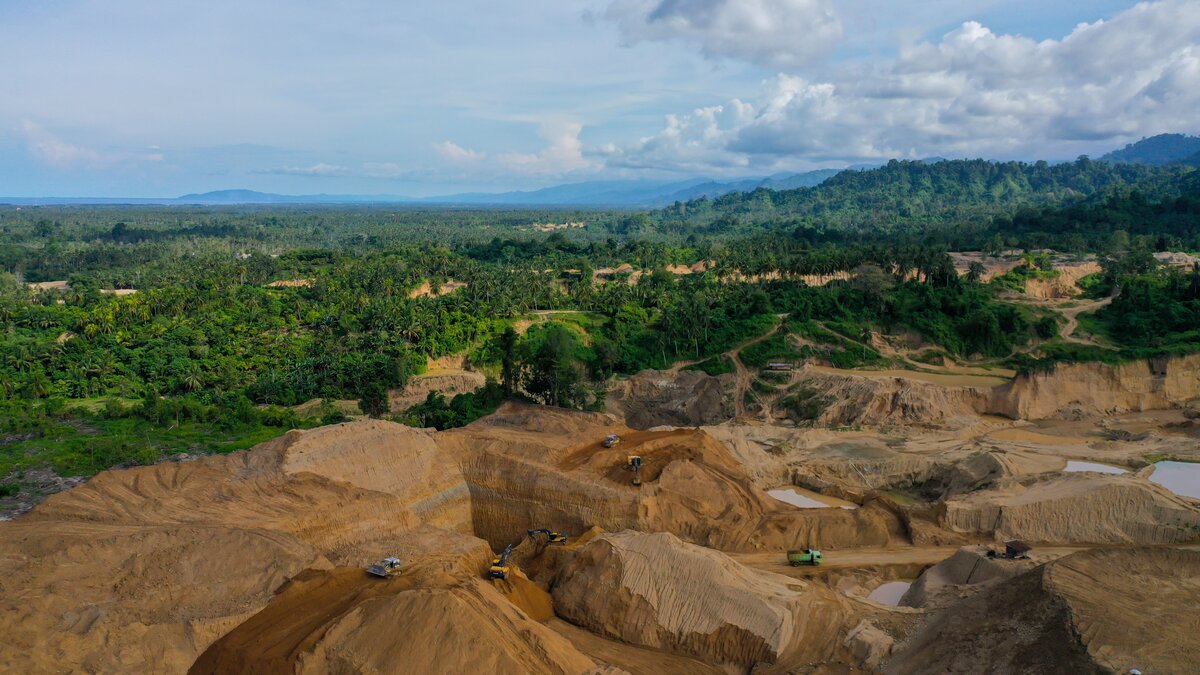
Image: Shutterstock | bangoland
How can gold-consuming countries stop deforestation caused by gold?
Replace voluntary schemes with binding market rules: Consumer countries should set clear, binding market rules that exclude illegal and unsustainable gold, just as they have for timber and some agricultural products. Make traceability and due diligence the core requirement.
Private-sector initiatives are valuable ways to demonstrate proof of concept, pilot policies and systems and raise awareness of problems and potential solutions. However, for forest risk commodities, it was clear that these approaches would only cover part of the supply chain, and were vulnerable to undercutting by less responsible businesses. This led relatively quickly (compared to other sectors) to government regulation with the aims of excluding illegal and/or unsustainable products from consumer markets and increasing incentives for both companies in the supply chain and producer-country governments to clean up the sector.
For forest risk commodities, these measures have included the market bans and due diligence requirements of the EU Timber Regulation (EUTR), the EU Deforestation Regulation (EUDR) and the US Lacey Act, as well as the legality verification and export licensing systems of the VPAs, reinforced by public procurement policies. Some due diligence laws, including the EU Corporate Sustainability Due Diligence Directive, require companies to support and provide targeted assistance to their business partners and suppliers rather than simply shifting compliance burdens on to them.
As above, the most far-reaching measures have largely been confined to the EU, but Europe is still a significant market, as can be seen by many producer countries’ reaction to the EUDR (such as undertaking policy and legal reforms, improving forest mapping and farmer registration and establishing government traceability systems). The EU and US adoption of such measures has encouraged the adoption of legislation in Australia, China, Japan and Korea.
The gold sector sees a much more limited range of public-sector regulations, and some of those, such as the EU Conflict Minerals Regulation, suffer from serious weaknesses. Partly this may be explained by the challenges of establishing effective traceability mechanisms, but the EUDR has shown that by placing and enforcing clear obligations on companies placing products on the EU market, companies and governments, can be incentivised to reform their practices, often after initially denying it was possible.
Some movements towards demand-side regulation are also happening in the gold sector. The US is considering a Legal Gold and Mining Partnership Act that would aim to curb illegal gold mining in the Western Hemisphere. Switzerland is also in the process of revising the Precious Metals Controls Act to bring it in line with OECD Guidelines.
Governments and international bodies can also help address gaps in trade statistics, customs reporting and production data that lead to the opacity on which illicit gold markets depend.
Some public-sector bodies themselves may have a role to play in sourcing responsibly produced gold – mainly central banks, which in recent years have helped to drive the gold price upwards by expanding their bullion reserves. While central banks do have some mechanisms available to support responsible sourcing, principally purchasing through LBMA-accredited refiners and emerging initiatives such as the World Gold Council London Principles, there is currently no comprehensive or universally applied system guaranteeing that gold reserves have been responsibly sourced.
What can gold-producing countries do to stop gold mining causing deforestation?
Focus on governance: Producer countries should move beyond law and order responses towards broader reform of how land, forests and minerals are governed
Most government action on gold production has centred on increasing law and order, including inspections, seizures and operations directed at illegal miners and traders inside producer countries.
The main lesson from similar efforts in the timber sector, however, was that the problems derived fundamentally from governance failures: weak institutions, corruption, poor law enforcement, unclear legal frameworks and limited participation from civil society.
Efforts evolved from a narrow enforcement focus towards broader land and forest governance reform, building a shared vision around the legitimacy of the system and a framework for continuous improvement of policies and institutions.
Key activities included establishing or strengthening multistakeholder deliberative processes, land tenure reform and clarification, inter-ministerial coordination, independent monitoring, and developing national land use planning laws and plans, national sustainability standards, and national traceability systems. The same approach is being applied, in some places, to agricultural commodity production.
To sustain the necessary long term political will to follow through on these deep-seated governance improvements, it was helpful that major consumer governments recognised progress through partnerships and demand-side measures.
Producer and Consumer governments need to agree how to tackle the problem together, with a clear plan of action and milestones. Over time, this can build increased understanding of the depth of the issues and the challenges faced, stimulate problem solving, identify the support needed and increase trust in the actions of the other party, as well as more confidence in the outcomes. This takes time and long-term commitment.
Much can be learned from the EU’s bilateral Voluntary Partnership Agreements (VPAs), trade deals between the EU and timber exporting countries aimed at tackling illegal logging and the illegal timber trade. VPAs committed the producer country and the EU to a joint milestone-based programme: a legality definition negotiated through a multistakeholder process, phased reforms to forest laws, an independent audit function and, eventually, a legality verification and export licensing system.
An important aspect was the focus on legality. Implementation of the producer country’s own laws was addressed, rather than imposing objectives or standards on it from the outside.
The same diagnosis clearly applies to gold mining. Although illicit activities can take place in large-scale mines, it is much more widespread in the rapidly growing Artisanal and Small-Scale Gold Mining (ASGM) sector. Illegality is driven not simply by weak enforcement capacity but by the underlying economic pressures on miners, the profits available to (sometimes) criminal intermediaries, and, in many cases, corruption within the licensing and enforcement system itself. The various efforts to formalise the ASGM sector can tackle these problems, but the aim of the process in some cases appears to be little more than increasing government revenue.
Efforts to increase good forest sector governance teach us that although governance reform is slow, resource-intensive and politically demanding, there is no credible substitute. A focus only on regulating supply chains without a joint and shared analysis of the problems and ways forward would not lead to the required changes and would risk entrenching existing injustices. For gold, donor and consumer-country support could aim to enhance governance capacity, ensure clarity over land and mineral rights, and improve inter-agency coordination, anti-corruption measures and independent monitoring. Experience from the forest sector also shows the value of involving local communities, particularly women, and civil society, ensuring that the perspectives of affected communities guide decision-making, contributing to a better problem-solving environment, a central foundation to increasing responsibility within the ASGM sector. In turn this requires stakeholders to have sufficient information and capacity to follow the relevant processes and enable joint monitoring.
Initiatives such as the UK-Ghana Gold Programme, the Multi-Stakeholder Partnership Initiative for Sustainable and Responsible Artisanal and Small-Scale Gold Mining, the Global Coalition for Action on ASGM and the proposed US Legal Gold and Mining Partnership Act all address some issues related to governance. Experience from the timber sector shows that they will be most effective where joint time-bound workplans with agreed definitions, phased reforms and independent scrutiny are built in from the start.
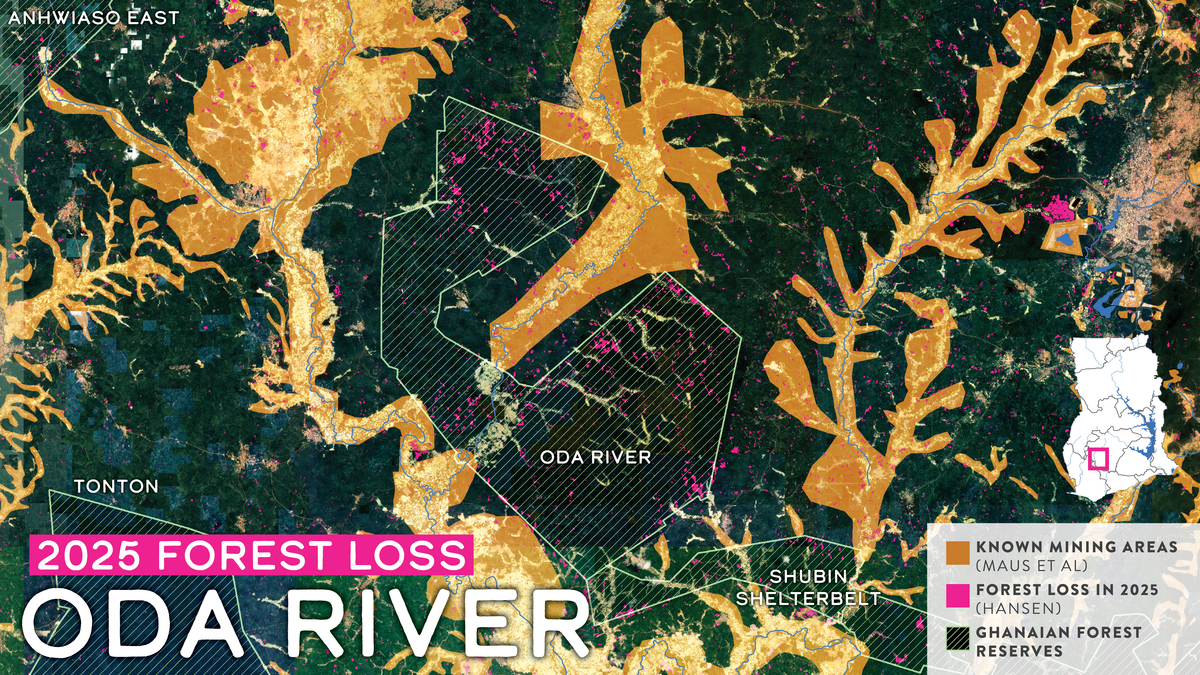
Image: Zachary Ammerman
How can donor governments help reduce deforestation from gold?
Sustain long-term governance reforms. Donor governments can support the governance reforms that producer countries need, as they did for timber and are now doing for the EUDR.
Far-reaching governance improvements generally need external support, which can be delivered through development cooperation, reinforced by the pressure created by demand-side measures. VPAs included the delivery of financial and technical capacity-building support, assisting partner countries to reform their laws, policies and governance frameworks and to establish legality assurance and export licensing systems. The same kind of support is being made available, somewhat belatedly, to help producer countries prepare for the entry into application of the EUDR, through the Team Europe Initiative.
Development cooperation programmes for gold mining have generally focussed on formalising artisanal and small-scale operations, eliminating toxic mercury and improving local economic benefits. Examples, as mentioned above, include the UK-Ghana Gold Programme, the Multi-Stakeholder Partnership Initiative for Sustainable and Responsible Artisanal and Small-Scale Gold Mining, the Global Coalition for Action on ASGM and the United Nations Environment Programme’s planetGOLD programme.
How can companies help stop gold from causing deforestation?
Strengthen internal company processes: Companies can strengthen their own due diligence, going beyond certification schemes, disclose their suppliers, improve traceability and engage in transparent auditing.
Company and industry responsible-purchasing policies and certification systems helped develop demand-side measures for forest risk commodities and gave preference to legally or sustainably sourced products. They also spurred traceability and reporting systems. These have been most common in Europe, though the Amazon Soy Moratorium in Brazil has been a striking success in a major producer country.
Gold has many voluntary frameworks, certification schemes and systems of due diligence: the London Bullion Market Association (LBMA) Responsible Sourcing Programme and Responsible Gold Guidance, LBMA’s International Bullion Centre Recommendations, the Responsible Jewellery Council (RJC) Code of Practices and Chain of Custody standard and the Fairmined, Fairtrade and Swiss Better Gold standards for production and requirements for traceability. So far, however, these have had only limited impact, and they are increasingly under fire. They are mostly confined to European and North American businesses, often do not extend through all stages in the supply chain and frequently suffer from weaknesses in design, auditing and enforcement.
Complex supply chains, and large volumes of so-called recycled gold make origins hard to trace. Researchers and NGOs have called for:
- due diligence standards including the Organisation for Economic Cooperation and Development (OECD) Due Diligence Guidance for Responsible Supply Chains of Minerals from Conflict‑Affected and High‑Risk Areas recommendations
- industry bodies such as the RJC, the Responsible Minerals Initiative (RMI) and the LBMA to require refiners to disclose the names of gold suppliers in red flag locations and beyond
- better and more transparent auditing
Traceability is achievable. Systems have been set up to trace forest risk commodities to plots of land, spurred by the need to demonstrate this information to trade with the EU, despite supply chains including hundreds of thousands of smallholders. Technological developments may also help, with the emergences of systems like xTrace, which uses trace elements in samples of ore to verify whether mined precious metals truly originate from their declared source. Similar methods have been used for forest risk commodities, with DNA testing or isotopic analysis used in some cases to prove (or disprove) origin claims.

Image: RAID UK
What would an effective international approach to gold look like?
Build a shared international framework. Consumer rules, producer reforms and the incentives linking them should be jointly owned. The UK Illicit Finance Summit 2027 should be a platform to launch a collective action agenda of the willing.
The timber sector’s overarching plan helped: in the early 2000s, the World Bank-led Forest Law Enforcement and Governance ministerial meetings raised the profile of illegal logging and created space for further discussion and joint concrete measures such as the Forest Law Enforcement, Governance and Trade action plan. The EUDR and accompanying Team Europe Initiative is now having a similar effect, stimulating a range of studies and proposals, as well as responses from producer countries, even though they have no direct responsibilities under the Regulation. There has also been a series of international declarations and commitments, including the New York Declaration on Forests (2014) and the Glasgow Leaders’ Declaration on Forests and Land Use (2021).
There is nothing comparable for gold, though the Illicit Finance Summit scheduled for 2027 may provide a platform.
In summary, experience from forest risk commodities point in the same direction:
- consumer-market rules need to be clear, binding, hard to evade and ideally jointly owned with producer countries;
- producer-country governance reform needs to be resourced, jointly owned and realistically paced;
- multistakeholder and community/women’s inclusion needs to be built into both;
- and the incentives connecting the two need to be real and to reach enough volume to make compliance worth the cost.
- In all cases, traceability is essential.
Contact us
-

Hannah Mowat
Hannah Mowat
Hannah Mowat has 15 years’ experience facilitating networks and campaigning for stronger energy, climate and forest policies in European NGOs and think tanks. She has published numerous reports and articles on finance and land rights, carbon trading, biodiversity offsetting and negative emissions. She previously worked at Friends of the Earth and the Munden Project, and lives in Paris. She is a certified conflict resolution mediator and is exploring ways to use that thinking to facilitate the environmental and social transition. Her work currently focuses on mining and gender.
- Languages: English, French, Portuguese, Swiss German