As price of gold mounts, so do threats to forests and peoples
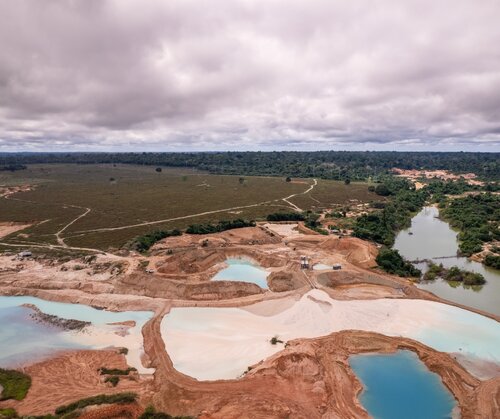
Over the past decade, gold became the largest mineral-related driver of deforestation – and that was before recent geopolitical instability increased demand and the price of gold doubled.
Systematic analysis of the correlation between off-the-charts gold prices and deforestation levels is unavailable, but on-the-ground analysis of gold-producing countries, such as Peru, shows an unsurprisingly perfect correlation. As with other forest-risk commodities, when prices increase, so does forest clearance – especially in the absence of clear dissuasive market regulation and good governance. Indigenous Peoples and local communities are the first harmed, through land-grabbing, poisoning of food and water (FW 310), and deep insecurity.
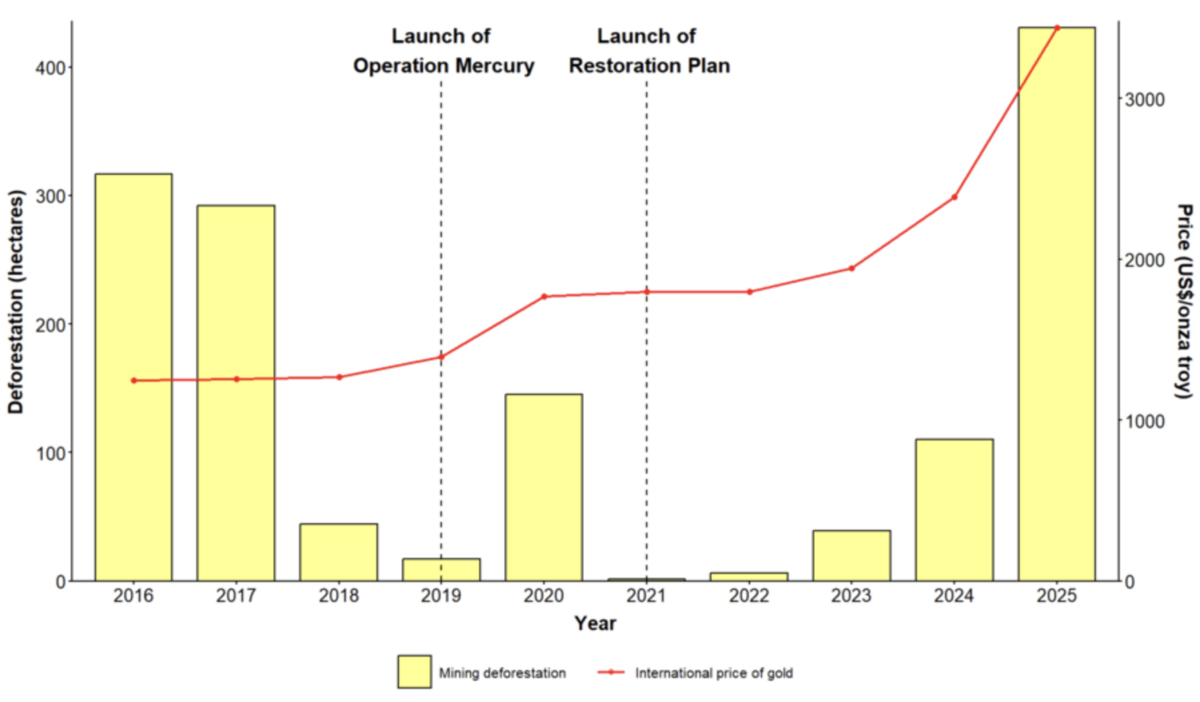
Graph 1. Mining Deforestation in Tambopata National Reserve. Data: ACA, ACCA, BCRP, CINCIA, MapBiomas Perú.
Deforestation aside, other concerns with the commodity are rising: its strategic use as a financial vehicle for organised crime, sanctions evasion and political corruption. Gold is portable, hard to trace, immune to financial sanctions and exists in a regulatory grey zone. For criminal organisations from drug cartels to Russian paramilitary groups, it functions as a parallel financial system, outside the reach of banks, regulators, and the Society for Worldwide Interbank Financial Telecommunication (SWIFT) network.
In this context, a global coalition of civil society organisations (CSOs) working on environmental crime and corruption, including Fern, developed a roadmap to address the acute problems mining and trade of illicit gold creates.
Recommendations are primarily addressed to the UK as being the centre of the world’s largest over-the-counter gold market makes the UK Government uniquely exposed to illegal gold’s risks, but also well positioned to offer solutions through domestic policies and international partnerships. The UK will take on the presidency of the Financial Action Task Force in June 2026, and the G20 in December; both are important opportunities to promote improved gold governance.
Key recommendations include that governments should:
Build binding multilateral agreements between priority countries to address illegal gold-mining’s root causes, develop national traceability systems, identify legal and law enforcement gaps, and tackle the systemic poverty driving small-scale miners into illegal supply chains.
Criminalise the import, export or purchase of gold produced in violation of exporting countries’ laws and treat such infringements as a predicate offence for money-laundering.
Make gold-smuggling harder by bolstering declaration requirements for travellers carrying gold.
Increase awareness and oversight of the financial sector and undertake reforms to improve data transparency from refiners.
Strengthen ownership transparency with open, publicly accessible registers of who owns companies involved in gold trading and refining.
Strengthen intelligence sharing and enforcement among international public-private partnerships as part of a multi-stakeholder approach to tackling illicit gold including civil society.
Recommendations also address International Bullion Centres, the largest gold-trading hubs (China, Hong Kong, India, Japan, Russia, Singapore, South Africa, Switzerland, Turkey, UAE, UK, and USA):
Create a shared global standard for responsible gold-trading across international companies, requiring all refiners to disclose sourcing/supply chain practices.
Close the recycled gold loophole and require enhanced due diligence and public reporting of credible evidence of human rights abuses linked to a mine, refiner or supplier; require detailed reporting for recycled/scrap gold supply chains, currently exploited to launder illicit gold.
The CSO coalition also recommends that commercial and investment banks make clients accountable for gold in their portfolios by requiring due diligence reports for gold held or traded, in line with anti-money laundering standards; and mandate publicly accessible whistleblower and grievance mechanisms.
Banks, governments, companies and communities are increasingly concerned with gold’s dark web of impacts. The time has come for stronger regulation.
Join us at London Climate Week on 25 June 2026 for an event to explore these issues in more depth!
Image: PARALAXIS/Shutterstock
Categories: News, Forest Watch, Critical minerals