EU: Undoing climate policy and pulping forests
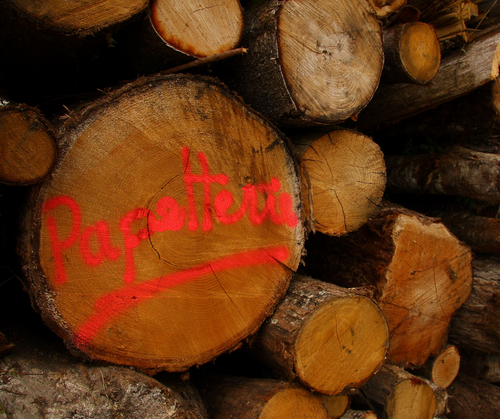
Since September 2025, the EU has set itself on a course to diminish the climate ambition of its Land Use, Land Use Change and Forestry (LULUCF) sectors in response to industry pressure.
Early on 5 November 2025, even the Environment Council took up this call, stating that the Commission should pay particular attention to the competitiveness of “traditional industries, notably ... pulp and paper”. We believe it is more important that EU Institutions pay attention to the public interest of some 450 million Europeans, and to defending climate policy as COP30 gets underway.
The Governments of Finland and Sweden placed a target on the EU’s forest carbon sink ambition with a letter to the Commission outlining that they will not meet LULUCF goals, blaming changes in forest age structure, climate change, droughts, pests, decreasing forest growth, and Russian aggression that increases prices and demand for forestry products.
They fail to mention the increased harvesting that is a principal cause of forest degradation and has severely degraded their land-use sectors – Finland’s to the point of becoming a net emitter of carbon, while Sweden’s forest carbon sink is in free-fall.
Finnish and Swedish NGOs responded swiftly, debunking their governments’ arguments, outlining the amount of megatons of carbon dioxide equivalent they will miss their targets by, and underscoring that the failure is a choice their governments are making, despite alarms raised repeatedly by scientists and experts. Rather than take recommended corrective measures, the Finnish and Swedish Governments are working to weaken the LULUCF Regulation.
“This is not a passive failure caused by circumstances. Land use sector sinks have been undermined through political choices which are contrary to given scientific advice and the EU’s and national climate targets”.
International NGOs agreed: 54 signed a letter that stressed the vital contribution of the LULUCF sector to the EU’s 2040 climate commitments, and the danger of placing the interests of a single industry above long-term societal health and resilience, or even “the long-term economic resilience of Nordic forestry.” They alluded to many misrepresentations in the governments’ letter – some contradicted by Sweden’s own Parliamentary Commission (SOU 2025:21); e.g., despite ‘key jobs’ claims, increasingly industrialised forestry employs “fewer and fewer people while extracting ever-greater quantities of forest biomass”.
To no avail. Commission President Ursula Von der Leyen sent her own letter to Member States leaders as they headed to debate new emissions-reduction targets for 2040, indicating that LULUCF will be made “realistic and feasible”.
On 24 October, the European Council followed suit, issuing conclusions that highlighted their commitment to Europe’s competitiveness – without mentioning the subsidies that prop up the bioenergy industry and distort competition for wood. They also welcomed Von der Leyen’s letter about revising LULUCF ambition downwards.
The EU and Member States could do many things to support foresters and the forest-based sector to thrive such as ending the billions in yearly subsidies spent on burning wood for energy, that leave wood as a scare resource. The subsidies could be redirected to help close-to-nature foresters compete against destructive industrialised forestry.
We continue to pulp forests and undo climate policy at the behest of the large industry, but by the EU’s own polling, in 2025, 81% of EU respondents support EU climate neutrality by 2050 – margins that any politician should take note of. That this LULUCF defeat comes on the heels of the pulp and paper industry’s victory with Packaging and Packaging Waste (FW 291), and industry success in ditching the Forest Monitoring proposal (FW 309) is ample evidence that they will just move on to the next piece of inconvenient legislation.
Image: Christopher Taylor/Alamy
Categories: News, Forest Watch, European forests