What does the EU Deforestation Regulation mean for China–EU Trade and global supply chains?
Despite the EUDR application date being delayed until December 2026, new research shows its effect is already being felt in China, writes Isabel Nepstad of BellaTerra.
As the EU’s Deforestation-free Regulation (EUDR) moves toward implementation, its implications are being felt far beyond Europe’s borders. For China, a major importer, processor, and exporter of forest- and land-use–related commodities, the Regulation poses both a substantial compliance challenge and a strategic opportunity to advance sustainable, resilient supply chains.
To support informed dialogue and on the ground action, Fern worked with BellaTerra Consulting, to produce a new report, Insights on the EUDR Requirements for Trade Flows Linked to China. The report, which was released in early January, provides a comprehensive overview of how the EUDR will affect trade flows between China and the EU. It focuses particularly on wood, rubber, and leather products, as these sectors are deeply embedded in global value chains and highly exposed to deforestation and land-use change risks.
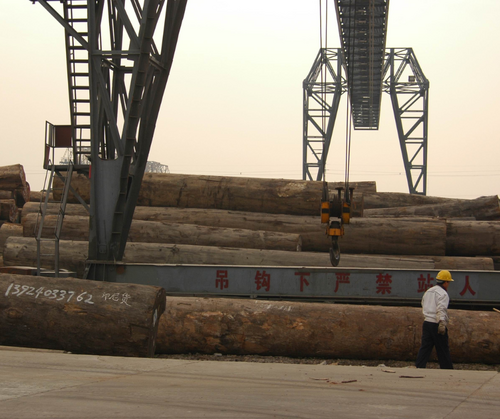
Although the EUDR currently only applies to products placed on or exported from the EU market, its reach is inherently global. China plays a central role as a processing and re-export hub for commodities such as timber, natural rubber, and leather, sourcing raw materials from regions including Southeast Asia, Africa, and Latin America before exporting finished goods to the EU.
The report indicates that China's annual exports to the EU amount to approximately €7.1 billion in wood-based products and €4.01 billion in rubber-based products, including furniture, paper, tires, and industrial goods. These products are subject to the EUDR's due diligence requirements, which mandate traceability to the plot of origin, proof of legal sourcing, and evidence that production is free from deforestation after the EU's cut-off date.
For businesses, policymakers, investors, and industry associations, understanding how these requirements interact with China's existing trade structures, policy environment, and corporate practices is essential for maintaining market access and managing long-term risk.
Key insights from the report
Using official trade data, policy analysis, and company case studies, the report identifies several structural challenges that Chinese companies face as they prepare for the EUDR. The report finds that the primary challenge for China-linked exporters under the EUDR is supply chain traceability, due to complex, multi-tier sourcing structures and gaps in land-use and geolocation data. These issues also disproportionately affect small and medium-sized enterprises (SMEs).
Although larger companies are better equipped to absorb compliance costs, uneven certification systems and the absence of a unified policy framework on overseas deforestation risks create additional uncertainty. Nevertheless, leading companies such as IKEA, Shandong Linglong Tire, and ANTA Sports have shown that investing early in traceability, engaging with suppliers, and cooperating internationally can reduce compliance risks and strengthen competitiveness in EU markets.
From research to dialogue
The release of the report is based on a broader engagement process that includes expert consultations and stakeholder dialogue. In October, BellaTerra Consulting and China Asset Management (ChinaAMC), with support from Fern, hosted the workshop "Green Is the New Gold: Advancing International Cooperation on Green and Resilient Value Chains" in Beijing.
The event brought together policymakers, industry associations, companies, investors, and civil society representatives from China, Europe, and Brazil to discuss the practical implications of the EUDR and the opportunities it creates for collaboration across regions and sectors.
The workshop reinforced a key finding in the report: regulatory compliance alone is not enough. Addressing deforestation and land-use change at scale will require coordinated policy dialogue, capacity building for companies and practical cooperation between governments, industries, and financial institutions.
Looking ahead
As the EUDR approaches its new application date, the report Insights on the EUDR requirements for trade flows linked to China offers stakeholders timely, evidence-based insights for navigating a rapidly evolving regulatory landscape. The report's grounding in the realities of China-linked supply chains is essential for supporting more constructive engagement, reducing unintended trade disruptions, and contributing to shared goals on forest protection, climate mitigation, and sustainable development.
Image: Greenpeace / Guo Qiang Ji
Categories: News, Forest Watch, Partner Voices, EU Regulation on deforestation-free products