
Blocking imports of Russia’s conflict timber is possible, and essential
11 June 2025
Earthsight’s Tara Ganesh discusses Russia’s ‘blood-stained birch’, EU sanctions and how successful enforcement depends on the political will to follow facts.
In late winter, as the United States dramatically distanced itself from Ukraine, the EU Parliament publicly underscored its solidarity by adopting a bravely worded resolution vowing “unwavering EU support for Ukraine.” Among the actions outlined, the resolution took up specific points that UK NGO Earthsight insists are necessary to staunch the flow of Russian conflict timber into the EU, and the return flow of Euros to Russia’s coffers. As Earthsight’s Tara Ganesh explains, the EU should reinforce its unwavering support with unflinching enforcement, and by broadening sanctions to target Russian conflict timber more effectively.
In January 2025, Earthsight published Blood-stained Birch, the fruit of a nine-month, undercover investigation into clandestine imports of high-value birch plywood from Russia and its ally Belarus into the EU. Earthsight traced supply chains from Russia and Belarus through launderers in China (most brazenly), Kazakhstan (“which had never imported a single sheet of birch plywood to the EU before July 2022”) and Turkey, and found that, between July 2022, when EU sanctions took effect, through to October 2024, €1.5 Billion in conflict timber entered the EU in breach of sanctions.
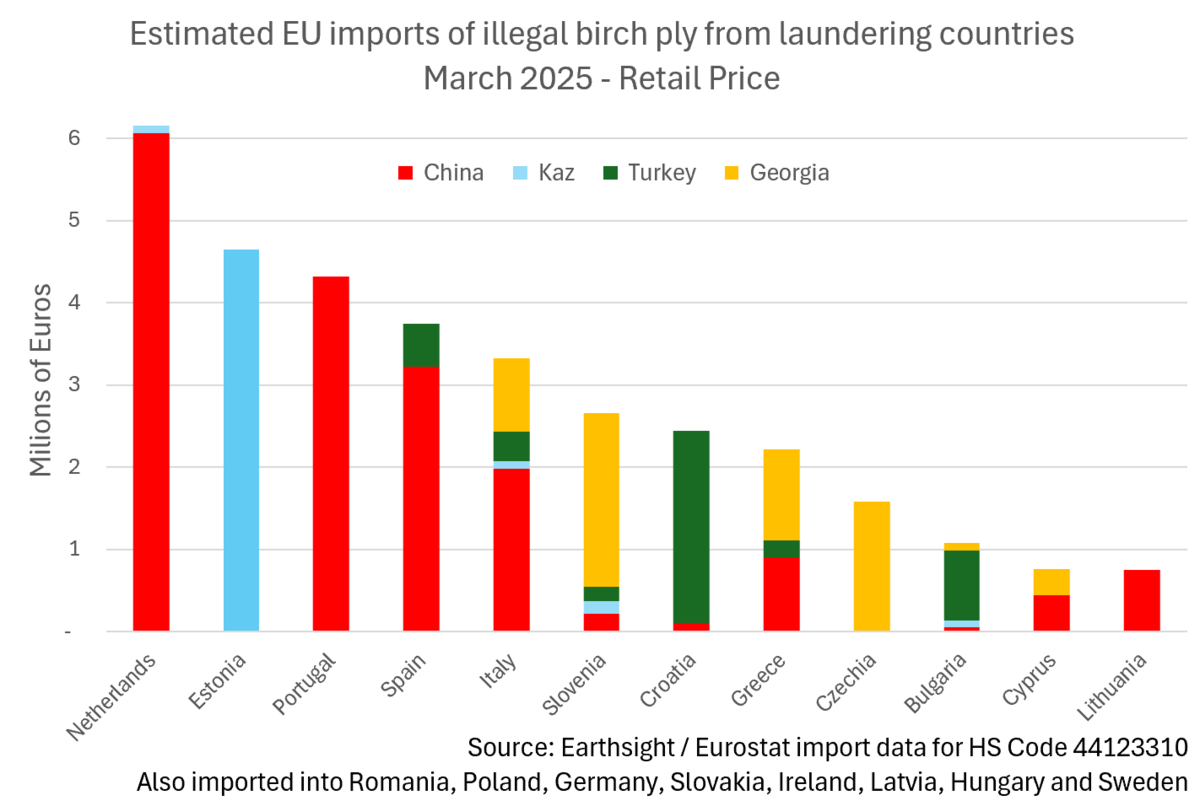
No EU Member State can claim moral high ground: companies across all 27 are involved, either knowingly (recorded and caught on camera) or as an unwitting illustration that sanctions enforcement must be strengthened. (Certain offending companies have not even lost their Forest Stewardship Council (FSC) certification to date, although FSC is aware of the issue.) As all Russian forests are state owned, timber revenue directly feeds Russia’s war machine. Several Russian plywood manufacturers are linked to sanctioned oligarchs.
After the report’s release, Greenpeace Ukraine led an international appeal signed by more than 80 civil society organisations (CSOs), including Fern, calling on the US, the EU and Member States to harmonise and expand sanctions, and to investigate and properly punish breaches of sanctions that fund Russian aggression and undermine justice, security and democracy.
Where it addresses timber, Parliament’s March resolution (25, 28) integrates a key request of the CSO appeal: broader sanctions on Russian and Belarusian wood, to seal off a worrisome loophole regarding third-country wood processing.
“The resolution was an important marker in an uncertain time,” Ganesh says, “a clear statement to all that the EU is firmly behind Ukraine, and supports various means of defunding the Russian regime – including by blocking timber imports, profits from which land directly in Russian coffers.
“The situation is dynamic, constantly evolving. Since the report was published, a decrease in trade was observed – significant, but not enough to indicate lasting change. Our sources say that new laundering routes and methods are continually being devised to send high-value birch to the EU. The additional costs of shipping through third countries are still not high enough to deter; profits easily cover these and unscrupulous actors take full advantage of the fact that sanctions are not properly enforced.”
Competent Authorities, tasked with enforcement, might agree; some have told Earthsight that extending the EU wood sanctions regime would help. Currently plywood from Russia or Belarus is sanctioned, even if it comes through China or Turkey without additional processing. But the situation is less straightforward if importers claim that additional processing occurred in third countries, allowed under current sanctions. By contrast, the EU Timber Regulation (EUTR) is based on country of harvest, not manufacture, and bans products made with Russian wood, full stop. The resulting confusion offers an exploitable loophole as Competent Authorities are at pains to disprove true or false processing claims.
Broadening sanctions to align with the EUTR would open practical enforcement avenues, such as isotopic testing of wood origin. Traceability to point of origin will be required anyway when the EU Deforestation Regulation enters into application. Harmonising sanctions with the EUTR also increases possibilities to penalise unlawful activity, as sanction rules criminalise breaches.
“DG Trade already imposed 62% tariffs on Chinese birch plywood (which carries a high risk of being Russian) and other hardwoods, but China quickly learns to evade higher duties. The top importing Member States shift monthly; companies have their ear to the ground about laundering routes and adjust to soft entry points – telling us that a specific Polish border is blocked; that Portugal, Italy or Spain are now easier ….”
Following Earthsight’s report, EU sanctions watchdog DG FISMA published a first-ever sanctions alert, warning firms of the risks of birch plywood, broadening enforcement agencies’ grounds to query suspicious purchases.
Encouragingly, although it was by far the top importer of Russian birch when the report came out, Poland has since taken action to address illegal imports, which have dropped significantly.
“It shows that successful enforcement is not some elusive magic; nor does it always require scientific testing. It depends on reading the evidence and following through with diligent checks,” Ganesh insists. “Checks alone have been successful in reducing trade in conflict plywood – even just asking companies questions results in a decrease. Poland tightened laws requiring new checks by Competent Authorities, and used its enforcement agencies to crack down on illegal imports, proceeding to raids, seizures – even arrests. It’s extremely gratifying, and we must now see meaningful prosecutions.”
The Council recently published new Russia sanctions, but missed the opportunity to close the processing loophole and broaden conflict timber enforcement. “The Council should take a step back and remind themselves that this is about support for Ukraine, and the EU’s appetite to take on warmongering. We hope it is seen in that light when voting the upcoming sanctions package.”
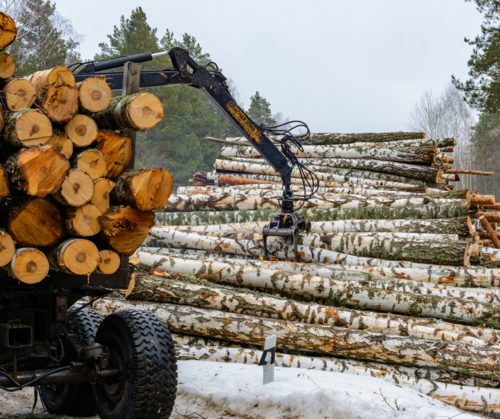
Image: Endless luck/Shutterstock
Categories: News, Forest Watch, Partner Voices, European forests, Illegal logging