Cameroon’s VPA ends, but Parliament’s resolution reinforces EU accountability
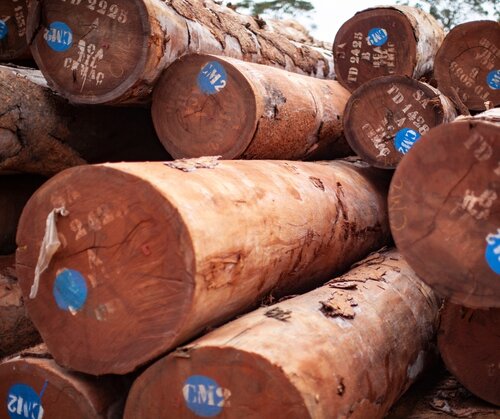
On 17 June 2025, the European Parliament (EP) plenary voted to terminate the EU-Cameroon Forest Law Enforcement, Governance and Trade (FLEGT) Voluntary Partnership Agreement (VPA). The unilateral nature of this step – the Government of Cameroon has not formally consented – has been soundly criticised. However, there may be a silver lining in the termination’s non-legislative resolution, drafted by rapporteur MEP Karin Karlsbro, who leads the EP’s vital FLEGT monitoring group. A silver lining, which could set a more positive course, if elements are meaningfully applied to EU engagement in other VPA processes.
Regarding Cameroon, the resolution notes that commitment to engaging with the nation, Africa’s largest exporter of tropical hardwoods to the EU, must continue. It recognises that deforestation and illegal logging in Cameroon remain high (5% of forest cover lost between 2011 – 2022) and underscores the shrinking space for civil society organisations (CSOs), stifling their capacity to offer solutions and prevent conflicts.
The resolution regrets the ending of the VPA with Cameroon and calls on the Commission to engage constructively in multi-stakeholder dialogue with Cameroon on combatting illegal logging, economic cooperation and trade.
Do not scrap past gains, build on them: Many of the resolution’s points are pertinent for other EU VPAs, partnerships and forest governance generally. It recognises that VPAs go beyond trade in legal timber, and have made systemic inroads in governance, transparency and the inclusion of stakeholders – especially Indigenous Peoples and local communities, and CSOs – in decision-making.
VPAs have provided the foundation of improved forest governance. Crucially they offer a binding legal framework for cooperative, transparent processes: the EU must commit to existing VPAs, as they are critical not only to tackling illegal logging, but to strengthening land tenure rights and participation. Unilateral termination harms the EU’s reputation as a partner and a forest defender. It leaves a vacancy that extractive industries will exploit through more nebulous agreements, undermining climate and biodiversity goals, and encouraging producer countries to turn from the EU to other markets.
DG INTPA’s current Forest Partnerships focus is on much shakier legal footing, and the EP is concerned by the Commission’s failure to involve it and other stakeholders in developing them; as well as by the lack of criteria, and real information about them. In Liberia, for example, there have been threats to terminate the VPA, but no guarantees or information given about the proposed Forest Partnership.
Ways forward: Looking to the future, the rapporteur’s resolution surfaced the importance of the EU’s commitments as a signatory of the Samoa Agreement between the EU and African, Caribbean and Pacific nations. Per this engagement, the EU must engage diverse stakeholders, protect vulnerable and Indigenous communities, the environment, biodiversity and climate.
The EP resolution also should also be read in the light of the Commission’s own Strategic Framework for international cooperation. It lists eight principles of engagement with third-country partners, including promoting dialogue with to support more transparent supply chains and traceability systems; supporting both conservation and smallholder access to supply chains; favouring involvement of all relevant stakeholders, and centring forest engagement not only on protecting the rights of forest peoples (e.g., tenure), but also on promoting their stewardship role.
As always, transparency, access to information, access to justice and judicial review; coherence and synergy with other EU policies (e.g., on corporate responsibility, sustainable finance, forced labour); and coordination and mutual support with development partners, are critical.
Cameroon’s VPA, on which CSO participation relied for years has come to an unfortunate end; so far, Cameroonian CSOs do not have an alternative multi-stakeholder space for dialogue with their government and the EU. Internationally, efforts to support their access and their financial capacity to offer equitable solutions and raise awareness of problems must be re-invigorated. As the EP makes clear, we already have the tools to reinforce EU engagement, in Cameroon and elsewhere, with coherence, ambition and transparency.
We can therefore do so if the Commission is so inclined.
Categories: News, Forest Watch, EU Partnerships, Illegal logging, Cameroon