
Deforestation made the cyclone more deadly: NGOs from Northern Sumatra
28 January 2026
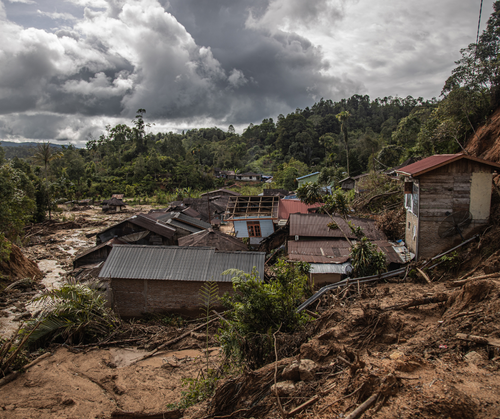
The cyclone Senyar that hit Northern Sumatra, Indonesia, 26 November 2025, and the floods and landslides that followed are a catastrophic example of what can happen when extractive activities in forests are left unregulated. It took the lives of more than 1,100 people and destroyed homes, infrastructure, and endangered species’ habitats. With adequate regulations to combat illegal and unsustainable corporate practices, both international and domestic, the vast scale of this disaster could have been avoided. To contribute to the protection of the remaining intact forests and the prevention of other disasters, the EU must implement its Deforestation Regulation.
Farwiza Farhan is founder of the HAkA NGO fighting to save one of the world’s last rainforests, the Leuser Ecosystem in Aceh; HAkA was organising a cultural festival in Lingga village when the cyclone struck. “When the floods and landslides happened, bridges and roads collapsed. Suddenly our staff, journalists and the partner community that we brought to the cultural festival all got stuck in Lingga. We might have prepared ourselves differently, if we had had information from the early warning system in time.
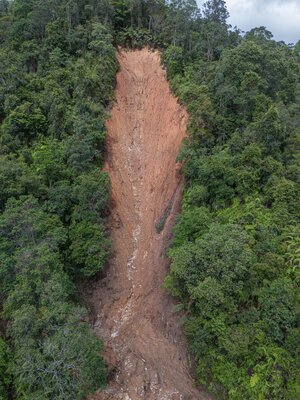
“The scale of deforestation all over Sumatra is massive, and that made the impact of the floods a lot more severe. Rainwater – it is just water until it brings timber and logs – was weaponised and destroyed homes and bridges – everything,” says Farhan. Experts say that land clearing and landscape alteration weakened natural buffers, and the soil could not absorb any more rain. HAkA is bringing food and other essential items to displaced communities and trying to help all those they can.
As well as the people that lost their lives, around 1 million others have been displaced. Indonesian forest NGOs and experts blame the severity of the devastation on the deforestation that has occurred in Sumatra for decades. Since 2011, Sumatra has lost some 4.4 million hectares of forests to mining, hydropower, and palm oil and timber plantations.
Farhan won the Future For Nature award in 2017 for the legal victory against attempts to turn areas of the Leuser ecosystem into oil palm plantations. The Leuser ecosystem is the last place on earth where the critically endangered Sumatran rhino, tiger, elephant and orangutan still roam together in the wild.
South of the Leuser ecosystem, the Batang Toru landscape is also suffering from extractivism, and was massively hit by the floods and landslides triggered by cyclone Senyar. Although this beautiful mountainous forest area is home to the Tapaluni orangutan, it has been licensed out for energy, mining and plantation projects.
Europe bears some responsibility for this disaster as it drives demand for timber plantations. New research conducted by Earthsight and Auriga shows that wood pulp produced by Toba Pulp Lestari is likely feeding global and European textiles supply chains.
Mining is also very problematic. “Gold-mining in the Batang Toru started in 1997,” says Andi Muttaqien of Satya Bumi. “The scale and impacts of the current disaster are the largest seen in decades, resulting from prolonged and ongoing degradation of the Batang Toru Ecosystem. This area serves a critical hydrological function and should be a centre for conservation, a habitat for protected wildlife, and a lifeline for local communities – yet it has instead suffered years of degradation.”
At present, the ecosystem is encircled by multiple extractive megaprojects, including the Martabe gold mine operated by Agincourt Resources; the Batang Toru Hydropower Project; the Pahae Julu Mini Hydropower Plant; SOL’s geothermal operations; the pulp company Toba Pulp Lestari; and oil palm plantations operated by Sago Nauli and PN III Batang Toru.
Satya Bumi’s data show that Agincourt Resources holds a concession covering 130,252 hectares; of this, 40,890 hectares overlap with the Batang Toru Ecosystem. A further 30,630 hectares of the concession also overlap with protected forests in North Tapanuli, Central Tapanuli and South Tapanuli. Out of this total concession area of more than 100,000 hectares, Agincourt had cleared 603 hectares as of October 2025.
Indonesian NGOs hope that the momentum created by this catastrophe will trigger ambitious forest governance reforms.
“Policies are the main driver of deforestation,” says Chandra FD Silalahi from Green Justice Indonesia, an NGO from Northern Sumatra that has supported communities to obtain legal recognition for more than 6,000 hectares of customary forests in Northern Sumatra. “No law specifically recognises the land rights of Indigenous Peoples in Indonesia. That makes their bargaining position weaker. I believe that only when policies that pro-actively protect Indigenous Peoples are in place, can we say that their customary land is safe.”
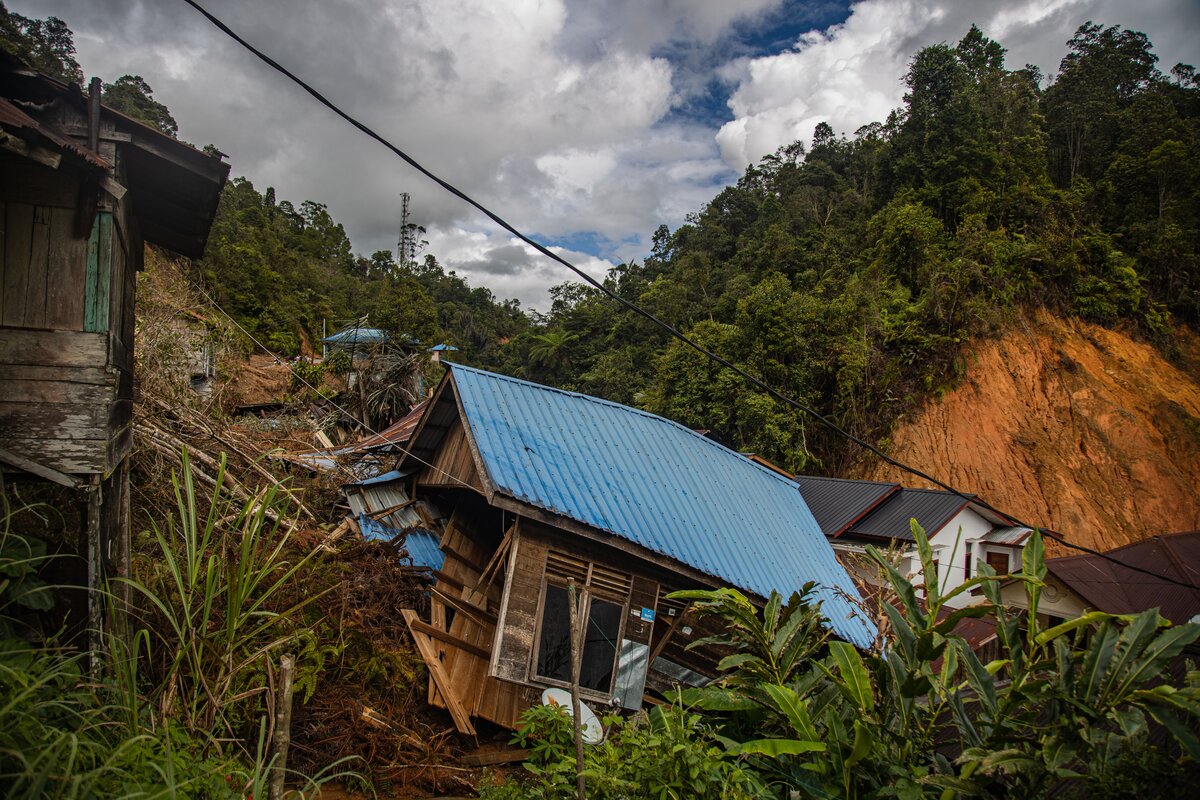
The decisions that policymakers take every day impact the lives of millions, Farhan adds. “This disaster is the prime example. As a citizen, you might be doing everything that you can to protect the environment around you. But then a decision is made higher up – to issue concessions, to allow logging without law enforcement, to allow disruption to take place – and then you are the one paying the price. I met a family who had their home for just a few months. Their life savings, everything, gone in one disaster”.
Following the Sumatra disaster, President Prabowo has revoked the permits of 28 companies found to have violated forest-use regulations. In addition, the Indonesian government has launched an investigation into six companies operating in the Batang Toru watershed to assess whether their activities contributed to the floods and landslides. The ministry has also ordered all eight companies to temporarily cease operations while environmental audits are conducted.
“We welcome this step. It shows that the government is beginning to uphold the polluter payer principle and ensure accountability for environmental impacts that harm communities and local ecosystems,” says Muttaqien. “However, we believe that this step is only one of many measures needed to address the root causes of the problem. Law enforcement must be accompanied by a comprehensive review of permits and policies that allow environmental damage in disaster-prone watersheds and ecosystems as a whole. It must ensure that recovery efforts do not stop at financial compensation but also deliver tangible ecosystem restoration and justice for affected communities.”
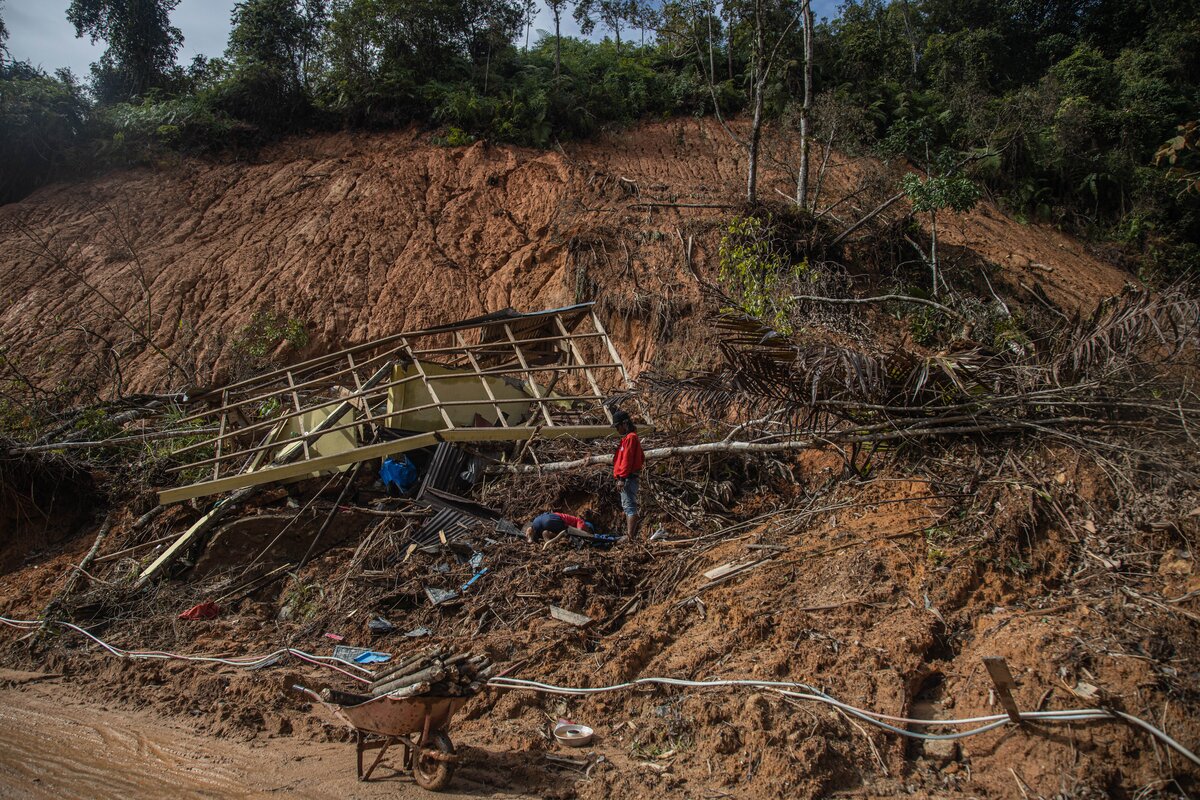
The disaster that took lives of thousands of Indonesians and destroyed the habitat of many endangered species could have been avoided. Even as the EU Deforestation Regulation narrowly escaped complete ruin by the corporate and government lobbies attracted by easy, short-term economic gains, this disaster reminds us that we cannot abandon the forests, and their inhabitants, to uncontrolled extraction.
Images: North Tapanuli, North Sumatra, Indonesia, by Yusuf Wahil
Categories: News, Forest Watch, Partner Voices, Critical minerals, EU Regulation on deforestation-free products, Indonesia