Ghana bans mining in forest reserves. What happens next?
Mining no longer allowed in Ghana’s forests
On 10 December 2025, the Ghanaian government officially revoked a Regulation that permitted Mining in Forest Reserves including Globally Significant Biodiversity Areas (GSBAs). This means that mining concessions can no longer be given out in Ghana’s protected forests, which cover over nine million hectares.
The Regulation that permitted mining in forests was passed by the previous administration in late 2022 and permitted mining in forest reserves and GSBAs said to be of ‘national interest’. Decisions such as these have contributed to Ghana being one of the top three countries in the world for direct mining-related deforestation.
The harm to forests were immediate: within a year of its passage, mining permits covering over 20% of Ghana’s forest reserves were handed out, leading to a steady increase in deforestation, exacerbated by shooting gold prices, with some protected forests reporting a 1900% increase in deforestation.
The campaign behind this success
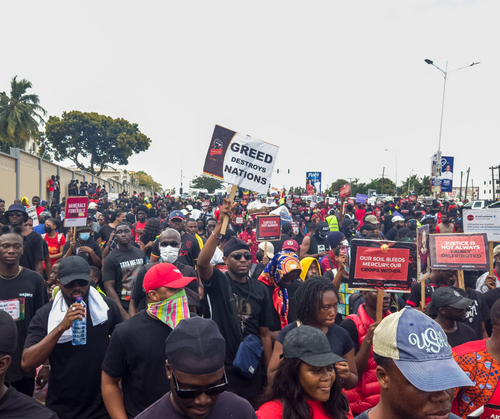
In a push to overturn the egregious Regulation that permits mining in forest reserves, civil society - spearheaded by the Coalition Against Galamsey – Ghana, mounted a popular campaign highlighting illegal gold mining’s impact on surrounding forests and rivers, leading to the contamination of people’s drinking water, and food staples. This is ultimately causing grave health issues and birth deformities, according to leading doctors in the country.
With a focus on media, the Coalition Against Galamsey- Ghana coordinated actions which led to nation-wide protests, statements from the Catholic Church, a general strike with labour unions participating and a lawsuit.
The broad appeal of the campaign led Presidential candidates to sign a pact in recent elections to accept the Coalition’s petition and commit to repeal this law, a commitment the President has ultimately honoured with this decision.
What comes next
While there is widespread relief at this announcement, the road ahead to effectively enforce the new rules is long and complex. High levels of political will are essential to halt illegal operations in a sector plagued by corruption.
The Ghanaian government has recently set up a Gold Board in an effort to claw back benefits of gold mining for the country. Civil society are asking for this Board to support a transparent traceability system, similar to one that is in place for timber, that would definitively ensure that gold produced and traded is legal and sustainable.
Learning from efforts in the country to effectively address illegal logging, civil society are calling for a multistakeholder approach, that brings public, private, community and third-sector actors together to sustain government efforts to tackle deep-seated challenges associated with illegal gold mining. They are calling for international buying regions, such as Switzerland, the UK and the EU to support such an approach.
Read the Ghana Civil Society Press Release that outlines their perspectives.
Image: Delali Adogla-Bessa/Shutterstock
Categories: News, Critical minerals, Ghana