Nordic forestry’s crisis of accountability indicates the need for deeper reform
10 December 2025
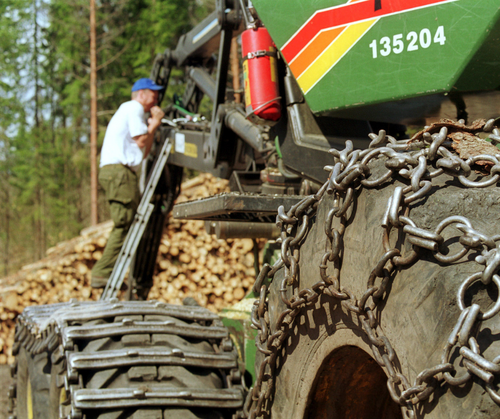
Major companies are cutting ties with Northern Europe’s forest sector over concerns about labour scandals and how the industry operates. Rather than address systemic abuse, Sweden and Finland are pushing the European Commission to weaken the rules that govern forest management.
In October 2025, Nestlé announced that it would cease sourcing virgin fibre from suppliers involved in controversies in Northern Sweden, citing “sourcing controversies”. Meanwhile one of Finland’s largest newspapers uncovered what may be the country’s largest human trafficking scandal – nearly 200 forest workers brought into the country with false documentation, dozens of them Nepalese men who are likely trafficking victims.
These are unacceptable symptoms of an industrial forestry model in need of reform, where thin profit margins and pressure to maintain high production volumes have created conditions ripe for both environmental degradation and labour exploitation.
Sweden – When a Global Brand Says Enough: Nestlé’s withdrawal represents a significant reputational risk for the region’s forestry sector. The company’s statement was unequivocal: “As a result of this work, and our high standards, we have reconsidered our business relationships with suppliers involved in sourcing controversies. We have decided to cease sourcing virgin fibre from suppliers […] in Northern Sweden.”
Nestlé references well-documented controversies: clear-cutting in areas of high conservation value, degradation of old-growth forests, and insufficient protection for biodiversity and Indigenous Saami reindeer herding lands. Walking away from Northern Swedish suppliers – long considered among Europe’s most ‘sustainable’ – signals that something fundamental has shifted.
Finland – The Human Cost of Industrial Forestry Finland’s human trafficking scandal exposes the social costs of the industry. Helsingin Sanomat’s investigation revealed that forest workers were lured to Finland with false promises, only to face non-payment, poor working conditions and exploitation. The scale of abuse is staggering, and cases have been linked to major actors including Metsä Group, UPM, Tornator and even the State forest owner Metsähallitus.
Merja Laakkonen, senior inspector at the Regional State Administrative Agency for Eastern Finland, emphasised that these are not isolated cases. The Industrial Trade Union has received numerous reports of exploitation of forest workers, and of serious occupational injuries. This echoes patterns Fern documented in neighbouring Sweden, where migrant workers face similar exploitation in the forestry sector.
Weakening Climate Targets is no answer: Faced with these crises, one would hope for acknowledgement of the need to carry out swift reforms. Instead, in September 2024, the countries’ prime ministers called on the EU to weaken the LULUCF (Land Use, Land-Use Change and Forestry) climate target (FW 310). They argued the need to protect “cultural and social contributions” of their forestry sectors (dominated by the pulp and paper industry), citing challenges including changes in forest age structure, climate change impacts (which their proposal would worsen) and market disruptions from Russia’s war against Ukraine.
This framing obscures crucial context, as 54 environmental NGOs underscored. The EU’s land use and forestry sector’s carbon sink capacity declined by 30% over the past decade, largely due to increased harvesting. Rather than address root causes – and human rights abuse – Sweden and Finland are pushing to diminish standards across the EU.
Industrial forestry is fundamentally broken. Nestlé’s withdrawal, Finland’s trafficking scandal and the push to weaken climate targets all stem from an industrial forestry model that prioritises volume over value, short-term extraction over long-term sustainability and political influence over accountability.
When forests are managed primarily as fibre factories for low-margin pulp and paper production, the pressure cascades down. Companies squeeze suppliers on price. Suppliers squeeze contractors. Contractors defy labour standards and environmental protection.
The race to the bottom ends with exploited workers, degraded forests and companies concluding that Northern European sourcing is too risky for their brand.
The European Commission faces a critical choice. Weakening LULUCF targets would signal that when powerful economic interests face accountability, EU environmental and human rights commitments are negotiable. It would tell companies engaged in exploitation that political bullying works.
The Commission should insist that meeting climate targets requires transforming, not perpetuating, flawed industrial models. Europe could unlock high-value, less extractive forest economies that balance conservation with sustainable use – if the cascading principle prioritising high-value timber uses over burning and pulping were properly implemented.
Systemic human rights violations and pressures to further weaken environmental standards indicate that the industrial model is failing on multiple fronts. Policymakers must choose whether to acknowledge these interconnected crises and respond with genuine reform, or to continue prioritising short-term industry interests over long-term sustainability and human dignity.
Image: Agencja Fotograficzna Caro / Alamy
Categories: News, Forest Watch, European forests