
Poland Draws the Line: New Rules Redefine Energy Wood
10 July 2025
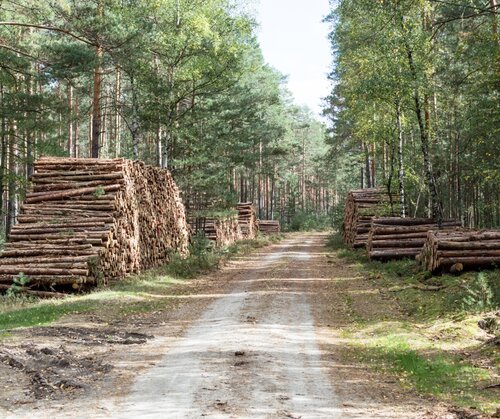
Augustyn Mikos, of civil society organisation Pracownia, in Poland, discusses a new Polish decree that significantly reduces financial support to bioenergy
Despite instigating a certain amount of environmental mayhem during its Presidency of the Council of the European Union, domestically Poland took a logical approach towards balancing Land Use, Land Use Change and Forestry (LULUCF) carbon sequestration targets and biodiversity conservation on the one hand, and limiting biomass in its renewable energy mix on the other. Its recent decree setting energy wood standards offers fellow EU Member States a practical approach to meeting EU targets.
How to tackle the issues
Poland reconciled objectives by identifying the reduction in wood harvesting needed to meet EU LULUCF targets (6% reduction), and the additional protection of forest ecosystems needed to meet EU Biodiversity Strategy 2030 goals (additional protection of 20% of public forests, focussing mainly on forests resistant to climate change). It also considered current and future wood demand, and what might be required to ensure availability while limiting harvesting (e.g., restricting exports and, importantly, ending subsidies for burning industrial grade roundwood, in line with requirements of the third Renewable Energy Directive (RED III)). An estimate was made of sustainable biomass resources available, within the constraints of the above targets and of demand.
In light of this, the Polish Ministry for Climate and Environment concluded that available biomass resources do not allow the country’s energy transition to be based largely on bioenergy. The decision was made to shift support away from biomass burning and to other needs related to Poland’s energy transition.
On 6 June 2025, a decree setting qualitative and dimensional standards for energy wood was published in the Journal of Laws of the Republic of Poland. Issued under the 2015 Renewable Energy Sources (RES) Act, the decree specifies which kinds of woody biomass can receive public subsidies. It will enter into force in September 2025.
Why the timing matters
Environmental organisations view the decree as offering long-overdue relief for forests. During the past two decades, the volume of woody biomass burned by the Polish energy sector has soared; today it exceeds five million cubic metres a year, roughly 140 times more than in 2004. That appetite aggravates logging pressure, blocks the creation of new protected areas and threatens biodiversity while doing little to curb greenhouse-gas emissions.
The wood-processing industry has a different worry. Panel and paper mills must buy raw material on market terms, whereas bioenergy producers receive subsidies. As energy plants turn increasingly to the same grades of small-diameter wood and by-products that industry relies on, mills face higher prices and periodic shortages. As a result, both environmental NGOs and associations of the panel and furniture industries welcomed the governing coalition’s 2023 promise to end the burning of wood in commercial energy generation; the decree is presented as the first concrete step towards upholding that pledge.
What the decree changes
Subsidies will now be confined to roundwood whose thicker end is under seven centimetres (cm) over bark (regardless of length) or, if the log is no longer than two metres, whose thinner end does not exceed seven cm. Even this small timber must show curvature, rot or charring to qualify. By that definition, roughly two-thirds of the roundwood previously eligible for support will drop out of the scheme.
The regulation still allows public support for: logging residues, agricultural wood waste, biomass from short-rotation plantations, material harvested to control alien invasive species, and by-products of the wood-processing industry (sawdust, chips and shavings).
The last category proved most contentious. During the public consultation, environmental NGOs as well as the panel industry and wood furniture industry associations argued that sawdust and chips are high-value feedstocks; subsidising their combustion, they said, violates the principle of cascading use of biomass and perpetuates an uneven playing field. The climate ministry briefly accepted that view, drafting a version that excluded sawdust and chips. After the pellet-industry lobbyists’ disinformation campaign, in which they claimed that such language would ‘ban pellet production’, the final text restored subsidies for all by-products.
Aftermath: uneven progress
According to Poland’s Ministry of Climate and Environment, by disqualifying most full-grade roundwood from subsidies, the decree should divert several million cubic metres of wood each year from furnaces to material production, and bring Poland closer to cascading-use goals and delivering a thriving bioeconomy. Yet it does not ban the combustion of high-quality wood outright, as the coalition agreement promised, but rather limits the types of woody biomass that qualify for subsidies. Moreover, it continues to incentivise the burning of logging residues and small-diameter timber feedstocks, which is carbon-intensive and harmful for forest biodiversity. Additional legislation will be needed if the government intends to fulfil its pledge of phasing out wood-fired energy generation altogether.
In all, the decree is positive but imperfect; much will depend on its practical implementation and effective enforcement, and whether the 6% reduction in harvesting and 20% additional forest protection actually materialises. But in a global context where science and facts are frequently shoved aside, the approach taken to balance objectives that sometimes chafe was refreshingly responsible.
Categories: News, Forest Watch, Bioenergy, European forests