Livestock Strategy and Protein Action Plan: Correct diagnosis – but no cure prescribed
On 7 July 2026, the European Commission published its much-anticipated Livestock Strategy, setting out its vision for the future of Europe’s animal farming sector. Alongside it came a Protein Action Plan, aimed at reducing the EU’s heavy dependence on imported protein feed. Both are too timid to help farmers break out of structural dependencies.
The Commission rightly acknowledges that the sector faces multiple challenges: low farm incomes, dependence on nature-destroying soy from Brazil and the US, climate change, biodiversity loss, animal diseases and growing public concern about animal welfare and pollution.
The diagnosis is accurate. Yet the prescription is still largely missing.
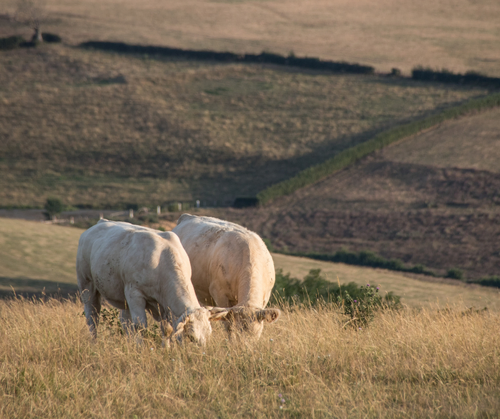
The Commission recognises that Europe would benefit from farming systems that rely less on imported feed and fertilisers, and from producing and eating more home-grown legumes such as beans, peas and lentils. It also acknowledges the role of grazing cattle and mixed farming in supporting healthier soils, greater biodiversity and more resilient rural economies.
Indeed, Europe’s intensive livestock sector – especially poultry and pig production – depends heavily on imported soy, continuing to drive deforestation and forcing Indigenous Peoples from their lands, while exposing farmers to geopolitical and market shocks. Producing more protein-rich crops in Europe for both animal feed and human consumption, and supporting farming systems where animal numbers remain in balance with what local land and feed resources can sustain, would help reduce those risks.
But the Commission’s plans stop short of proposing the policies needed to spur that transition.
Instead, the Commission places considerable faith in innovation and technological solutions, from improved breeding techniques and optimised feeding strategies to feed additives. While some of these tools may have a role to play, only about a quarter of emissions from animal farming could be reduced through technical measures and these often depend on costly investments that leave farmers with no choice but to scale up production to recoup costs.
Funding is another weakness of both strategies.
The Livestock Strategy presents the Common Agricultural Policy (CAP) as the key instrument for supporting farmers through the transition. Yet proposals for the post-2027 CAP have weakened the Commission’s oversight on how CAP funds are spent. Without strong guarantees that public money will support pasture-based livestock systems, mixed farming and legume production, the transition risks remaining largely rhetorical. The Commission should go beyond merely “considering” additional support and commit to establishing a dedicated fund to help farmers transition to sustainable, higher-welfare animal farming systems.
The Protein Action Plan follows a similar pattern. It highlights the benefits of healthier, more diversified diets rich in locally produced plant-based proteins but it does not propose any concrete measures, or budget, for achieving this. It observes the need to stimulate demand to support European protein crop farmers and mentions tools that could achieve this – such as public catering, fiscal measures, product composition and dietary guidelines – but leaves this up to Member States.
Taken together, the two documents suggest that the Commission has correctly identified the vulnerabilities of Europe’s food system. The question is whether it has the courage to challenge the economic model that has locked many farmers into dependence on imported feed, expensive inputs and a “get bigger or get out” model of production.
A different path is possible. Denmark, despite having one of Europe’s most intensive animal production sectors, has pledged to redirect farm subsidies towards nature restoration, biodiversity, cleaner water and animal welfare, while encouraging exports to shift away from meat and toward plant-based crops. The Netherlands also has ambitious plans to transition from its intensive livestock model to tackle nitrogen pollution. The package proposed by the new Dutch coalition government contains farm-specific emission limits and a cap of 2.6 cows per hectare by 2035, financial support for extensification, and an obligation for supermarkets to commit to boosting sales of organic food.
Whether both countries succeed remains to be seen, but it shows that structural reform is possible if there is political will – and it could be a source of inspiration for EU policy.
Recognising the benefits of grazing systems, protein crops and healthier diets is the easy part. Redirecting public investment towards making them the norm is the real test. Without that shift, Europe will struggle to reduce its dependence on imported soy, curb its contribution to deforestation, and build animal farming systems that are resilient, sustainable and economically viable for farmers.
Image: jef77/Shutterstock
Categories: News, Forest Watch, Meat consumption