
Logging is a key reason the forest carbon sink is shrinking
1 Agustus 2025
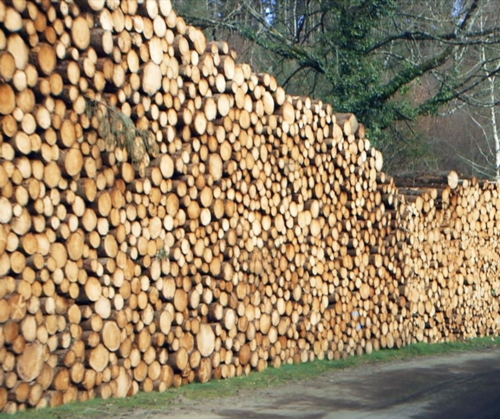
The European Union’s forest carbon sink has declined dramatically over the last decade. The factors driving it are the subject of ongoing and intense debate.
This briefing summarises the well-documented causes of this decline: evidence which is accumulated through EU and national assessments, as well as external research sources.
EU analyses
Several EU level analyses point to logging being the leading cause of the decline in the carbon stored in Europe’s land and forests, the sector known as Land Use, Land-Use Change and Forestry (LULUCF).
For instance, satellite data from between 1986 and 2020 shows that more than 82% of forest disturbances in Europe were the result of planned logging. This proportion has remained stable on average in the past decade, but overall disturbances have been increasing, both from logging and from the climate and biodiversity crisis.
Meanwhile an analysis by the European Commission’s science and knowledge service, the Joint Research Centre (JRC), points out that wood harvesting is the main driver of the size of the carbon sink, and the level of harvesting can make the difference between having a scarily low -155Mt carbon sink or a -606Mt carbon sink in the year 2050.
More specifically, the European Scientific Advisory Board on Climate Change (ESABCC) notes in its recent report that “the decrease in the LULUCF sink is partly linked to increasing bioenergy use in the EU.”
Within EU wood use, emissions from biomass combustion have doubled since 2001 and the introduction of the first EU bioenergy incentives, which fuelled a boost in wood burning in the energy sector. Biomass emissions represent more than 15% of the EU’s direct Greenhouse gas (GHG) emissions today: as these emissions are counted in the LULUCF sector, the LULUCF land sink would be considerably higher without the recent massive increase in bioenergy. About half the EU wood harvest is burnt today, a proportion that has also increased over the period.
It is incorrect to assert, as some Member States do, that missing the EU LULUCF climate targets can be solely blamed on climate change or recent geo-political developments.
The decline in the carbon sink was recognised as early as 2013 and in many areas logging volumes have increased.
Most scientific assessments clearly identify logging as a primary factor, and this is being omitted in political discussions.
National and regional studies
In addition to EU-wide analysis, national and regional studies confirm harvesting’s impact on Europe’s decreasing carbon sink:
-
Finland: the Natural Resources Institute Finland (LUKE) reports that, in addition to climate change, increased logging is a primary reason for forests shifting from a sink to a source of carbon dioxide.
-
Sweden: the Swedish University of Agricultural Sciences (SLU) report points to harvesting as a main factor in the decline of their forest sink.
-
France: An analysis by France Stratégie sees logging as a substantial driver of the declining sink. Recent projections by the French National Institute of Geographic and Forest Information (IGN) and the Forest Cellulose Wood and Furniture Institute (FCBA) show that increasing timber harvest levels, as envisaged in the National Energy and Climate Plan (NECP), would lead to a major reduction in the forest carbon sink.
-
Germany: The Öko Institute attributed the loss of the German forest sink primarily to collapsed spruce stocks, which were mainly planted in unsuitable locations in the 1950s, showing how forest management can weaken forests resilience to the natural disasters that hit the country in 2018 and 2020.
-
Eastern Europe: Researchers from the Karlsruhe Institute of Technology (KIT) found that across the region (EU countries analysed included Bulgaria, Czech Republic, Estonia, Hungary, Latvia, Lithuania, Poland, Romania and Slovakia) logging had the biggest influence on the carbon sink, more so than environmental impacts.
A recent overview of studies looking at LULUCF potential on the EU level shows that the forest sink can grow with concerted action to address high logging levels. While The EU assumes the highest natural land sink potentials for 2050 are in the range of -400 to -500 Mt CO2eq, academic studies often estimate ranges of -500 to -600 Mt CO2eq, or even almost -800 Mt CO2eq.
Science is clear on why forests are losing carbon, and solutions exist.
In their 2023 report the Finnish Environmental Institute (SYKE) suggests 17 different measures for the government to consider for improving LULUCF performance. These include tax design and financial incentives for improved forms of management.
Countries have the flexibility to choose improved forest management strategies to protect and restore forests while producing wood and other forest products in a way that increases resilience and prepares the sector for the future.
On behalf of their citizens, governments should promote smaller wood production innovators and request meaningful plans from larger industry actors to shift away from outdated forestry practices from the 1950s that threaten upcoming LULUCF targets.
Everyone stands to profit from future-proofing the sector. Acknowledging the role of logging in the declining forest carbon sink is an essential first step.
Categories: LULUCF, European forests