What is LULUCF?
LULUCF stands for Land Use, Land Use Change and Forestry. It is the part of the EU's climate framework that accounts for greenhouse gas emissions and carbon removals from land — including forests, cropland, grassland, and wetlands.
Forests are by far the most important component: healthy, growing forests absorb CO₂ from the atmosphere and store it as carbon, making them a vital tool for tackling climate change. When forests are degraded or harvested intensively, that carbon is released back into the atmosphere. The LULUCF Regulation sets binding targets for EU Member States to ensure the land sector contributes to — rather than undermines — Europe's climate goals.
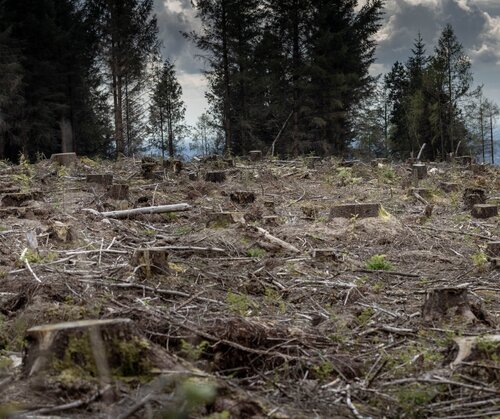
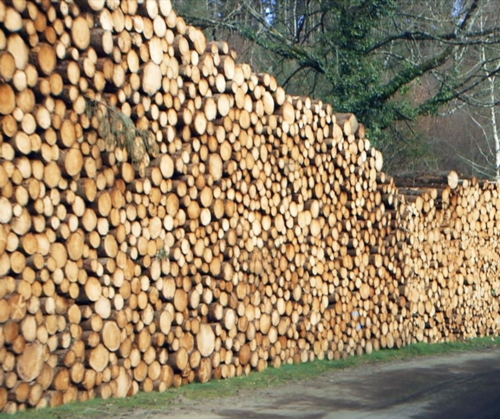
Healthy, growing forests remove CO₂ from the atmosphere. To allow them to continue playing this role, we must curtail the dominant forestry model in which healthy forests are clearcut and promote sustainable alternatives.
Fern’s work on LULUCF
Fern ensures that EU forests play a key role in tackling climate change and has been involved in complex negotiations about EU land use policies since 2014. We bring NGOs, academics and scientists together to ensure a wide chorus of voices call for increased EU forest carbon storage capacity as well as, not instead of, emissions reductions in energy and transport.
In the 2023 LULUCF Regulation review, we successfully advocated for biodiversity criteria and targets to remove 310 million tons of carbon from the atmosphere by the year 2030 — the equivalent of taking a quarter of a billion fossil-fuelled cars off the road for a year! The previous target would have promoted further forest harvesting; this one requires Member States to grow their carbon sink and address the impacts of intensive forestry.
However, despite these higher targets the precipitous decline in the amount of carbon absorbed by forests has continued since 2013.
Carbon absorbed by forests in the European Union

Source: European Environment Agency. November 2025. “Figure 1. EU emissions and removals of the LULUCF sector by main land use category”.
It is important that climate targets for 2040 remain ambitious, including strong LULUCF targets and dedicated resources for forest owners and managers to protect and restore European forests.
Does logging impact how much carbon is absorbed by forests?
Yes — significantly. Europe's forest carbon sink has been declining for years, and logging is a key reason why. When trees are felled, the carbon stored in their trunks, branches, roots and surrounding soil is released back into the atmosphere. At the same time, the forest loses its capacity to absorb new carbon while it recovers.
Research shows that management decisions — not just climate change — are the primary driver of sink decline across key Member States including Finland, Sweden, France and Germany. Protecting and restoring forests, rather than increasing harvesting rates, is essential to reversing this trend. Read more here.
Instead of clearcutting forests, we should protect and restore them, so they absorb CO2, rather than emitting it.
This could be done through forest management methods, such as close-to-nature or continuous cover forestry, which benefits people, nature and the climate. It is a forestry method where harvesting is selective and old forest ecosystem and carbon sinks aren’t replaced with new monoculture trees.
Is making more wood products better for the climate than leaving forests standing?
No. The wood industry frequently claims that using timber products instead of carbon-intensive materials like concrete or steel delivers major climate benefits — an argument known as the "substitution effect." However, independent scientific reviews, including from the EU's own Joint Research Centre, find that these benefits are routinely overstated. Most wood products — paper, packaging, furniture, pellets — have short lifespans, meaning much of the carbon they contain returns to the atmosphere within a decade. Meanwhile, the carbon lost from forests through harvesting far exceeds what is stored in products.
Forests’ greatest climate benefit is achieved by keeping them standing: intact, high-carbon-stock forests absorb and store far more carbon over time than any chain of harvested wood products. Governments should base policy on this independent science rather than on industry claims designed to justify business as usual.
To see why narratives to overconsume wood is so pervasive and discover ways that wood can be better used to keep our forests beautiful, read more on our bioeconomy page.
What removes carbon dioxide from the atmosphere?
Healthy, growing forests remove carbon dioxide from the atmosphere. To allow them to continue playing this role, we must curtail the dominant forestry model in which healthy forests are clearcut and promote sustainable alternatives.
The clearcutting method originated in Europe where it is now pervasive. Sadly, it has also been exported around the world.
In the EU, clearcutting has sharply reduced the amount of carbon forests hold. For instance, in 2021 it was revealed that Finland’s land use sector had become a net emitter of carbon dioxide: imperilling the country’s climate commitments, and creating an “outright national emergency” according to one expert.
In Sweden – where only 3% of forestry doesn’t involve clearcutting – the situation is similarly grim. According to data from Sweden’s Environmental Protection Agency, net uptake by forests and land in 2023 was 31 million tonnes of carbon dioxide equivalents, 7% less than the previous year and significantly less than the average since 1990, around 55 million tonnes.
Key resources

Logging is a key reason the forest carbon sink is shrinking
The EU’s forest carbon sink has declined dramatically over the last decade. The factors driving it are the subject of ongoing and intense debate.

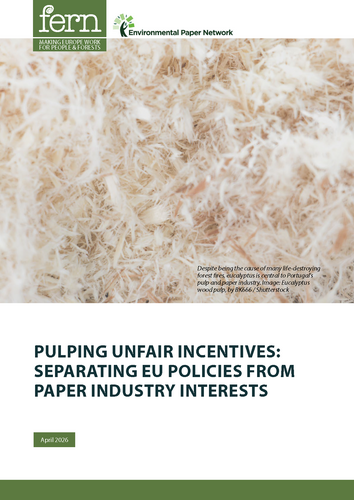
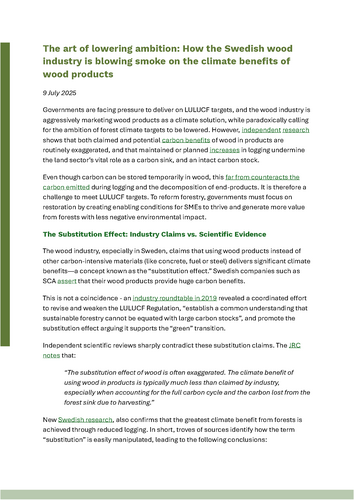
How the Swedish wood industry is blowing smoke on the climate benefits of wood products
The wood industry is aggressively marketing wood products as a climate solution, while paradoxically calling for the ambition of forest climate targets to be lowered.

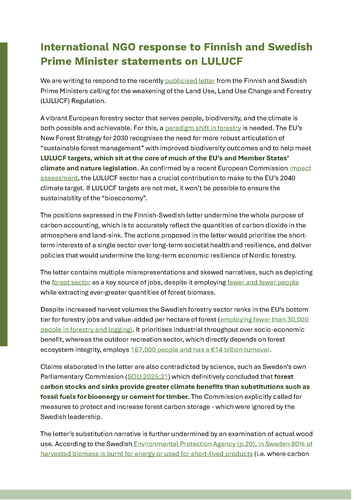
International NGO response to Finnish and Swedish Prime Minister statements on LULUCF
54 NGOs respond to the misleading arguments and outline the multiple benefits that fair LULUCF targets contribute to.

An introduction to LULUCF
LULUCF could make the difference between damaging and catastrophic climate change.