
In Romania, the EUDR is urgently needed to prevent illegal wood harvesting and forest degradation
17 September 2025
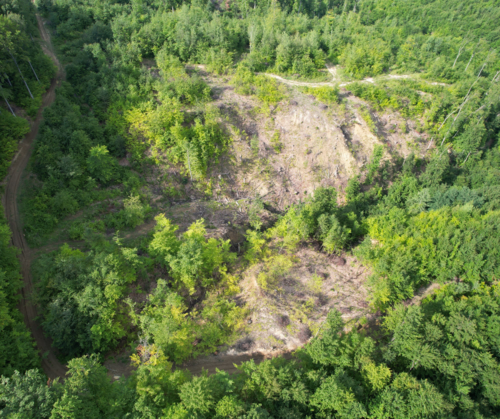
Fern partners Agent Green and Bruno Manser Fonds stress the importance of ambitious, timely implementation of the EU Deforestation Regulation
In response to the EU Commission’s call for evidence regarding the ‘simplification’ of environmental legislation including the EU Deforestation Regulation (EUDR), Romanian NGO Agent Green and the Bruno Manser Fonds wrote to the Environment Commissioner to draw attention to the relentless, often illegal logging that today plagues Romania’s forests, including its remaining primary and old-growth forests. Given the constant threat and absence of adequate protections, they argue, Romania must be considered a country with “considerable – not negligible – risk of illegal wood logging”, and the EUDR must be implemented in a “consistent, complete and timely” manner.
Supported by more than 25 EU and international civil society organisations, the letter outlines a degenerating situation, a far cry from the ‘no risk’ situation some contend.
Degradation: A significant portion of the EU’s high biodiversity value forests lies in Romania, but little of this natural wealth is strictly protected. Even as these forests are being mapped for protection under the EU Biodiversity Strategy 2030, they are being logged: of more than 500,000 hectares (ha) of potential primary and old-growth forests identified in the 2019 Primofaro inventory, 138,000 ha have undergone logging; of this, 71,000 ha are inside Natura 2000 protected areas.
But as of 2023, only 3% of Romania’s forests were strictly protected. The EU Biodiversity Strategy for 2030 stipulates that mapping of primary and old-growth forests in the EU be finalised in 2025, and strict protection should be in place by end 2029; although mapping is underway, signs point to sabotage through efforts to classify far fewer forests as primary than needed.
By contrast, the pace of logging – often illegal – far outstrips the snail’s pace and downgraded mapping ambition. Agent Green and Fern drew the Commission’s attention to ‘panic-logging’ – extracting as much timber as possible in advance of legal protections requirements – in early 2023 (FW 283). Panic logging and short intervals between cuts have caused many forests that qualified as primary and old-growth under Commission guidelines when these were published, to lose their defining characteristics, disqualifying them from strict protection. The desolate landscapes such logging leaves behind may then be transformed into plantations, and such conversion yields timber that is not compliant with the EUDR. Primary and old-growth forests that met the EU definitions when the EU Biodiversity Strategy was adopted but have since lost their defining characteristics due to human activity, should be strictly protected to allow them to regenerate, per Commission guidelines. To do otherwise allows the harmful precedent of rewarding such dubious practices. To date, no forests meeting these criteria have been put under protection in Romania.
Illegality: In 2019, Romania’s own Environment Minister confirmed that, based on the National Forest Inventory (NFI), an estimated 20 million cubic metres of timber were removed from the forest in excess of permits each year. Leaked numbers from the new NFI 2019-2024 put the timber removed annually in excess of legal permits at 17 million cubic meters (noting that this may include various other components, e.g., some natural tree mortality).
The Commission itself has long been concerned about logging in Romania that infringes the Birds and Habitats directives and EU Timber Regulation (EUTR) and degrades Natura 2000 sites, issuing a reasoned opinion in 2020. In 2023, the European Parliament asked the Commission about Romania’s “continued large-scale destruction of Natura 2000 sites, the breach of Birds and Habitats directives, and the fact that “No visible or measurable progress has been made to date.” Moreover, the PETI-Commission report following the fact-finding mission to Romania in 2023 revealed that the highest share of investigated crimes in the country consisted of environmental crimes, e.g., water and air pollution, waste management, illegal logging, illegal hunting and protected species trafficking, according to the Prosecutor General Office.
The EUDR is designed to prevent the sale of timber from illegal logging. This must apply in tropical forests, but also in European ones.
Regulatory concerns: Elements of Romania’s new Forest Code of December 2024 (Law No. 331/2024) could further justify a high-risk EUDR designation: e.g., the inadequate separation of regulatory, administrative and commercial responsibilities allows fox-in-charge-of-the-henhouse administrative overlap; it has become easier to remove forests from the National Forest Fund (NFF), while lands meeting the definition of ‘forests’ no longer have the same safeguards in place as NFF forests, exposing 500,000 ha to deforestation. Failure to ensure forest regeneration within two years of logging is no longer a criminal offence.
As for traceability, Romania’s SUMAL digitised wood tracking system is state of the art. Nonetheless, a 2021 Agent Green investigation sounded the alarm about means of bypassing the system; concerns were echoed in a 2024 Organised Crime and Corruption Reporting Project study. Romania’s Environment Ministry drew up important solutions to close identified loopholes, but these have not yet been tested and implemented. The EUDR is an opportunity for the Romanian government to ensure that its traceability system guarantees compliance.
Beyond Romania: Illegalities and degradation in the EU are not limited to Romania. The European Environment Agency underscores the startlingly degraded state of European forests: 53.9% have an unfavourable-inadequate conservation status, 30.6% are in ‘unfavourable-bad” condition, and a mere 14.2% are considered “good”. In Sweden, for example, as of 15 September 2025, 44,898 ha of high conservation value forests are planned for final felling – encompassing both degradation and illegal logging, some of which occurs in Indigenous Sápmi territory.
Some Member States and MEPs have been calling for the creation of a “no risk” category for European countries that would sidestep further scrutiny. This is neither credible nor in the public interest. It cannot have escaped the notice of other producer countries that the EU appears unwilling to apply to itself the obligations that it has defined for others.
Nature is not fooled by meaningless designations and commitments. This summer, catastrophic floods on Bistrița River and its tributaries placed these findings in the physical context of climate change. Spain, France, Greece and Italy also lost human lives and homes, and hundreds of thousands of hectares to fires. Almost one million ha (994,363 ha) had burned in Europe by early September 2025; nearly four times the area burned by the same time the previous year (238,574 ha). Together these figures make a desperate case for the EUDR’s full, timely implementation.
Image: Agent Green and Bruno Manser Fonds
Categories: News, Forest Watch, Partner Voices, European forests, EU Regulation on deforestation-free products, Forest conservation