
NGOs reveal forest destruction caused by EU Nature Credits pilot
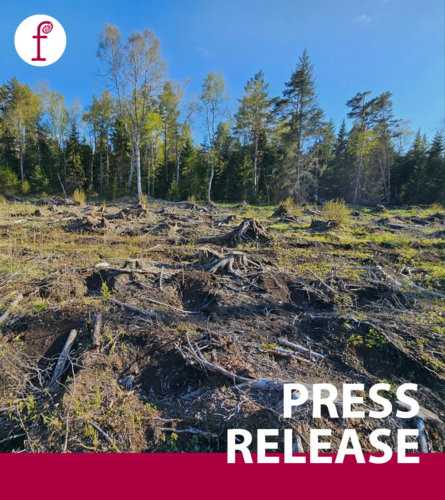
A new investigation by forest NGOs Canopée and Fern has revealed that in just two and a half years, the European Commissions showpiece Nature Credits pilot project has destroyed 38 football fields of forests, including old-growth and woodland key habitats.
The European Commission has promoted the idea of “nature credits” as a way to allow businesses to claim to offset destruction caused by their activities by financing the restoration or protection of nature in return for certified credits that could be traded in a dedicated financial market.
As the concept is not well-defined, the Commission has focussed on two ‘pilot projects’. One of these, a forestry project in Estonia, has destroyed the very biodiversity it was meant to protect.
Hiiumaa - A pilot in nature destruction
The European Commission-backed pilot project on the Estonian island of Hiiumaa is a chilling example of the sort of destruction nature credits could support. Although the Commission promotes it as a credible model, the NGO investigation found no evidence of the “nature-positive actions” that the Commission seeks to support.
The Commission’s Estonian pilot project is on land owned by MAIF, a French insurance giant, who have contracted forestry investment firm France Valley to manage the site. Satellite data and expert field analysis suggests that since taking ownership, they approved at least 27 hectares of clear-cuts, often in ecologically sensitive forests, despite public claims that they do not engage in such activities.
A site visit in early May 2025 found fresh and planned clear-cut sites in old-growth forests, woodland key habitats, Habitat Directive’s Annex I forest habitats, and sites of nationally protected sensitive species. The visit also revealed evidence of machinery driving through a natural waterbody and disturbing carbon rich soils.
NGOs have long argued that Hiiumaa forests deserve Natura 2000 status, the highest European Environmental protection, because it has significantly more old forests than the national average.
"Hiiumaa’s forests are renowned across Estonia for their unique character and rich biodiversity. They provide a habitat for truly rare species such as the Eurasian eagle-owl and the European mink. These forests are important both for the local community and visitors. It is deeply troubling that, under the slogan of nature protection, these valuable ecosystems are being destroyed," said Silvia Lotman, a Board member of Estonian Fund for Nature.
When presented with these findings, the portfolio manager, France Valley, said they were considering better management practices with MAIF who has already committed to full transparency about all current forest management plans on the French forests it owns. MAIF and France Valley also informed Canopée that they have not made any decision regarding their participation in the EU Nature Credit Roadmap, given that its framework has not yet been defined.
"MAIF must make a clear break from current forestry practices in the forests it owns in Estonia. We will vigilantly monitor their claim that all other forests they own have been managed without clear-cutting since day one, and that they have banned clear-cutting in areas of high ecological value. A central question remains: how can a model based on clear-cutting serve as a pilot for future European nature credits? This decision sends a dangerous signal, potentially legitimising and subsidising harmful forestry practices," said Céline Lesot, climate and biodiversity campaigner at Canopée.
Top down and out of touch
The leaked EU Nature Credits Roadmap references pilot projects as a means to refine methodologies, monitoring tools, and governance frameworks, thereby laying the groundwork for a credible and scalable EU nature credit market. It says nothing, however, about how to meaningfully connect actions on the ground with funding, and clearly presents a risk for investors, like MAIF, looking to step into funding forest restoration.
The European Investment Bank (EIB) recognised the risk in 2022, pointing to “inconsistent definitions of sustainability and the absence of best practice guidelines from governments and regulatory bodies” as a barrier to companies undertaking forest restoration.
Leapfrogging the conversation about real funding
The proposed Strategy appears to have been rushed ahead of broader discussions about how to fund much-needed nature restoration in Europe.
“It is absurd that discussions around nature finance are relying on a pilot that increases environmental destruction. It is long past time for the European Commission to launch a Dialogue on Forest Restoration, reaching out specifically to those with most knowledge about the best ways to support forest restoration and transition to more sustainable forestry,” said Siim Kuresoo, European Forest campaigner at Fern, the forest and rights NGO.
“The rushed proposal raises suspicions that the Commission plans to replace public funding for biodiversity such as LIFE, which finances several restoration projects, with this flawed nature credit scheme.”
“We urge the European Commission to first consider the fundamental question about funding for nature restoration – how to identify and re-direct environmentally harmful or dormant subsidies,” he concluded.
Notes to editors:
The full report from the Hiiumaa site visit is available here.
An article looking further into this issue from Canopée is available here.
Image: Kippari
Category: European forests