Poland’s excessive reliance on wood pellets caused an energy security crisis
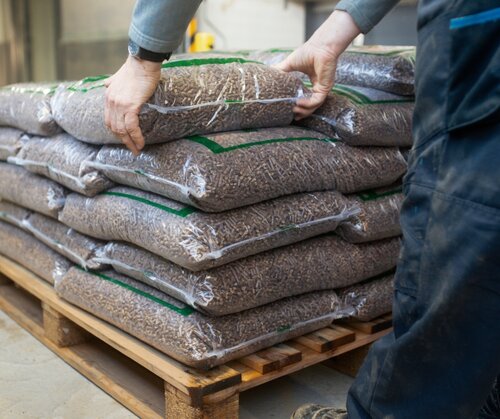
Wood pellets made headlines for weeks in Poland this winter. The reason? A combination of a cold winter and excessive government support in past years for households’ purchase of wood pellet stoves and boilers, encouraged by misguided EU renewable energy policy, caused a big spike in demand – but supply didn’t follow. The result? Massive shortages and skyrocketing prices left thousands of Polish households unable to use pellets stoves and boilers to heat their homes when they needed it most.
Winter 2025-26 brought prolonged cold spells, forcing homeowners to burn through pellet stocks weeks earlier than planned. By late January, many Polish households had exhausted reserves, triggering emergency purchases and retailer rationing, even though Poland is the third largest producer of wood pellets in the EU. By February, several retailers’ stocks had vanished, and prices for remaining supplies were reaching up to €1000/tonne – three times higher than in the autumn. This sparked a nationwide controversy, with suspicions of collusion by suppliers, local youtubers experimenting with doughnuts as cheaper-than-pellets fuel for their stove, and media interventions by the Polish Energy Minister.
But cold winters are not unusual in Poland: the crisis had deeper roots, particularly in ill-designed policy. Many Polish citizens complained on social media that they were forced to replace their previous heating sources (mainly coal) to comply with EU renewable energy directives and Polish anti-smog regulations, leaving them with a serious problem.
Coal burning is terrible for the climate and air pollution and must be phased out. But since its launch in 2018, the Polish Czyste Powietrze (Clean Air) programme subsidised hundreds of thousands of pellet boiler installations, rapidly expanding domestic demand while the country was experiencing a “collapse” of the heat pump market in recent years.
Indeed, by treating heat pumps and pellet boilers as equivalent alternatives without fully correcting the underlying electricity price distortion, the programme effectively subsidised the dirtier but cheaper, easier-to-install, wood-based option; the cleaner but more expensive, sometimes less effective and electricity-dependent heat pump option became progressively less attractive as energy prices shifted.
Fern’s Polish NGO partner Pracownia warned our readers already in July 2025 about the Polish government’s unfortunate decision to maintain subsidies for burning by-products of the wood-processing industry (sawdust, chips and shavings), the main Polish raw materials for pellet producers, after they lobbied the government. This increased demand and competition between the other industries using it (pulp and paper, panels, furniture, etc).
While reliable data is not easy to find, an estimated 7% of Polish households only used wood as a heating source in 2021, and 33% solid fuels (coal and wood combined). This supply crisis therefore hit Poland despite only a small minority of the Polish population relying on wood pellets for heating. Meanwhile, the Polish forestry industry is facing an increasing shortage of raw materials, with harvesting levels expected to decrease, and Polish forests’ ability to sequester carbon dioxide, while still meaningful, has been decreasing for the past 20 years. It is therefore highly unlikely that the country can rely on more wood pellets for its heating needs than are already being used.
This unfortunate situation showed that the perception of wood pellets as a local, reliable source of fuel for heating is not true when demand goes through the roof. With the EU Renewable Energy Directive coming up for its post-2030 revision, and EU forests already suffering from excessive logging, let’s hope that the lesson Polish households learned the hard way will be noticed by EU policy makers: incentivising households to rely more on wood burning for heating is likely to worsen energy security, increase energy bills as well as increase forest destruction and put climate targets further out of reach. Let’s hope the Energy Commissioner is paying attention..
Image: Halfpoint/Shutterstock
Categories: News, Forest Watch, Bioenergy