
A new study reveals the devastating impact that mining for materials for the global energy transition is having on the precious Miombo forests in Democratic Republic of Congo (DRC). Journalist Didier Makal journeys to the epicentre of the destruction to reveal its human cost.
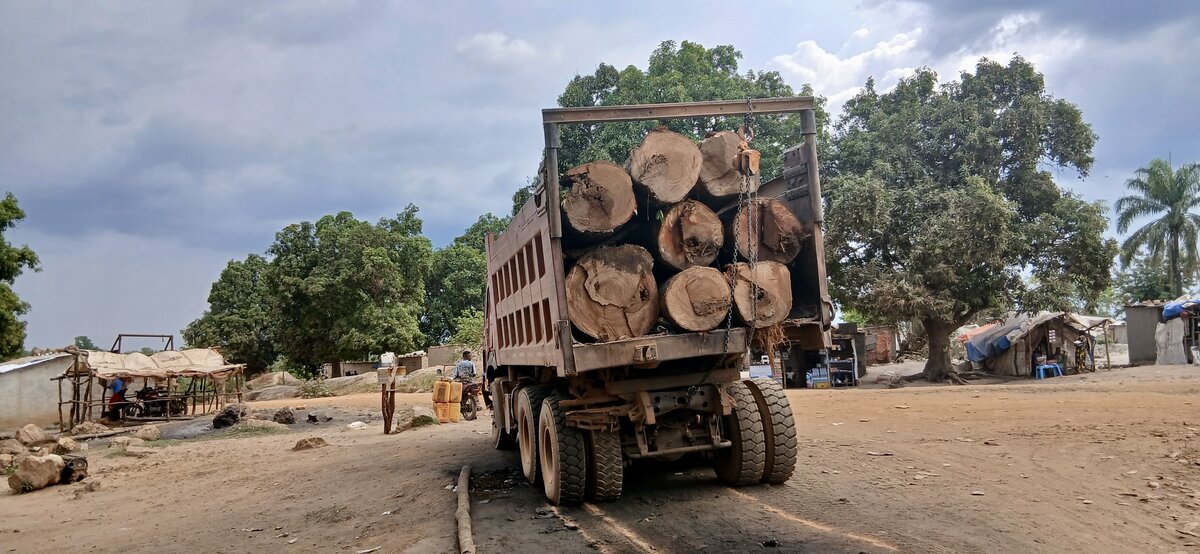
One day last October, we sat on the side of the road which connects Kolwezi, the capital of Lualaba province, in the south-east of the DRC, to north-west of the city of Lubumbashi. A stream of lorries passes - all overloaded with freshly cut logs and charcoal, known as makala in Kiswahili. They come from the fragile Miombo forest, considered the largest dry tropical forest in the world, which stretches from south-east DRC through southern Africa.
My companion and guide, John Muzembe, a PhD communications student at the University of Kolwezi, who is studying deforestation in Lualaba, says this scene is typical and that the region where these products originate (an area connecting the provinces of Lualaba and Haut-Lomami) – is losing its ‘primary’ forests at an alarming rate.
These trucks are a part of a much wider story.
It’s one that has, until now, been largely overlooked: the vast indirect deforestation caused by the global race for ‘critical minerals’: raw materials used in electric vehicles (EVs), wind turbines, solar panels, weapons systems and artificial intelligence (AI). The leaders of the race, whose voracious demand is fuelling deforestation? The United States, the EU and China.
The Congo has the world's largest reserves of cobalt, an essential component of lithium-ion batteries that power electric vehicles, laptops and mobile phones. It is well known that growing demand has led to human rights violations and environmental degradation in the DRC. Less well known is the indirect impact of mining on forests, particularly Miombo forests.
Various forces lie behind the destruction.
Forests are being razed because of rapid population growth and to make way for new infrastructure. But they are also being chopped down for makala, which communities need to counter their lack of access to electricity – which is now increasingly being consumed by mining companies. This fuel is necessary for cooking meals, as only 24% of households in Lubumbashi have access to electricity, according to a study by the United Nations (UNDP). Gas is rare and has only just been introduced in the region. Its price remains prohibitive: US$13 for a 5kg bottle, according to several farmers interviewed.
This destruction is set to accelerate.
The EU, for example, wants to expand its footprint in the region to increase its supply of essential raw materials through the Lobito Corridor initiative, a strategic trade route linking the port of Lobito in Angola to the DRC via Zambia's copper belt. This initiative threatens fragile ecosystems, including the Miombo forests.
A new study by Afrewatch, a Congolese association specialising in natural resources, quantifies - for the first time - the impact that mining has had on Miombo forest ecosystems in the cobalt rich regions of Haut-Katanga and Lualaba.
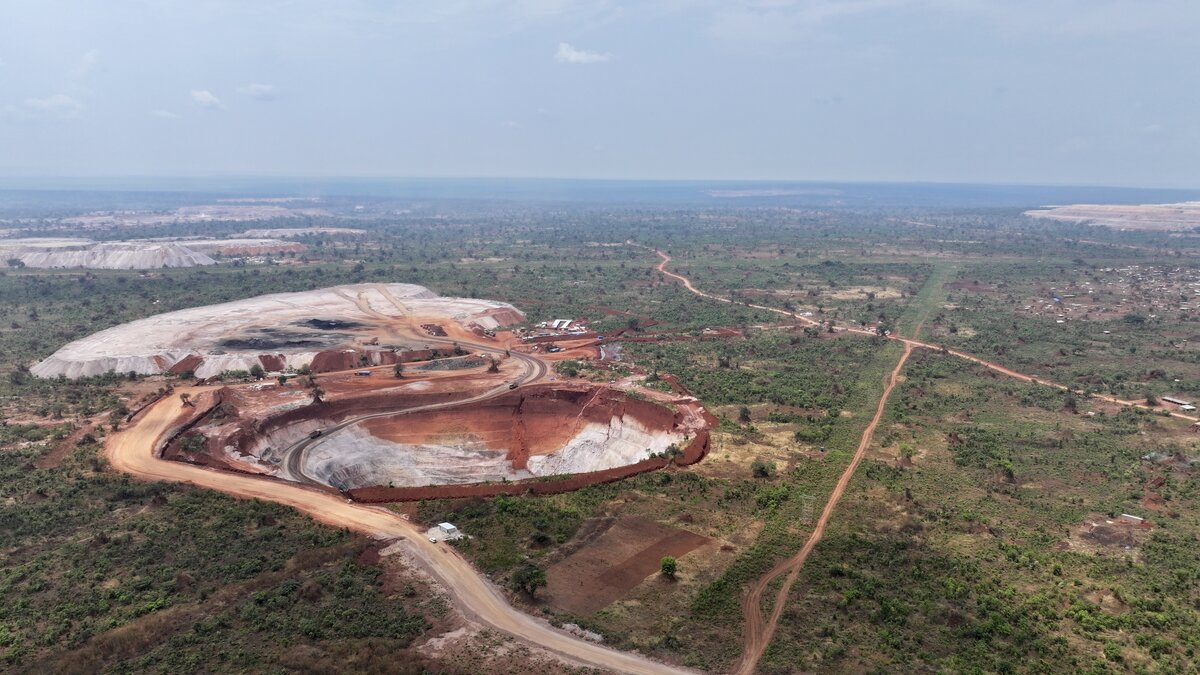
Analysing Landsat satellite images, coupled with geographic information system (GIS) and remote sensing tools, the study found that between 2000 and 2024, 873,926.4 hectares of Miombo forest disappeared, resulting in total emissions of around 108 megatonnes of CO₂e – equivalent to the annual emissions of Bangladesh.
And, as I discovered during my trip to Haut-Katanga and Lualaba to report on the human stories behind this phenomenon, the intensification of mining is having a profound impact on people's livelihoods and their relationship with nature.
Professional charcoal burners
At the entrance to Ngolo, a village located 5 km from Mulomba, two large piles of wood await carbonisation, and the disappearance of the nearby forest seems inevitable. The logs, finely cut and stacked, will be covered with earth to ensure the low oxygenation necessary for the wood to be transformed into charcoal.
With a population of 2.281 million, for example, the city of Lubumbashi consumes at least 2.87 million tonnes of wood equivalent per year, according to the UNDP. And wood, whether processed or raw, is also used for other important activities such as house construction and sawmilling.
Further away, in the village of Pama Bidons, created about three years ago by charcoal burners, Marie Kasongo stirs the ashes of a kiln and sorts through the charred pieces of wood. She then puts them in bags, with the help of her seven-year-old daughter, to sell them to buyers from the city or take them herself to Kolwezi. "I left Mulomba a year ago because there are no more trees," she explains.
This region is home to a growing number of people whose job is to produce charcoal. If they have the means, they hire chainsaws to cut down trees easily.
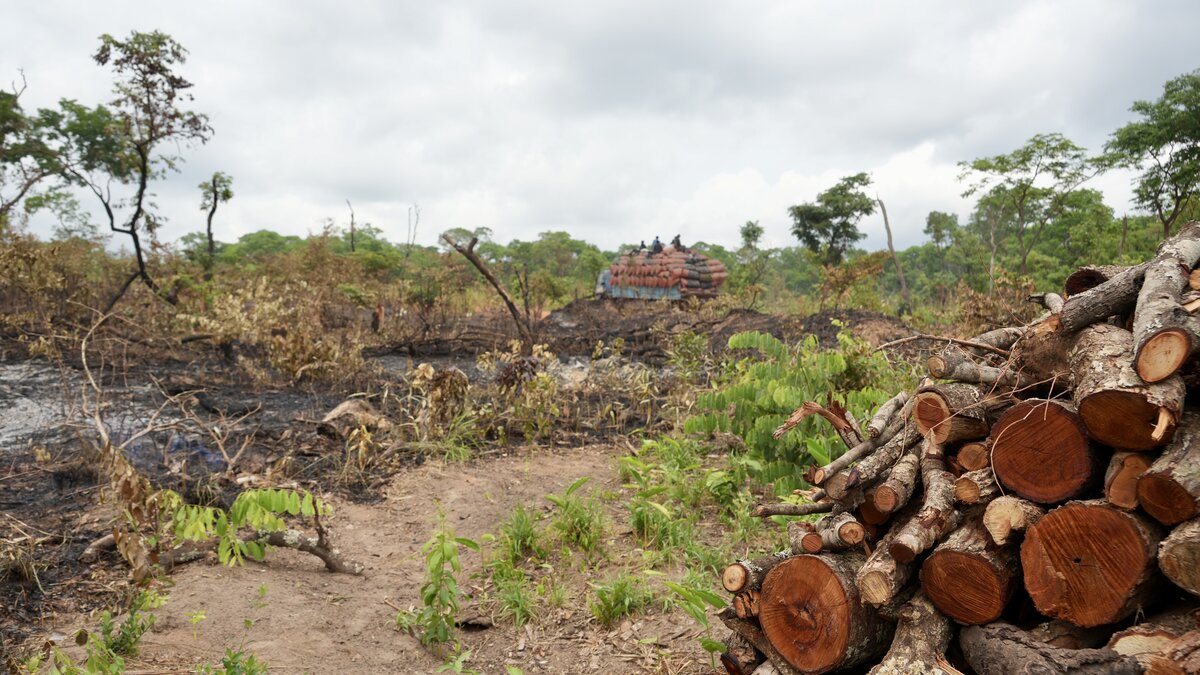
With a chainsaw slung over his shoulder and a hat partially covered in sawdust on his head, John Kabeji is a sawyer. On his way back from the forest, he explains that he sometimes receives requests from timber manufacturers. On the half-hectare plot of land he bought from the village chief Mantapala, he plans to grow cereals, mainly maize. But first, he will make charcoal from the wood he cuts. "I came to farm in Kanzenze. My brother told me that the soil is no longer productive where he lives, and sent me here where the soil is of good quality and promises a good yield of maize and cassava," explains Kabeji.
Non-Indigenous people who settle in the region, such as Kabeji, must pay customary fees to traditional chiefs. According to Marie Kasongo, 70,000 Congolese francs, or US$30, must be paid for a 25 m² plot of land.
Under a straw hut where he welcomes us, Mujinga Kibele, a man in his fifties who represents the chief in his absence, notes that promises of agricultural activities do not always materialise, which poses a risk to food security.
"In reality, many people are looking for makala. But we have just held a meeting during which we realised that the rush for charcoal will create famine in the village. We must all cultivate the land to avoid hunger," he explains.
A hydroelectric project that amplifies deforestation
The 240 MW Busanga hydroelectric dam is a Sino-Congolese cooperation programme of the "mines for infrastructure" type, which is designed to meet the energy needs of the cobalt and copper industry.
The dam’s construction required repairing a road that had long been in poor condition.
But while the road opens the region, it also increases deforestation, notes Mujinga, who had never seen anyone loading trucks with charcoal before. "Before, agricultural products or charcoal had to be transported by bicycle. It was difficult to produce much," explains Mujinga.
Héritier Khoji, professor at the Faculty of Agronomy at the University of Lubumbashi and one of the experts at the Miombo Urban Forest Observatory attached to the University of Lubumbashi, confirms this fact:
"Look at the forest: before the Sakanya-Kasumbalesa road [in the neighbouring province of Haut-Katanga] was rehabilitated, it was almost intact. Three years later, I saw charcoal burners everywhere along the road. The road improves access to the resource and facilitates the transport of charcoal."
On the ground, charcoal kilns line road or, if further away, are located near the paths that lead to the forest, cutting it up into small, disconnected pieces. These paths facilitate access for lorries, which can easily transport the products.
Dwindling hopes, shrinking forests
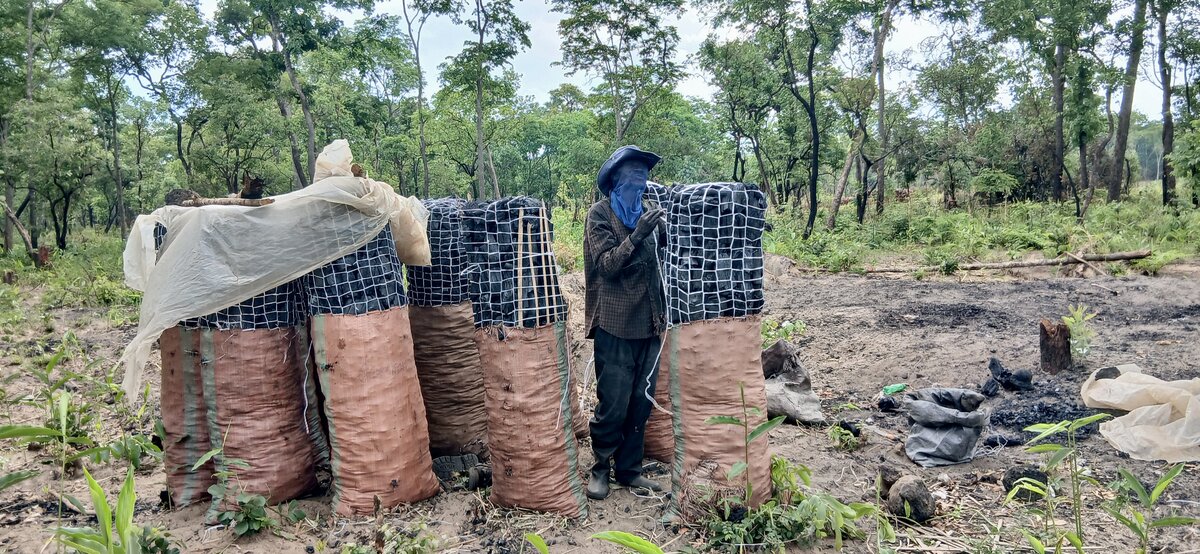
Standing in front of a dozen bags of makala, braving the midday sun, wearing a mesh visor hat to protect himself from the gnats that are attracted by his sweat, Ngoy Twite, aged around 60, prepares his merchandise. Soon, he will travel to Kolwezi to visit his family. He will pay for his children's schooling with the money he earns from selling makala, he explains. Tree felling and agriculture are alternatives to the lack of opportunities and dispossession of land.
"If you look closely, you will see that wherever we could farm, there is no longer any unoccupied land. It has been taken by the miners. This is the case in Kamilombe. It drives us away, and we come here to farm," explains Ngoy, pointing to his field of growing cassava.
Sitting under a straw hut where they prepare their meals, Ruth Mujinga and Jolie Mazanga explain that charcoal production allows women to supplement their household income with other activities. "The men cut down the trees with axes. It's a job I can't do [because it's more difficult]. We help them stack the logs and harvest the products. It's our job, which allows us to earn a living and send our children to school," explains Mujinga.
Like Mujinga, Mazanga also helps her husband make charcoal. But she insists that her work remains farming. "I have already prepared my cassava and maize fields."
On the other side of this region, in Kisanfu, on the road towards the town of Fungurume, cutting wood for makala production is the only opportunity for quick money for those who have settled in this area, which was very ordinary until 2014 and is now booming.
Wood when mines are of little use
In the last decade, the village of Kisanfu has lost all the Miombo forest that surrounded it. The savannah that now dominates the area continues to expand, even into the perimeter of the reserve Basse Kando, a protected area managed from the village of Lualaba about ten kilometres away. "The Department of the Environment imposes a tax on those who cut down trees. As a traditional chief, I am never consulted," explains Koni, the traditional chief of Kisanfu.
Deogracias Yambisa, 44, is the local coordinator for the New Civil Society. Under his guidance, we leave the village to observe the spread of deforestation and the imposition of the industrial landscape. At least four mining companies surround the village, including the Chinese companies CMOC and Brother Mining, which are among the largest. Closer by is the subsidiary of the Anglo-Swiss company Glencore Mutanda Mining (MUMI), in which the Congolese government holds assets.
"In the past, on the road to Kolwezi, we had to stop to let a family of monkeys cross the road; today, that's a dream. We have lost everything: the trees, the animals, the mushrooms. The Kisanfu forest has become a savannah, and even the seasons are no longer the same," explains Yambisa.
"The beauty of a country lies in its flora and fauna. Here, we have lost everything. The miners are working, but we suffer from the dust, the heat and the silence of the dead forests."
Soaring deforestation
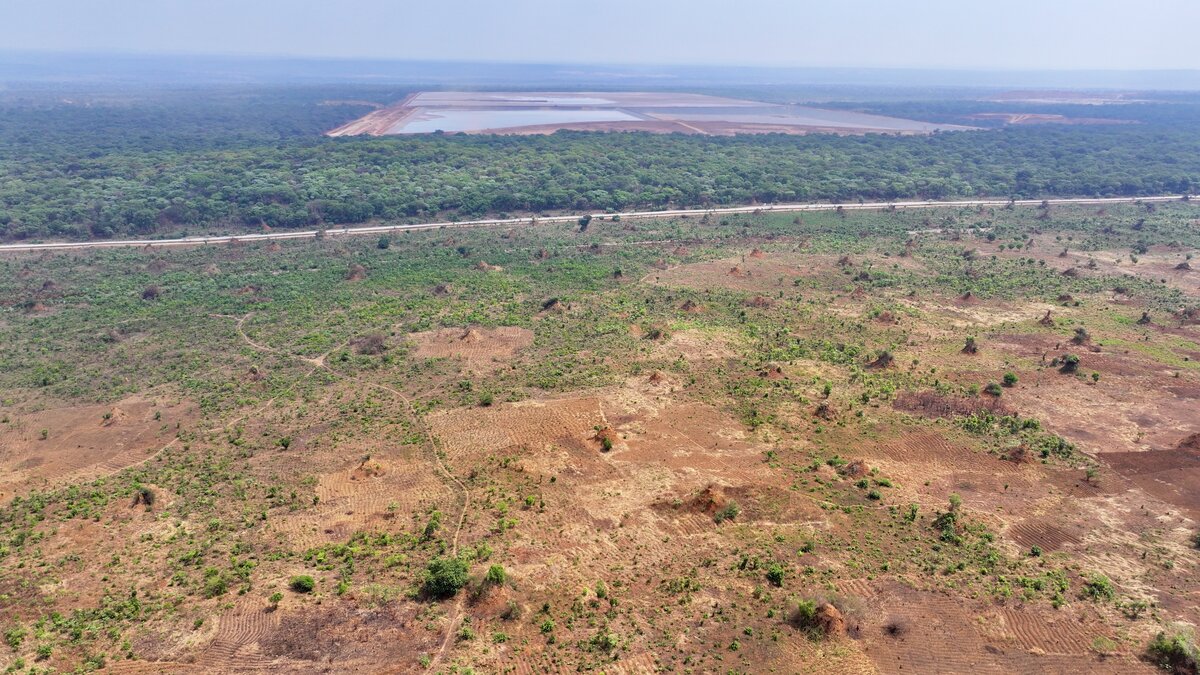
A study on deforestation caused by mining since 2000 (particularly copper and cobalt) in 20 African countries, including the DRC, Zambia and Nigeria, conducted by researchers at the University of Sheffield and the University of Cambridge and published in the journal Biological Conservation in April 2025 shows that "when a mine is established, 47.5% of forest cover is threatened".
According to the same study, after the creation of mines, deforestation rates increased by 11,200 hectares per year for mines established between 2009 and 2011, compared to an average of 1,665 hectares previously, representing a 2.6-fold increase.
Just energy transition and risk sharing
André Ntumba, Afrewatch’s head of the Environment and Climate Change program, says that tackling the deforestation and other challenges arising from the energy transition requires collective global effort, including by public and private actors in Congo.
"We want to move towards clean energy, but its exploitation here is destroying our forests. While we talk about reducing greenhouse gases, we are deforesting the Miombo to extract cobalt and copper, which are supposed to be used to manufacture green technologies," explains Ntumba.
For him, "if northern countries want to reduce their emissions, they must also look at how their minerals are extracted here. Otherwise, we are going round in circles: reducing emissions there only to pollute here."
Professor Khoji notes that the rapid proliferation of mining companies in Katanga, stimulated by the global energy transition, "has led to deforestation, rural exodus and the accelerated destruction of the Miombo".
"It is important that mines be part of remedying the imbalances created: Taxes from mining activities should finance the reforestation of degraded sites and support stable agriculture. Without this ecological redistribution, the energy transition will remain an injustice to our communities," he believes.
Since 2016, national and international organisations such as Amnesty International and Afrewatch have been reminding us that private companies which produce high-tech technologies have a responsibility to be part of the solution by exercising due diligence.
But due diligence is no longer sufficient to tackle the ecological crises we face, says Indra Van Gisbergen, Forest Governance Campaigner at Fern.
“Our dependence on critical minerals is a political choice. Numerous studies show that it’s possible to reduce our consumption of these minerals through ambitious policies that support more sustainable ways of living.
Mobility is a concrete example. Western societies have become dependent on private cars, which consume large amounts of minerals. Alternative means of transport such as car sharing and public transport should be supported through public policies, particularly in large cities."
“Ambitious policies aimed at reducing resource extraction are the only way to save our forests and our planet.”
It is a message which would likely resonate with those in Congo’s cobalt heartlands whose lives are being upturned by the global pursuit of the raw material.
Didier Makal is a Congolese journalist specialising in mining, forestry and agriculture. He has written for national and international publications. In 2023 he was a Rainforest Investigative Fellow at the Pulitzer Centre. All images were taken by Didier Makal.
For more information, read the Afrewatch report ‘Assessment of deforestation in the mining provinces of Lualaba and Haut-Katanga’ (also available in French) and our joint briefing outlining recommendations for the EU and beyond (also available in French).