EU ETS reform: Will the bioenergy and biochar industries obtain billions of euros of public money at the expense of forests?
15 Oktober 2026
The revision of the European Trading System (ETS), the EU’s flagship climate policy, is being discussed by the European Parliament (EP) and Council. EU national governments are split over its fate. For forests, this is a crucial file for at least two reasons:
- The considerable carbon emissions from burning wood for energy are unfortunately counted as ‘zero’ in the ETS, unlike fossil fuel emissions—although there is no difference in the warming effect they create in the atmosphere. If this remains unchanged, the higher the price of fossil fuel, the more attractive burning wood for energy production becomes. About half of Europe’s annual wood harvest is already burnt for energy production.
- In its legislative proposal to revise the ETS, the European Commission proposed creating 250 million extra pollution permits; their sales would generate revenue for the Commission to buy carbon credits from projects using Direct Air Capture with Carbon Capture and Storage (DACCS) or Biogenic emissions with CCS (BioCCS/BECCS). To this, the European Parliament’s rapporteur MEP has proposed adding carbon credits from biochar projects, within a 20% limit of the total. Biochar, a form of charcoal, is today mostly made from wood.
The bioenergy and biochar industries stand to gain billions of euros of public subsidies. Lobbyists are therefore scurrying to influence MEPs, such as through a 15 October breakfast roundtable organised in the EP by the conservatives and the Negative Emissions Platform, a lobby group representing the carbon removals industry, but also the bioenergy and biochar industries. Lobbyists are also having meetings with MEPs and national governments, disclosed or not.
Both BioCCS and biochar remove carbon from ecosystems, not the atmosphere. In fact, in the short term, they add carbon to the atmosphere because they capture and store only a fraction of the carbon contained in the biomass they use; the rest is emitted as carbon dioxide (CO2) immediately or soon afterwards.
It is crucial that carbon credits for BioCCS and biochar remain excluded from the EU ETS because the EU’s rules for their quantification and certification cannot ensure climate benefits. They ignore EU climate scientific advisers’ recommendations, and even legal requirements to rely on the best available science: Fern joined other NGOs in a legal challenge to the Commission on this matter.
BioCCS hardly exists today beyond promises, pilots and a few small CCS installations on biogas or biomethane plants – no carbon capture technology economically captures CO2 from biomass combustion yet. The largest BioCCS project in Europe is being built in Stockholm next to a biomass heat and power plant after its promoters secured more than 1.8 billion euros in public funding and guarantees from the EU and the Swedish Government. This project’s carbon capture technology will only be tested at scale after completion, expected late 2028; the company operating the power plant has consistently refused to disclose details on its wood supply to NGOs and journalists.
Biochar has mainly been used in Europe as a feed additive and a soil amendment. While it can be beneficial in the latter role, it can also degrade soil’s health with increased alkalinity and toxic pollutants such as heavy metals. Because biochar soil application is irreversible, it is essential that its use as a soil amendment only occurs within farming. Including carbon credits from biochar projects in the ETS risks breaking this link.
Moreover, biochar’s durability depends on how it is produced and applied, and many unknowns surround its long-term fate. When biochar was first discussed in the Commission’s expert group on carbon removals, it was referred to as an option for “carbon storage in long-lasting products” – not as a carbon-removal pathway. However, because it is much cheaper to produce and use than DACCS or BioCCS, it represents the overwhelming majority of ‘durable’ carbon credits on voluntary carbon markets, and large biochar projects currently being developed in tropical countries risk supplying Europe with biochar that causes deforestation and forest degradation.
Today, forests are the one sure thing in Europe that removes CO2 from the atmosphere at scale. Given overlogging, forest fires, ecosystems degradation and Europe’s dwindling land carbon sink, now is certainly not the moment to create new incentives for excessive biomass extraction. Forests are already suffering. Why risking undermining them further? The European Parliament’s Environment Committee is expected to vote on the file on 1 December, and in plenary in mid-December.
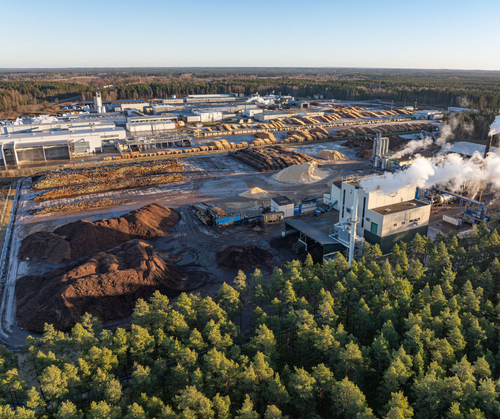
Image: Kaspars Stirna | Alamy
Categories: News, Forest Watch, Bioenergy